Tag Archives: iPhone

Invasive Hunter Academy Thrives at UT Austin’s Hot Science – Cool Talks

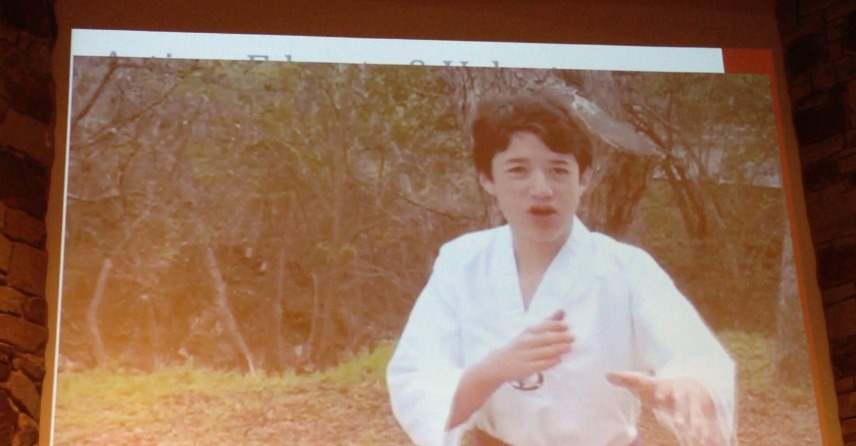
Commander Ben talks with high school students about invasive species at Hot Science – Cool Talks
Photo credit: UT Austin Environmental Science Institute

The UT Austin Environmental Science Institute (ESI) has a great Hot Science – Cool Talks series that brings scientists from UT Austin and across the country to talk about their neat science research. Kids of all ages are invited to attend.

Mr. Geoff Hensgen, ESI Outreach Coordinator, invited me to bring my Invasive Hunter Academy to their most recent event with Dr. Jay Famiglietti, “Last Call at the Oasis: Will There be Enough Water for the 21st Century?

I was excited to, but I wanted to add more information for high school students, since I knew they enjoyed coming to the Hot Science presentations. So I researched about some of the water problems caused by invasive species.

Invasive Hunter Academy Grows

I really liked the new info that I added to the Invasive Hunter Academy. I still have the three fun original steps to becoming an invasive hunter:

  • Know your enemy – Match up pictures of native and invasive plants
  • Know your action moves – Practice the three cool taekwondo moves to take down invasive plants
  • Create your action scene – Build a great diorama to take home

For Dr. Famiglietti’s Cool Talks event, I created a new presentation for young adults with some great information about my nemesis, the Giant Reed. I talked about:
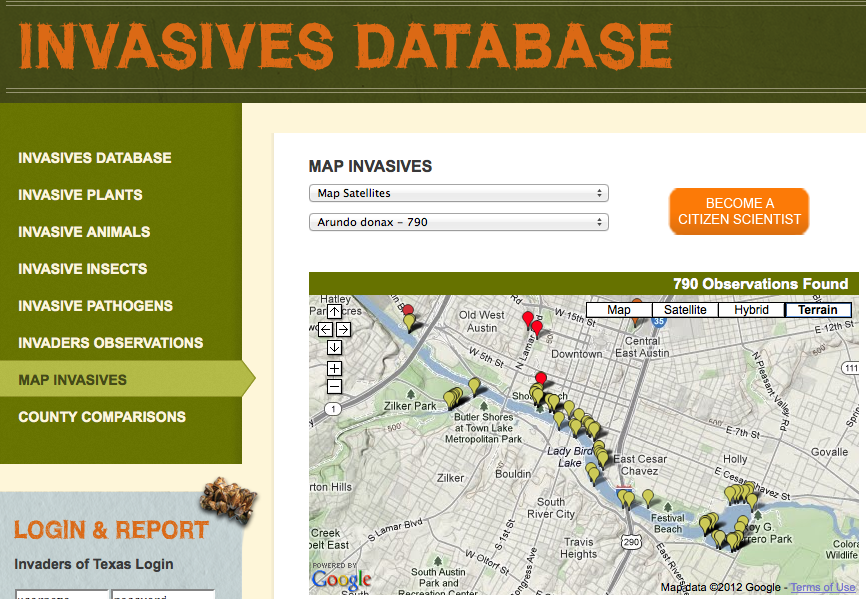
Recorded locations of the Giant Reed around Austin
Source: Texas Invasives website

(1) What invasive species are and specifically the problems of the Giant Reed (Arundo donax). I showed how easy it is to find sightings of the Giant Reed and other invasive species that citizen scientists reported around the state by using the Texas Invasives database.

Giant Reed along the Rio Grande River near Big Bend National Park
Credit: Mr. John Goolsby, USDA

(2) The EPA is considering using the Giant Reed for biofuel because it grows fast and doesn’t impact the food industry. That’s great for a biofuel plant, but the Giant Reed can easily escape into the native ecosystem and take over as an invasive species.

Scientists are concerned that the spread of the Giant Reed to could create an economic and environmental disaster, and for that reason it should not be used as a biofuel.
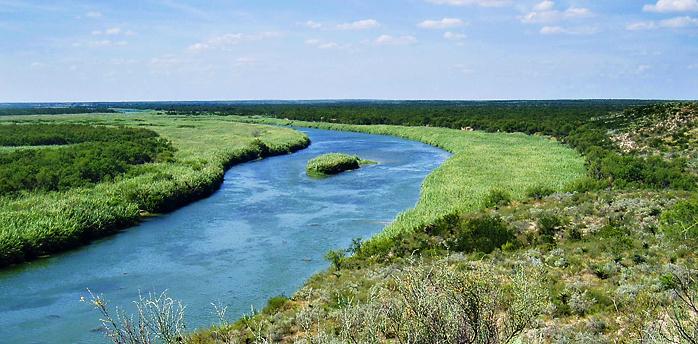
Giant Reed along the Rio Grande River
Photo Credit: Center for Invasive Species Research

(3) Especially for Dr. Famiglietti’s freshwater talk, I added information about how the Giant Reed is a threat to the survival of the Rio Grande River because it:

  • Reduces the available water supply
  • Chokes waterways
  • Inhibits with power generation
  • Interferes with agricultural irrigation
  • Degrades water quality
  • Threatens the of health of native plants and animals by creating a dense monoculture and crowding out native plants

QR Codes Help Presentations Jump to the Web

I added QR codes to make it easier for people to access the websites that I talk about in my poster presentation. I first added QR codes when I brought the academy to the Wildflower Center as part of Nature Nights this summer.

I saw people use their iPhones and Android phones to scan the QR codes to access my website, so I wanted to add more codes for my Hot Science presentation to help bring people to where they could get more information on the web, like to learn more about the Giant Reed.

High School Students Graduate to the Academy

One of the Invasive Hunter Academy tables before the start of Hot Science – Cool Talks at UT Austin

The audience was older than my other academy presentations. There were many students from eighth graders to high school and college students. That was neat!

I enjoy bringing the original academy activities to kids all ages, but now I especially enjoy talking to the older students and teaching them about invasive species. (In these pictures, I still have my hand in a cast from when it got broken during a taekwondo sparring match. :-()

Commander Ben motions to how high (and higher!) the Giant Reed invasive plant can grow
Photo credit: UT Austin Environmental Science Institute

They found my posters very helpful, because a lot of students were there with their science classes, and they had notebooks that they were writing in for extra credit. I talked with them about the problems with the Giant Reed, and they took copious notes. I hope they all got great grades! 🙂
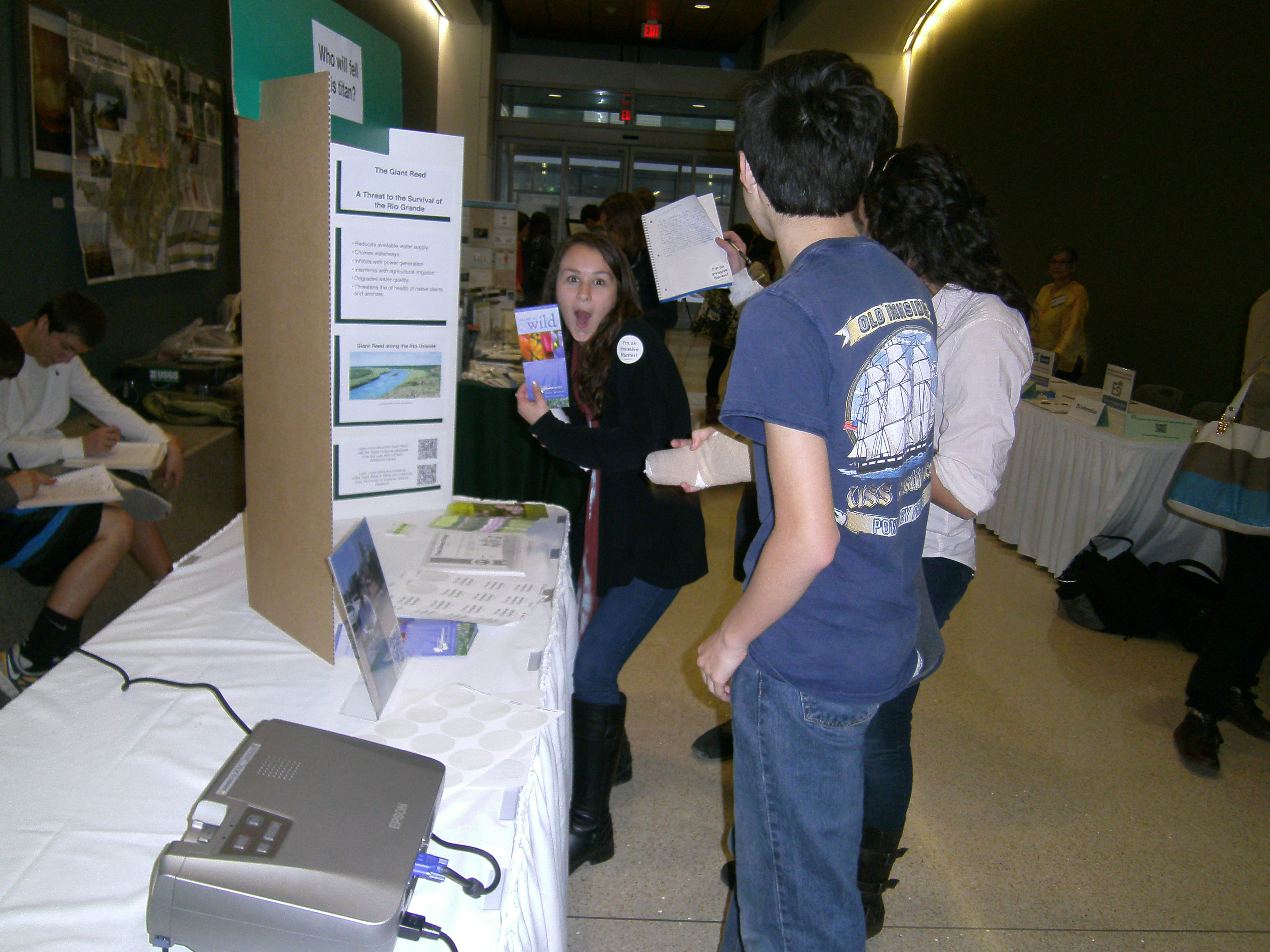
Invasive Hunter graduate shows off her “I’m an Invasive Hunter” sticker and Wildflower Center brochure
Photo credit: UT Austin Environmental Science Institute

They really liked my “I’m an invasive hunter'” stickers and went to my website on their phones to watch my videos too. They put the stickers on their shirts and books, and one of the high school freshman put it on his forehead. (Not recommended.)

Battles with Invasive Species Videos

Commander Ben before the start of the Hot Science – Cool Talks prelecture fun with the Native Plant Avengers video playing in the background

Mr. Hensgen is just the best! I want to thank him for inviting me to be part of the prelecture fun and the interview with Dr. Famiglietti. He gave me the best table because it was near the entrance to the auditorium, and he gave me a projector to play my Battles with Invasive Species videos on the wall during the event.

During the event, I played two videos:

One Freshman high school girl came back another time for two reasons: she was interested to learn more about invasive species and she had also left her iPod. 🙂

It was also great to talk again with Dr. Jay Banner, Director of the UT Austin Environmental Science Institute. I saw him being filmed for the Longhorn Network during the event. Thanks, Dr. Banner, for mentioning me during your prelecture slides!

Last Call at the Oasis

Dr. Jay Famiglietti’s Last Call at the Oasis presentation at Hot Science – Cool Talks

I also had a great time chatting with Dr. Famiglietti before his talk. I wished him good luck, but he didn’t need it because he did a great job!

I found one of the reserved chairs in the auditorium. (Thanks Mr. Hensgen!) and I noticed that they were much, much more comfortable than the regular chairs. (They were the same as the other chairs, but since they were reserved, they were extra comfy!)

Dr. Famiglietti talked about the making of his video, Last Call at the Oasis. It was released on DVD on November 8th, so be sure to check it out!

At the end of his talk, he showed a funny video with Jack Black about their drinkable, treated sewage water, porcelain springs.

Learn More about Invasive Species
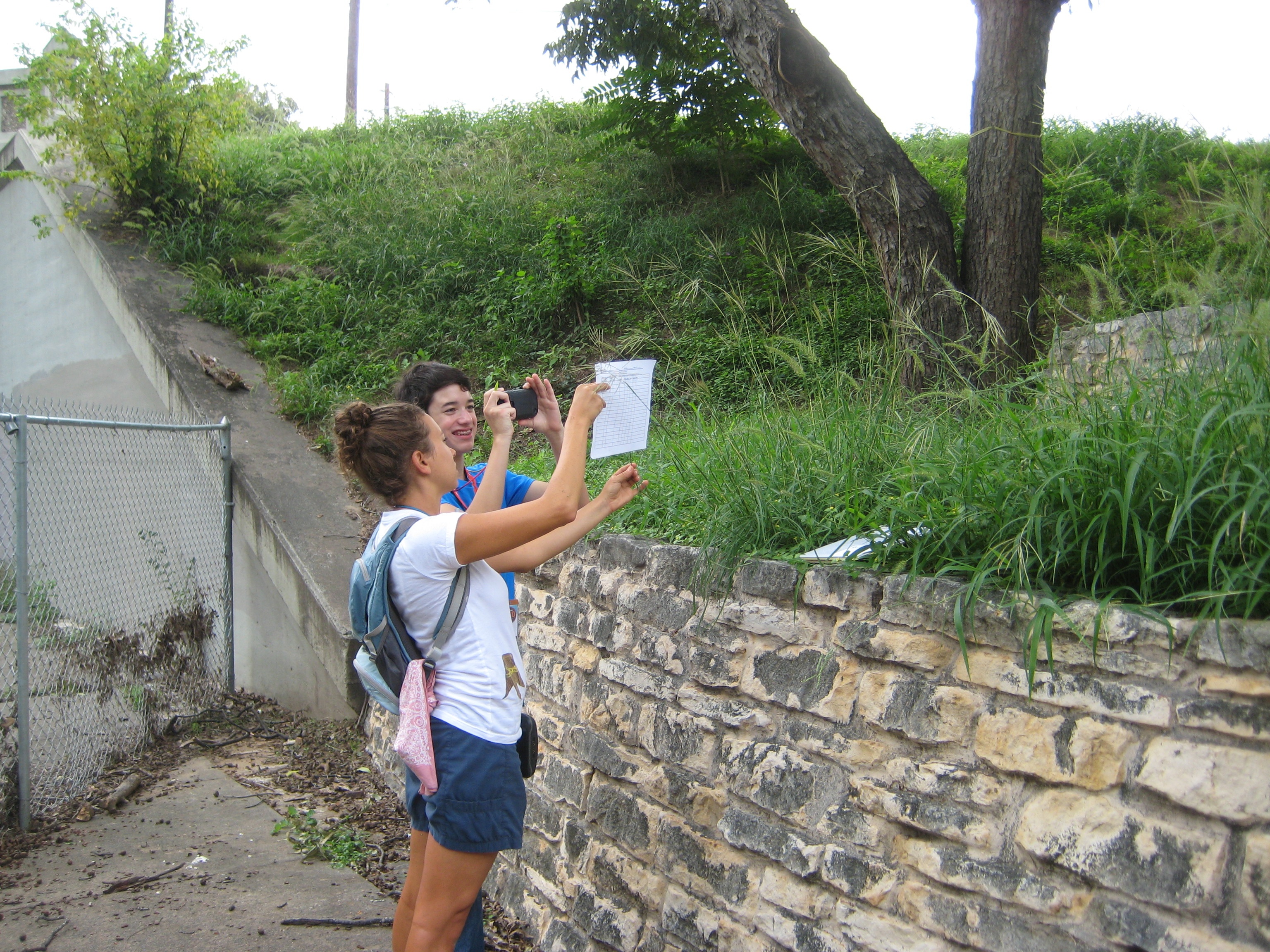
Ms. Jessica Strickland and Commander Ben mapping invasive species at SXSWEco

My thanks to Ms. Jessica Strickland for all her help teaching me more about invasive species on the Texas Invasives website and at SXSW Eco. (I learned about the EPA considering to use the Giant Reed as biofuel from the Texas Invasives iWire newsletter. If you don’t already receive this monthly email newsletter, be sure to subscribe to iWire today.) I also learned about the Rio Grande River’s problem with the Giant Reed from presentations during the 2011 Texas Invasive Plant and Pest Conference.

I also want to thank Ms. Alice Nance, Lady Bird Johnson Wildflower Center Education Manager. She gave me a lot of goodies to pass out during the prelecture fun. I had Wildflower Center brochures with discount coupons and Plant Hero badges and certificates. (Kids had a lot of fun with Plant Heroes too when I brought the Invasive Hunter Academy to Nature Nights at the Wildflower Center this summer.)

Next Hot Science – Cool Talks presentation

Commander Ben and Dr. Jay Famiglietti at Hot Science - Cool Talks

Commander Ben and Dr. Jay Famiglietti wrap up Hot Science – Cool Talks on a humorous note

Thank you again Dr. Banner, Mr. Hensgen, and Dr. Famiglietti for everything! 🙂 If you missed the event, watch my video interview series with Dr. Famiglietti and check out the webcast replay of Dr Famiglietti’s presentation. (It was ESI’s 80th Hot Science – Cool Talks event!)

I had a fantastic time, and I can’t wait until the next Hot Science – Cool Talks event on November 30, “The War on Cancer: 41 Years after Nixon’s Declaration“, with Dr. Mark Clanton.

Hope to see you there!

Your friend,
Ben

Leave a comment

Filed under 2011 Texas Invasive Plant Conference, Android, Arundo donax, Bastard Cabbage, Battles with Invasive Species, Big Bend National Park, Biofuel, Center for Invasive Species Research, Dr. Jay Famiglietti, Environmental, Environmental Protection Agency, Environmental Science Institute, EPA, ESI, Extra credit, Geoff Hensgen, Giant Reed, High school, Hot Science - Cool Talks, Invasive Hunter, Invasive Hunter Academy, Invasive Plants, Invasive Species, iPhone, iWire Texas Invasives Newsletter, Jay Banner, Jessica Strickland, Lady Bird Johnson Wildflower Center, Last Call at the Oasis, Lights. Camera. Help., Monoculture, Ms. Alice Nance, Native ecosystem, Native Plant Avengers, Nature Nights, Plant Heroes, Porcelain springs, QR codes, Rio Grande River, Science class, Tae Kwon Do, Taekwondo, Texas, Texas Invasives, U.S. Botanic Garden, University of Texas, UT Austin, water, water conservation, water hydrology, water supply, Wildflower Center

What is Dyslexia?…And What Does It Mean To Me?

“You should prefer a good scientist without literary abilities
than a literate one without scientific skills.”
Leonardo da Vinci, Dyslexic

Listening to my 8th grade science textbook using my Victor Reader Stream.

Today, I’m expanding my blog beyond my usual invasive species and scientific posts (but don’t worry, invasive species and science will still be my primary focus!…and in a way, this is a bit scientific too), to share a story with you about a topic that is near and dear to my heart…dyslexia.  Why dyslexia?  Well, because I have dyslexia.

So What Exactly is Dyslexia?

First, what is dyslexia?  To put it quite simply, all it means in Latin is “trouble with words”.  Sounds so simple but it really isn’t.  Just ask anyone with dyslexia who has tried to learn how to read!

From the Wikipedia definition, dyslexia is a very broad term defining a learning difference that impairs a person’s reading fluency,  accuracy, or comprehension.

And it doesn’t stop there.  Some of us with dyslexia can also have problems with handwriting – dysgraphia, and still others can also have challenges with math – dyscalculia.  I have struggles with both.

So how many of us have dyslexia?  Well, there really isn’t any definitive number but the National Institutes of Health estimate that about 15% of the world’s population has dyslexia.  That’s about 1 billion people!  But the good news is that people with dyslexia often have above average intelligence and are great at “thinking outside the box”.  So maybe I should say “that’s about 1 billion smart people!”

And So My Story Begins…

Young Commander Ben – Invasive Hunter!

My story starts way back when I was in kindergarten.  My teacher noticed how well I spoke and what a great vocabulary I had (traits not uncommon in people who have dyslexia), but at the same time how I struggled to recognizing the letters of the alphabet.  My school contacted my Mom, who had me tested, and sure enough…I had dyslexia.  Right away, my parents made arrangements for me to be taught how to read by a Certified Academic Language Therapist (CALT).

Why right away?  Because according to dyslexia experts, such as Dr. Sally Shaywitz, M.D. at Yale University’s Center for Dyslexia and Creativity, early intervention is so important for helping kids with dyslexia learn how to read.

I spent 8 years working with a CALT and am now able to read…slowly.  Over the years, my reading teachers used a variety of Orton-Gillingham based multi-sensory approaches to teach me how to read.   “Multi-sensory” basically means  teaching visual, auditory, and tactile elements all together to help improve memory and learning.

For example, when I was little, my teacher would have me put plastic alphabet letters in order, then have me say each letter’s name and make its sound, then trace the letters with my finger.  These multi-sensory types of programs have been proven successful for about 70 years when teaching people with dyslexia how to read.

But With Reading Slowly, How Did I Keep Up With My Schoolwork?

Victor Reader Stream and Audio SD Cards

So how did I manage with my studies all these years?  And how did I keep up with my grade level reading?  That’s where Learning Ally comes in.  (Formerly Recording for the Blind and Dyslexic.)  This is such a great organization of wonderful people who volunteer their time to read and record text books so that kids…and adults too…can have all the reading materials they need to stay informed.

Thanks to advances in technology, it’s as simple as picking out the book I need from the Learning Ally online catalog at their website, and then downloading it to an SD card.  Then I insert the card into my external reader, which is about the size of a small handheld tape player, called a “Victor Reader Stream” made by the HumanWare company.

This is the Learning Ally app for the iPhone.

There are also other ways I can listen to books, as with the Learning Ally app for mobile devices such as the iPhone, or on my laptop, but I really like the Stream because it can take a lot of battle damage which comes in handy on my invasive hunts! 😉

But What About Other Kinds Of Reading…And How About Writing?

iPad Dictation Mode

But what if I want to read something on the Internet?  And what about all the typing I have to do?  Not just for school but for my blog too!  Well, I’m so happy that I live in the 21st century!  Thanks to text readers and voice-to-text software, life is a lot easier for me now than before these inventions.  They’re not perfect, but they get better and better every year.

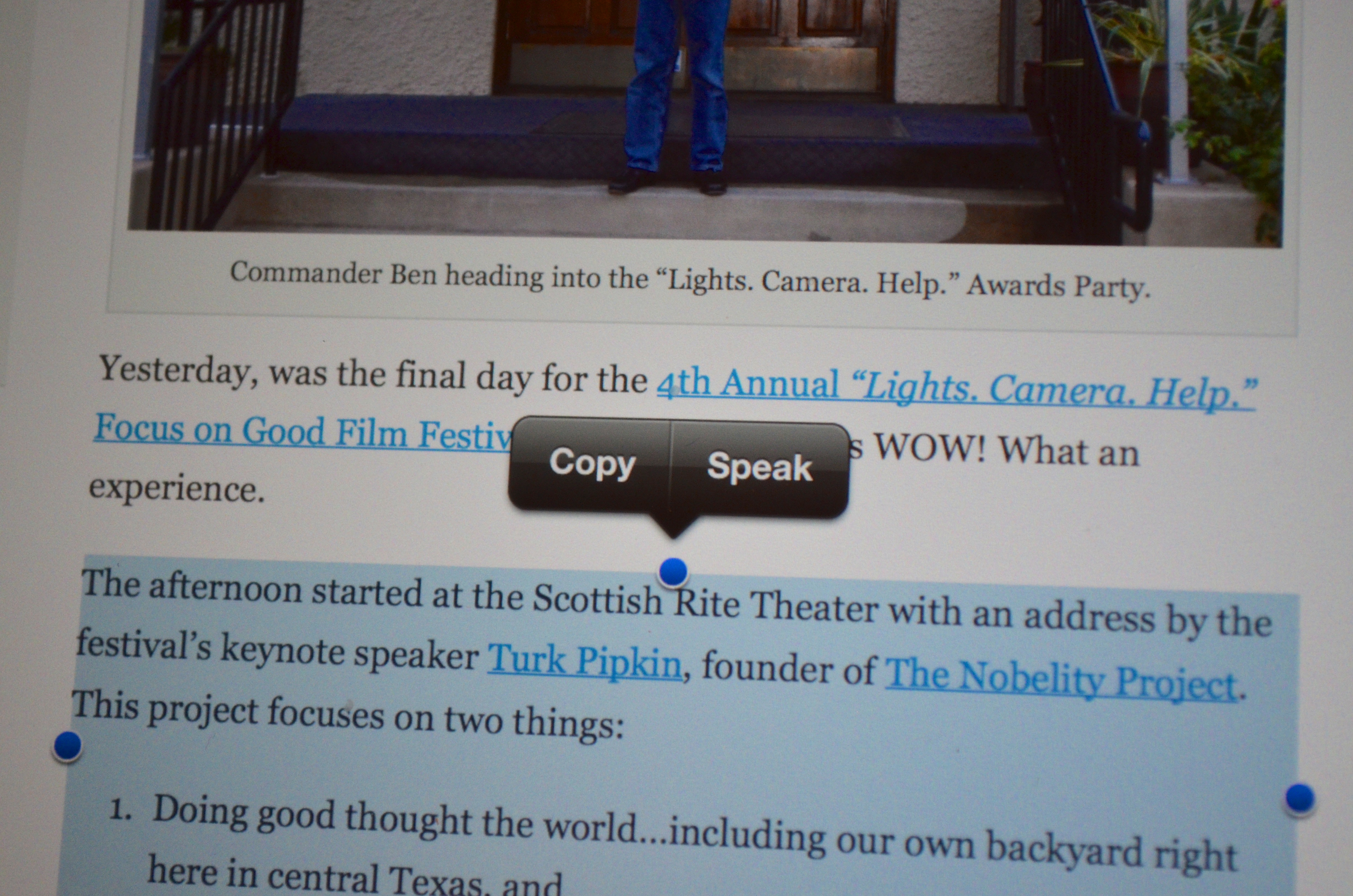
Here I am using the iPad Text to Speech function.

The latest Apple iPad has a text reader that sounds quite good.  All I have to do is highlight what I want to read, as you can see in the picture above, and then tap on the “speak” icon. The voice is a bit computerized sounding but it is very clear and easy to understand.

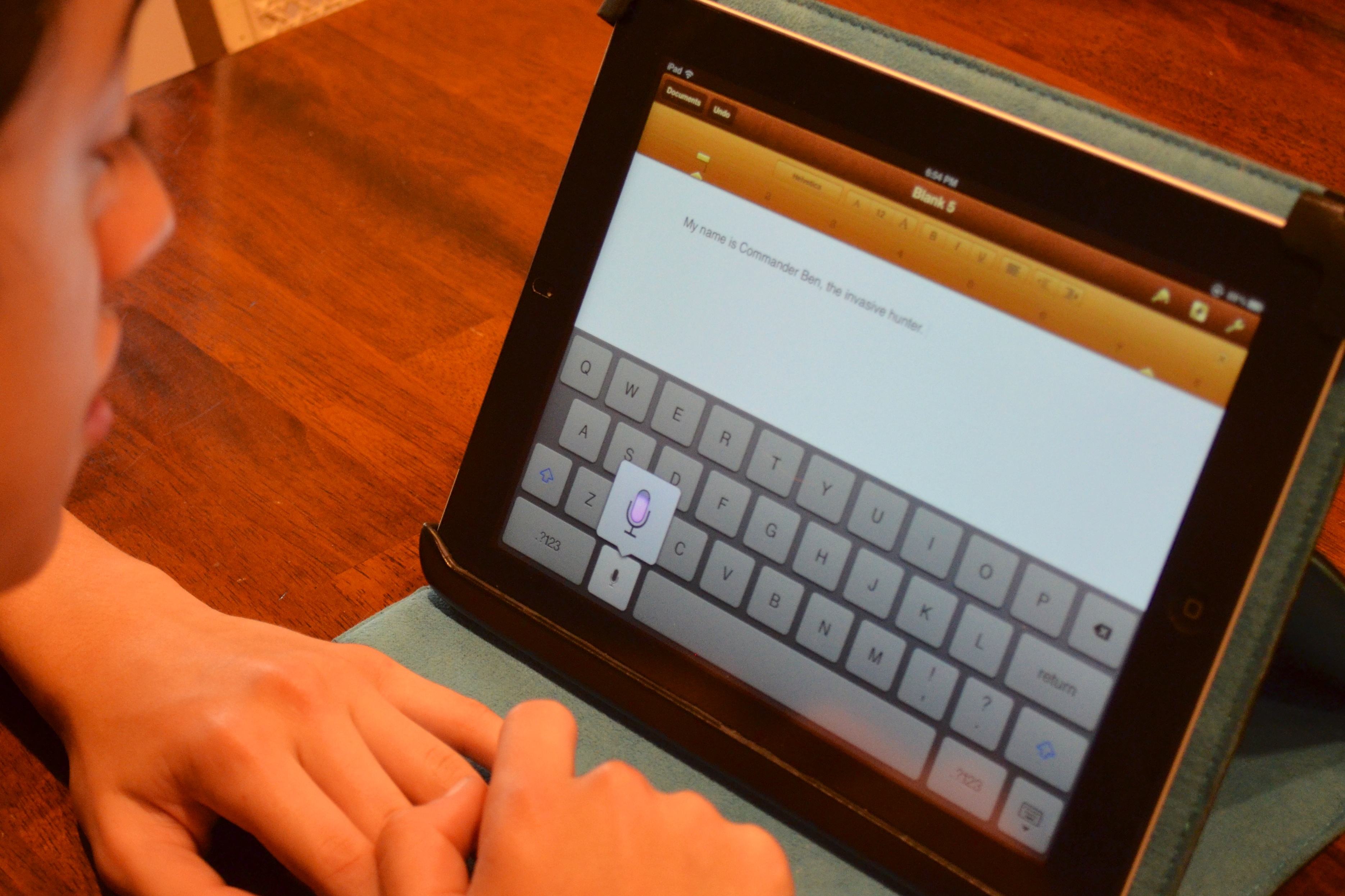
The iPad also has a small microphone icon – dictation mode –  that is a very reliable voice-to-text tool.  This is great because typing can be a bit of a challenge for me. (And don’t getting me started talking about how hard handwriting can be…)   Oh! And Siri on the iPhone is amazing!

Here I am using the iPad Diction Mode.

I Wouldn’t Change A Thing

It’s been a hard road for me but I wouldn’t change a thing because having dyslexia is part of who I am.  And I like to think that it has made me both tenacious when it comes to life in general, and empathetic to understanding the various struggles others have in their own lives.

But most important, I learned early on that the key to working with my dyslexia was to always persevere and never give up…and be eternally grateful for spell check! 😉  I think that’s something many of us can agree upon regardless of how well we read and spell.

But even more than spell check, it’s my parents to whom I’m really eternally grateful.  I can’t begin to thank them for all they have done for me.  They are so supportive and always there for me, making any sacrifices necessary when it comes to helping me get the help I need.  And they are always there to encourage me and reassure me that I can do anything I put my  mind to.

So, What’s Next?

Over the next few days, here on my blog, I’ll be sharing some stories and videos about my adventures with dyslexia.  I’m a very positive person 🙂 , and I think that I have always tried to maintain a good sense of humor about having dyslexia, so hopefully you’ll find my stories and videos, not only educational, but fun and entertaining too!

I really hope this information I’m sharing will help people with dyslexia stay informed about all the technology available to make our lives easier.  (And I hope that even folks without dyslexia, or teachers who work with kids who have dyslexia, will find this information useful!)  But most important, I hope that I can inspire other kids who have dyslexia to know that anything is possible and to never become discouraged.   We can achieve whatever we set our minds to!

“Our greatest weakness lies in giving up.
The most certain way to succeed is always to try just one more time.”
Thomas Edison, Dyslexic

Be sure to visit the Dyslexia page of my blog to read all my posts on this subject.

See you soon.

Your friend,
Ben

17 Comments

Filed under Academic Language Therapy Association, Apple, Certified Academic Language Reading Therapist, Certified Academic Language Therapist, Dictation, Dr. Sally Shaywitz, Dyscalculia, Dysgraphia, Dyslexia, Famous Dyslexics, HumanWare, iPad, iPhone, Learning Ally, Learning Ally app, Leonardo da Vinci, multi-sensory learning, National Institutes of Health, Orton Gillingham, Recording for the Blind & Dyslexic, Siri, Thomas Edison, Victor Reader Stream, Yale Center for Dyslexia & Creativity

Citizen scientists band together with the Invaders of Texas Program

Commander Ben with a Giant Reed at the Lady Bird Johnson Wildflower Center

Last weekend, I attended the Invasive Species Workshop at the Lady Bird Johnson Wildflower Center. Ms. Jessica Strickland, the center’s invasive species program coordinator, led the event, teaching us about invasives, especially how to map and combat them.

She talked about the Invaders of Texas program, which helps to educate citizen scientists about invasive species and how to report them to agencies that can research their locations and do something about their spread.

There were over 80 people in attendance, including many master naturalists who were very enthusiastic about sharing their knowledge about invasives with me and the other attendees. We had a full agenda!

How to become a citizen scientist

Ms. Jessica Strickland’s invasive species workshop presentation

It’s easy to become a citizen scientist for the Invaders of Texas program. You just need the knowledge and desire to take action against invasives.

To become a citizen scientist, you can join a satellite group, such as a group of master naturalists, and attend an educational workshop. The group will then report their sightings in the invasive species database.

Or you can learn about invasive species online, take a short test, and be on your way to finding and recording invasives as part of the Voyager group. I’m a Voyager, and I hope that you’ll join me too.

Equipment to record your invasive species sighting

Ms. Strickland gave us a demo of how to make an observation and enter the sighting into the Invaders of Texas database.

To record a sighting, all you need are:

  • A digital camera – Very important because Ms. Strickland will need a picture of the suspect verify your sighting. Tip: put a white piece of paper behind the leaves or distinguishing feature of the plant that you’re taking a picture of. This will help to make details visible for identification.
  • GPS device – This will help pinpoint the exact location of your find. If you don’t have one, you can use Google maps with the reporting database to get as close as you can to the area where you were.
  • Reporting form – Helps you record all the data about your sighting for entering on your computer later. You can’t fill out the web form on your smartphone now because you have to be able to upload a picture from your computer. (That will be changing soon!)
  • Knowledge about the invasive species that you’re looking for – You don’t want to report the wrong species!

Here’s a picture of my invasive hunter suit, but you don’t have to dress up for the occasion. 🙂

Commander Ben unfazed by the looming stand of Giant Reeds sneaking up on him.

Report your invasive species observation into the database

Once you have your sighting, just go to your computer, enter your data, and upload your picture. Once your species is verified, you’ll be part of a vast and powerful database that will help other citizen scientist and scientists take action against invasives.

There’s a space on the reporting form to ask for volunteer hours, and that’s important in case the Invaders of Texas program needs to apply for matching grants to help maintain or grow the program.

Android and iPhone app for Invasive Species coming soon!

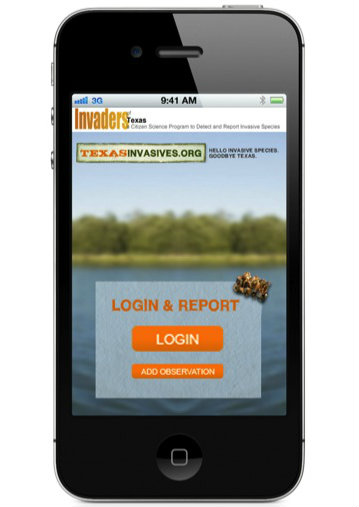
Invaders of Texas Android and iPhone mobile app to report invasive species coming soon

I’m looking forward to when their Texas Invasives mobile app will come out that will allow citizen scientists to record their sightings instantly with their mobile phone. This will really help to increase sightings! They’re coming out with the Android version first. I’m really looking forward to the iPhone version.

Sentinel Pest Network

During the workshop, we learned about the Sentinel Pest Network that was created to help us watch out for deadly invasives that are in the United States, but have not been found in our state yet…but they may be marching our way.

Learning about the Emerald Ash Borer

We learned more about these other invasives, including the Emerald Ash Borer (Agrilus planipennis). It’s amazing that an insect that’s smaller than a penny could do so much damage to the native ash tree population of the United States.

We also learned more about the Asian Longhorn Beetle and the Gypsy Moth (Lymantria dispar), which I didn’t know much about before this workshop.

Invasives at the Wildflower Center!

Ms. Strickland asked us to bring samples of different kinds of invasives species. I brought my nemesis, the Giant Reed (arundo donax). It was so tall that I had to be careful making my way through doorways and not knocking things over along the way.

Pressed sample of a Japanese Climbing Fern

It was great that so many people brought land and aquatic invasive species to share, some of which I had not seen in person before, like the Japanese Climbing Fern (Lygodium japonicum). This invasive spreads in the woods of East Texas, suffocating native trees and plants on the ground.

Other topics

Turtle in the pond at the Lady Bird Johnson Wildflower Center

During our breaks, I enjoyed talking with my fellow citizen scientists and watching the magnificent turtles in the Wildflower Center’s pond. They were very friendly. I also saw a lot of cool damselflies and lots of flowers and plants.

At the workshop, we also learned about the Great Texas Tree Roundup from the “Tree Folks” and the Eradication Calculator that helps to publish and report volunteer efforts to get rid of invasive species.

Invasive Hunter Academy

Invasive Hunter Academy video screening at the workshop

Many workshop attendees had asked for educational resources and ways to help teach kids about about invasive species and the problems that they’re causing in our ecosystem.

Ms. Strickland invited me to bring my Invasive Hunter Academy to the workshops to show teachers and master naturalists about a fun way to help educate kids about invasives. This is the same academy that I created for the National Invasive Species Awareness Week (NISAW) in Washington D.C. earlier this year.

When I first arrived in the morning, Ms. Strickland and Ms. Karen Clary provided me with a wonderful table to set up my academy, and right before the youth education session, Ms. Strickland showed my Invasive Hunter Academy preview video to the entire audience.

It was wonderful. I was so happy to hear everyone’s reactions to the video, especially all their laughter during the funny scenes. It was awesome to know that people really do enjoy my battles with invasive species videos, and they can help educate everyone about invasive species.

How to become an Invasive Hunter

Commander Ben standing at the ready in front of the Invasive Hunter Academy

During the youth education session, I talked with a group of teachers and master naturalists about the wonderful educational activities that are part of the Invasive Hunter Academy.

I described the steps for students to graduate from the academy. A few of the attendees wanted to go through the experience themselves identifying the invasives, and of course, they all succeeded!

Next, they enjoyed the action moves to take down the different invasives with a lot of laughter. Once they started showing me their their moves, I got an inkling that there may be a budding invasive hunter in them.

But they had to pass the final test, perhaps the most difficult challenge, creating their action scene. One lady picked the Giant Reed to fight against in her diorama. I asked her why, and she said that it was a big problem where she lived, and wanted to wage a battle against it.

Once they were done, I graduated them as full fledged invasive hunters, giving them a sticker, and certifying them as an official Invasive Hunter.

The master naturalists from the El Camino Real Chapter invited me to be part of their nature festival next year. It sounds like fun!

Invasive Hunter Academy at the Wildflower Center

You too can be an invasive hunter, especially if you’re in Austin, by enrolling in the Invasive Hunter Academy at the Lady Bird Johnson Wildflower Center during the Power of Plants at Nature Nights on July 5. It’s free and you’re guaranteed to have fun! You’ll have a great time becoming an invasive hunter, and you’ll make and bring home an action diorama of you protecting your native ecosystem against the invading invasives.

Fantastic invasive species workshop!

Jessica Strickland, Commander Ben, and Dr. Damon Waitt at the Invasive Hunter Academy

Ms. Strickland made me feel very welcome, and I learned so much. Thank you for inviting me to be part of your event, and thank you Dr. Damon Waitt for all your kind words and encouragement.

This was a great workshop! Ms. Strickland is giving these these workshops around the state, and you won’t want to miss attending one of these events!

Your friend,
Ben

Leave a comment

Filed under Android, Asian Longhorn Beetle, Battles with Invasive Species, Citizen Scientist, Damon Waitt, El Camino Real Chapter, Emerald Ash Borer, Eradication Calculator, Giant Reed, Great Texas Tree Roundup, Gypsy Moth, Invaders of Texas, Invaders of Texas Citizen Science Program, Invasive Hunter Academy, Invasive Species, Invasive Species Workshop, iPhone, Japanese Climbing Fern, Jessica Strickland, Karen Clary, Lady Bird Johnson Wildflower Center, Master naturalist, Mobile app, Nature Nights, NISAW, Power of Plants, Sentinel Pest Network, Texas Invasives, Tree folks, Turtle, Wildflower center

Record Sightings of Invasives and Attend the Next Invasive Species Eradication Workshop

Reported locations of the Giant Reed (Arundo donax) around Lady Bird Lake in Austin, Texas.

You too can join the fight against invasive species by attending the next Invasive Species Eradication workshop. This workshop helps you become a more active citizen scientist by teaching you about invasive species and how to report them.

I recorded my first invasive species, my nemesis the Giant Reed (Arundo donax), early last year with my GPS, pencil and paper, and digital camera, and I reported my information on the Texas Invasives website for other scientists to understand how invasive species were spreading.

Many other citizen scientists across Texas have reported their invasive sightings too. For example, View a map of the reported Giant Reed locations in Texas.

We won’t always need pencil and paper. The May 2012 iWire newsletter talks about a new Invaders of Texas mobile app to report invasive species. The Invaders of Texas program received an empowerment grant from the Motorola Foundation to develop a mobile application for Android devices.

Attend the next invasive species workshop in Austin

These invasive species workshops are held around the state throughout the year, and the next workshop in Austin will be on Saturday, June 16th, at the Lady Bird Johnson Wildflower Center.

I look forward to attending this upcoming workshop to learn about the latest techniques for identifying and reporting invasives and meeting other citizen scientists. I want to learn more about how to use an iPhone to easily report invasives when I see them. The workshop will also cover the new Eradication Calculator, which will help to organize and coordinate removal efforts.

Learn more about this invasive species workshop and others around Texas at Texas Invasives workshops or contact Ms. Jessica Strickland, the Wildflower Center’s invasive species manager.

Your friend,
Ben

1 Comment

Filed under Android, Eradication Calculator, Giant Reed, Invaders of Texas, Invaders of Texas Citizen Science Program, Invasive Species, iPhone, Jessica Strickland, Lady Bird Johnson Wildflower Center, Motorola Foundation

iPhone Apps and Google Maps Team Up to Battle Invasive Species

In part two of his interview, Mr. Chuck Bargeron talks about his work on EDDMapS to make invasive species mapping easy; IveGot1, the iPhone app to help citizen scientists report invasives in Florida; and his eagerly anticipated iPhone app to help with the reporting of invasives in Texas. He also brings out the important role that herbariums play to documenting the location of species. Mr. Bargeron is the technology director for Invasive Species and Ecosystem Health at the University of Georgia.

Watch part one of Commander Ben’s interview with Mr. Bargeron, “Invasive species watch: Nile Monitor lizards and feral hogs”.

This video is part of Commander Ben’s “Invasive Species: Secrets Revealed” series of interviews from the 2011 Texas Invasive Plant and Pest Conference.

Commander Ben signing off…

Leave a comment

Filed under 2011 Texas Invasive Plant Conference, Chuck Bargeron, Invasive Species: Secrets Revealed, iPhone