Tag Archives: UT Austin

Dr. Michael Webber Hot Science – Cool Talks on the Longhorn Network

Commander Ben and Dr. Michael Webber at the KLRU television studios at UT Austin

Last month, I had a chance to attend Dr. Michael Webber’s Hot Science – Cool Talks lecture, “From Fracking to the 40 Acres: Energy Challenges for UT, Texas and the World”, in person at the KLRU television studios on the UT Austin campus.

Dr. Webber is the Co-Director of the Clean Energy Incubator at the Austin Technology Incubator, and he is also an Assistant Professor of Mechanical Engineering at UT Austin. KLRU is our Austin, Texas, PBS station where I’ve seen many Nova and Nature television programs.

I missed Dr. Webber’s presentation earlier this year when he gave it as part of the Spring 2012 lecture series, since I was in Washington D.C. getting the Invasive Hunter Academy ready for Kids’ Day during National Invasive Species Awareness Week (NISAW). So I was glad that I got this second chance to see his presentation in person.

The KLRU studio is cool, mostly painted black for the TV background. Someone said that they used to film Austin City Limits, a music program, here.

We could sit in the raised seats or on seats set up on the floor. I wanted to sit in the floor area, as close as I could to the front, so I could see his presentation clearly.

During his presentation he talked about natural gas, wind, and solar as being clean energies for the future. He also talked about biofuels, such as corn. The downside is that corn used for fuel can’t be used for food, and that may drive food prices up.

Horizontal drilling and hydraulic fracturing

Dr. Webber also talked about fracking where companies drill far down and then sideways. They blast the shale rock and force a sand and liquid solution down to help release the natural gas out of the cracked rocks. They make a protective covering around the tube to try to keep fluids from leaching out into the surrounding land or aquifers. Fracking helps us get natural gas from areas where we could not before, and Texas is a great producer of natural gas for clean energy.

Learn more about future energies from Dr. Webber’s presentation

You can see Dr. Webber’s presentation on the Longhorn Network on Monday, July 9, at 8:00 p.m. and 10:00 p.m. CT.

If you don’t have the Longhorn Network, watch a replay of his From Fracking to the 40 Acres webcast and Hot Science – Cool Talks presentation.

Fall 2012 Hot Science – Cool Talks presentations

I can’t wait to attend the Fall 2012 Hot Science – Cool Talks in person. They’ll be in the new Student Activity Center.

I liked them in Welch Hall because it felt very scientific, and I really liked the periodic tables on the wall, but having them in the center is hip too. That’s where
Dr. Andrew Howell gave his Hot Science – Cool Talks lecture in January.

Hope to see you there!

Your friend,
Ben

1 Comment

Filed under Austin Technology Incubator, Biofuel, Clean energy, Clean Energy Incubator, Dr. Michael Webber, Fracking, Hot Science - Cool Talks, Hydraulic fracturing, KLRU, Longhorn Network, Natural gas, University of Texas, UT Austin

DNA sequencing with the Shadow a Scientist program at UT Austin

Today, I had a great time at UT Austin with their Shadow a Scientist program, part of the College of Natural Science’s Freshman Research Initiative.

It was wonderful seeing Dr. Greg Clark again. I met him at the Barbara Jordan statue on the UT Austin campus, and we had a nice chat. Afterwards, I joined Mr. Peter Enyeart, a graduate genome researcher.

Mr. Enyeart led me through an experiment where we got to see what DNA sequencing is all about. This involved inserting bacteria into an agar substance and running an electric current through it to help the DNA spread out.

Agar is made up of tons of holes. The bigger DNA cannot go through the smaller holes, but the smaller DNA can spread out, and the two patterns create the DNA sequencing for study that we see here:

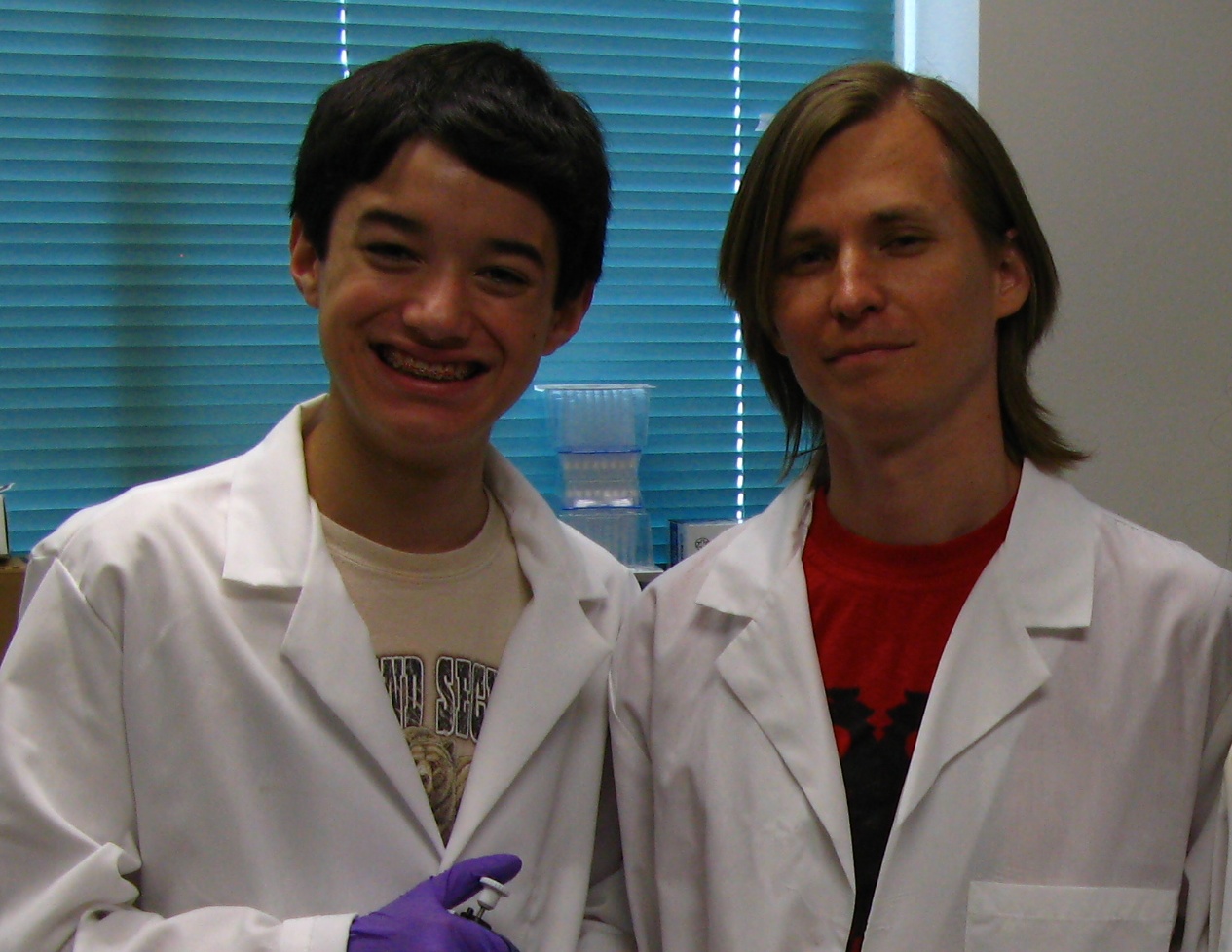
I enjoyed wearing the lab coat, gloves, and glasses. All I needed was a pocket protector to bring out my inner scientist!

I like lab coats! I also wear one as part of my costume in last year’s “The Boy who Cried Invasives” video, part of my Battles with Invasive Species video series:

If you haven’t had the chance to sign up for the Shadow a Scientist program, there’s still time to register, or if you’re a future middle schooler, don’t miss signing up for this program next year.

Thanks Dr. Clark and Mr. Enyeart. I had a spectacular time!

Your friend,
Ben

Leave a comment

Filed under Battles with Invasive Species, College of Natural Sciences, DNA sequencing, Dr. Gregory Clark, Freshman Research Initiative, genome, Mr. Peter Enyeart, Shadow a Scientist, University of Texas, UT Austin

Can Invasive Species Trigger Black Swan Events in Nature?

I’m looking forward to the upcoming Fall 2012 series of Hot Science – Cool Talks.

During the first presentation, Black Swans & the U.S. Future: Creating Sustainable & Resilient Societies, Dr. David W. Orr will talk about how sudden and unpredictable events drive change in human and natural systems.

I’m especially interested to learn if the introductions of invasive species to an ecosystem may represent black swan events in nature.

Deep Sea Invasion

I remember watching a rerun of the PBS Nova episode, Deep Sea Invasion, which showed how a bright green seaweed (Caulerpa taxifolia) that was used to decorate salt water aquariums escaped into the Mediterranean sea and created a choking monoculture wherever it went.

The dense carpet of seaweed represented a great change in the ecosystem since it overwhelmed native species and deprived native marine animals of food since the seaweed has a toxin that the creatures cannot eat.

In 2000, scientists found this invasive seaweed growing in the waters outside of San Diego, California, probably accidentally released by an aquarium owner, but due to early detection and rapid response, scientists were able to contain this killer alga with plastic and eradicate it with chlorine.

Like the Wakame (Undaria pinnatifida) seaweed shown in First wave of tsunami debris brings dock loaded with invasive species to the US West Coast, Caulerpa taxifolia is also in the Global Invasive Species database lists as one of the world’s 100 worst invasive species.

I can’t wait to attend the next Hot Science – Cool Talks and learn more about black swan events from Dr. Orr and the Environmental Science Institute at UT Austin.

Your friend,
Ben

1 Comment

Filed under black swan, Deep Sea Invasion, Dr. David Orr, Early detection, Environmental, Environmental Science Institute, ESI, Global Invasive Species, Hot Science - Cool Talks, Invasive Species, Japanese tsunami, killer alga, Monoculture, Nova, PBS, Rapid response, tsunami debris, University of Texas, Wakame, Wakame

Entomology adventures with Insecta Fiesta at the UT Austin Brackenridge Field Lab

I had a great time learning about insects last weekend at the Insecta Fiesta. It was held on Saturday, April 21, 2012, at the UT Austin Brackenridge Field Lab.

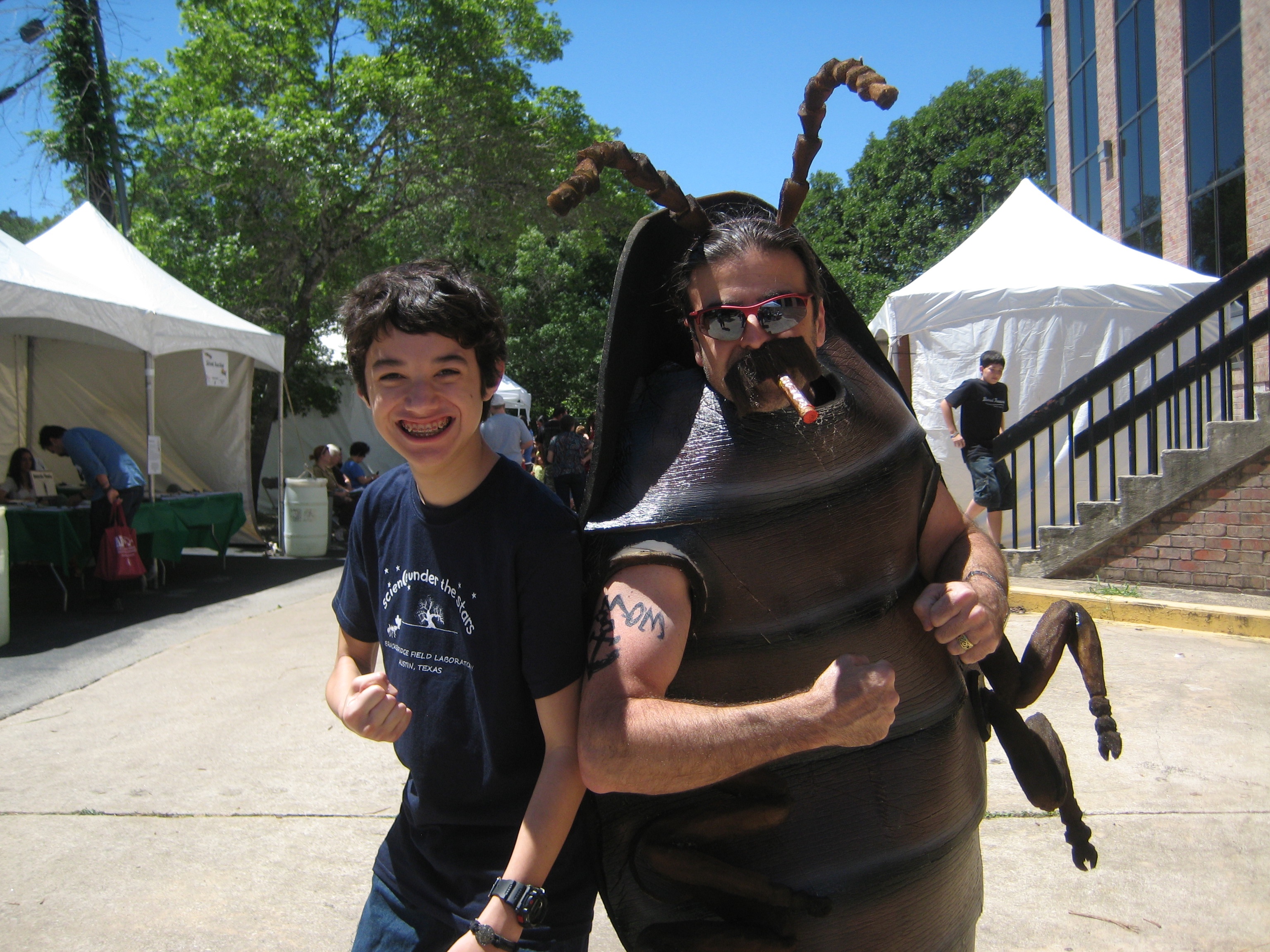
You can see from the picture above that this place had a big bug problem, but that’s a good thing. (Although you can’t see it in this picture, I kept my swatter close by in case this gigantic cockroach got out of hand.)

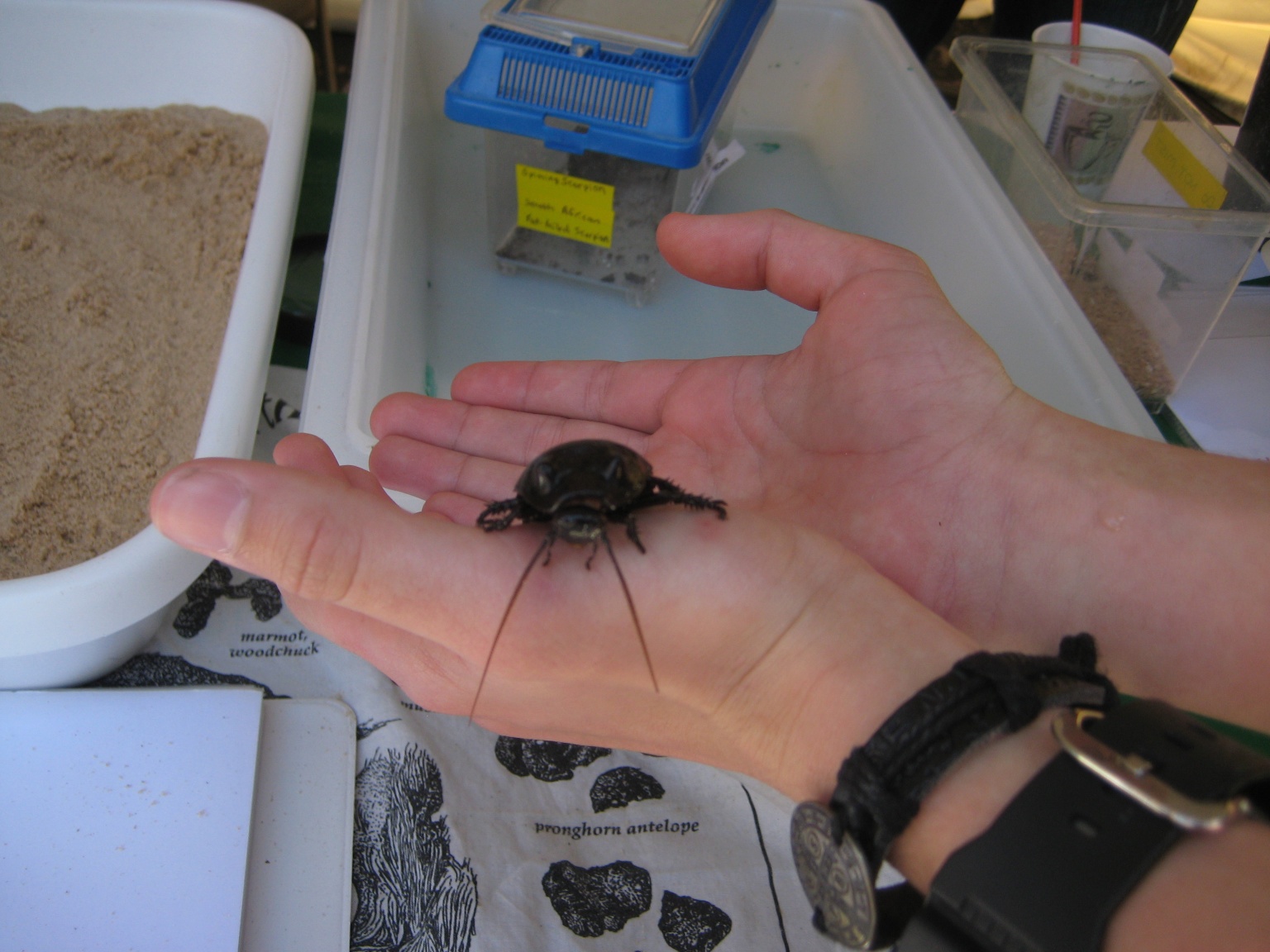
This hissing cockroach was down to size. It was cool holding him because it felt like many dull thumbtacks poking me.

Strangely, it did not hiss for me. I think it was tired of hissing at all the people that came before me. When I put him (it?) back down, it skittered away.

Here I sit next to a homemade bug city in their butterfly garden. It’s really a refuge that everyone can make because there are many places for bugs to hide and burrow in with no fear of being squished.

Magnificent UT Austin insect collection

Dr. Tom Atkinson, research scientist with College of Natural Sciences, took us on a tour of the UT Austin Insect Collection. He was really nice and showed us their extensive collection. Although it’s not as big as Texas A&Ms, he said they’re not trying to have the biggest collection (although they have a lot!), but they are trying to specialize in the insects of this area.

They have wonderful tools for preserving and pinning insects at their field lab.

Commander Ben’s insect collection

I love collecting insects, although I have not formally pinned many of the insects in my collection. After they’ve dried out, I keep my specimens in a plastic box with dividers.

Some of my favorites, I put in small, clear card boxes, and I keep my specimens safe by putting cotton balls around them.
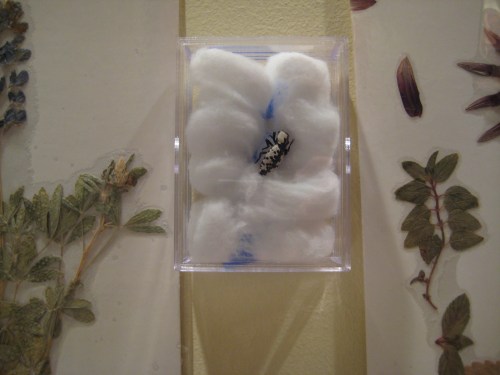
Here’s my “pièce de résistance“, an Ironclad Beetle that I found hanging on a screen door a few years ago. It has an extremely hard exoskeleton, and I learned that you have to use a small drill to pierce the exoskeleton, if you want to pin it. I like keeping it on a wall in my room.

I have many more insects in my collection, but four more that I really like are my:

* Click beetle
* Large walking stick
* Huge assassin beetle
* Unusual tree cricket.

Click beetles and butterflies at UT Austin

Here’s a picture of UT Austin’s click beetle collection. They are really cool because when you try to hold or catch them, they try to get away by clicking and hopping their bodies, almost like a seesaw. They feed on organic material and roots, and you’ll find them in central Texas, so be sure to look for them the next time you’re hunting insects.

Dr. Atkinson showed us a beautiful display of butterflies, but sadly, he said it was not very scientifically useful because the insects were not labeled or identified. Be sure to label the insects in your collection!

He said that everyone can catch the larger bugs, and they have tons in their collection. (Note to graduate students, collect more smaller insects!)

Update: Learn more about North and Central American bark and ambrosia beetles at Dr. Atkinson’s Bark Beetles website.

Beware of food with insects!
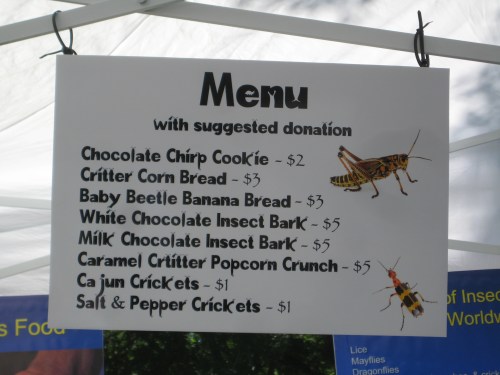
They had tons of different insect food to taste, and a lot were made with crickets. I think that people are more open to eating crickets and not mealworms, especially live ones, as that can make you squeamish. (Take a look at me eating a mealworm at Explore UT.)

They were sold out of the following when I stopped by:

  • Cajun crickets, which were dried, baked, and flavored with cajun spices
  • Salt and pepper crickets, which were also dried and baked, but with salt and pepper

The graduate student who I talked with (and who I met at Explore UT too!) said that the least favorite snacks were the ones where people could see the insects. She said that the critter popcorn crunch, which was caramel popcorn with caramelized beetle larva, was not selling well, probably because it was too easy to see the larva. (I didn’t want it either.)

I didn’t want to eat any because I was still recovering from having all four of my wisdom teeth out earlier in the week…

Cricket spitting contest

But that didn’t stop me from taking part in the cricket spitting contest. At the front of the line, where people were waiting to spit crickets, someone held a container full of crickets that had been frozen, but were thawed out.

I grabbed one of the crickets with my hand, and I was initially wary of putting one in my mouth, but I finally stuffed it in (and went back for a second time too.) I think I made it up to 13 or 14 feet both times without anyone getting hit.

They started out with 1000 crickets, but the activity was so popular that they soon began to run out.

On spider safari

Here I stand with a very nice man, Spider Joe (Joe Lapp). He didn’t like spiders, but preferred insects when he was younger. But he grew to like them and became very knowledgeable about them.

He talked about spiders to our group and asked what’s the difference between insects and spiders? The other kids had a lot of answers, like six or eight legs, but the key answer is that an insect has three body segments: head, thorax, and abdomen. Spiders only have a head and abdomen.

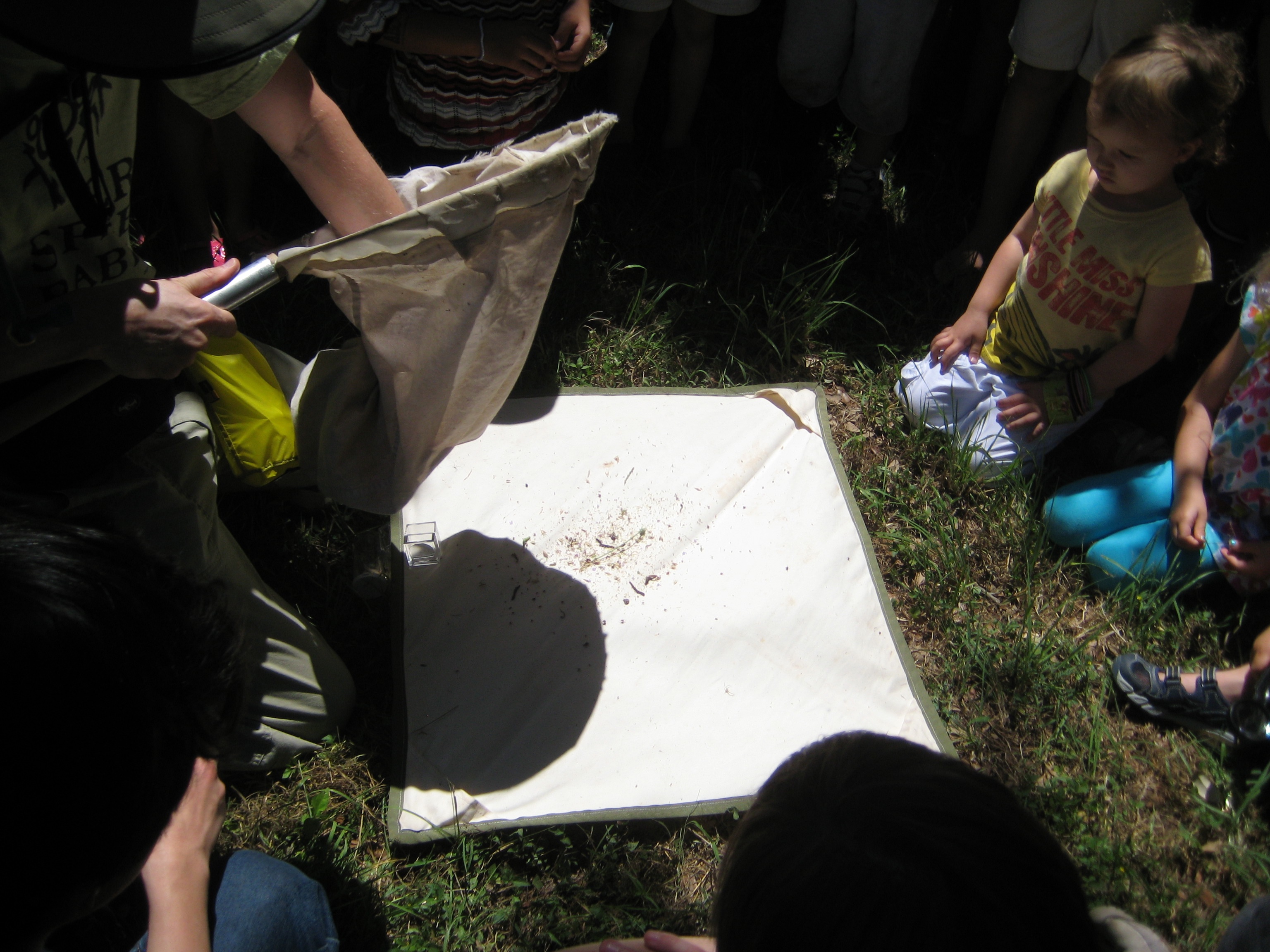
As part of his activity, he walked around through the tall grass with his spider collecting net. He dumped the insects and spiders that he caught on his inspecting canvas. He identified the arachnids that he caught and passed them around in small containers for everyone to see. He mostly caught orb weavers, like Charlotte in Charlotte’s Web. He also found a wolf spider that I liked because it has a cool way of hunting prey. (They don’t wait for the prey to come to them.)

He also showed us a brown recluse in a clear container. It was small and difficult to see, but I was able to make out a fiddle on its back.

Our group walked along a wilderness trail around Brackenridge Field Lab, and Spider Joe stopped along the way to have us look for spiders. In such a wonderfully wooded area, there were a good many spiders. That was a very fun activity. No tarantulas sadly, as I really like tarantulas.

Spider Joe was a really nice man, and if you ever get a chance to get a guided tour from him, jump at the chance.

A secret find!

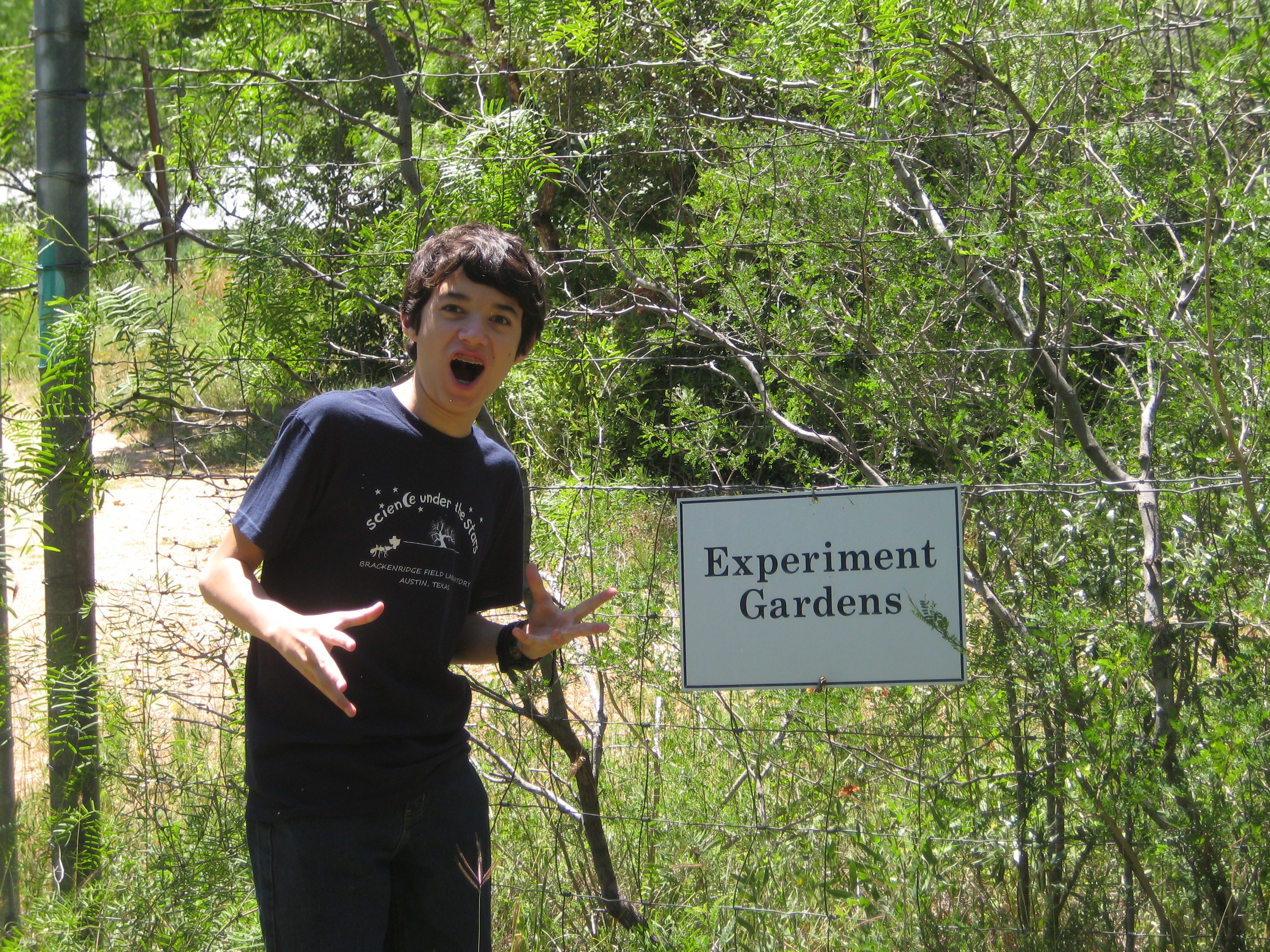
Here I stand by their experimental gardens. Who knows what secret and mysterious creatures are inside! (I took a peek, but it looks like a bunch of plants…hey…wait a minute, was that an invasive?)

I really enjoyed the Insecta Fiesta. The professors and graduate students at the Brackenridge Field Lab did a great job. It was wonderful to be around so many bugs and so many people who loved nature so much.

Your friend,
Commander Ben
Leave a comment

Filed under Brackenridge Field Lab, Click beetle, College of Natural Sciences, Crickets, Dr. Tom Atkinson, Entomology, Hissing cockroach, Insecta Fiesta, Insects, Ironclad beetle, Orb spiders, Spider Joe, Spider safari, Spiders, UT Austin Insect Collection

Life on Europa: Interview series with Dr. Britney Schmidt

You won’t believe what I got to do the other day…I had breakfast at the Bouldin Creek Cafe with Dr. Britney Schmidt, research scientist at The University of Texas Institute for Geophysics!

And not only did I have breakfast with her, she was very gracious to allow me to interview her about her fascinating research on the possibility of life in our solar system and her upcoming talk, “Life on Europa? Exploring Jupiter’s Icy Moon, which is part of the awesome Hot Science – Cool Talks series, presented by the Environmental Science Institute. (Don’t miss her talk on Friday, April 13, 2012!)

I published her interview in seven parts with cool planetary graphics from NASA/JPL-Caltech. Click on the videos below to learn more about the possibility of life on Europa, planetary science, and the amazing trajectory Dr. Schmidt took to become a planetary scientist.


(1) Life on Europa: Exploring Jupiter’s Icy Moon – Hot Science – Cool Talks Preview

Dr. Schmidt describes her upcoming presentation, “Life on Europa? Exploring Jupiter’s Icy Moon”, and talks about astrobiology, the study of the rise of life in habitable planetary systems.


(2) Does Icy Europa Hide Life?

What can learning about ice on Earth tell us about possible single or multicellular life on Europa? Dr. Schmidt talks about the trapped lakes under the surface of one of Jupiter’s moons that might harbor life.


(3) Would Scientists Freak Out if They Found Life on Europa?

If we discovered life on Europa, would we start a robotic space race to get there? Would scientists dance in the streets or would such a discovery cause great scientific or social revolutions? Dr. Schmidt shares her thoughts about what might happen after such a fantastical discovery.


(4) Incredible Tidal Forces Power Europa

Dr. Schmidt talks about the incredible tidal forces exerted by Jupiter and its Galilean moons that bring chaos to Europa, but also give it the energy and heat that may make it possible for Europa to sustain life.


(5) Does Earth Ice Hold the Key to Alien Life?

If we can find microbes living between ice crystals on Earth, can we find life on icy Europa too? Dr. Britney Schmidt describes Earth’s environments and creatures, such as ice loving cryophiles, that can help us understand the possibility of life elsewhere in the universe.


(6) Planetary Moon Smackdown: Triton versus Europa

Why does Dr. Schmidt find Triton so compelling? If you’re looking for a young surface, covered in methane, with a bizarre geology, look no further than Triton. Oh, and did we mention cryovolcanism too?


(7) From Heavy Metal Fan to Planetary Scientist (Geophysicist Dr. Britney Schmidt)

Dr. Schmidt looked to musicians as modern day poets and never pictured herself in a lab coat. Discover Dr. Schmidt’s remarkable journey after her class in planetary science, when she felt the gravitational pull to physics to pursue her passion for researching Europa.

Thanks, Dr. Schmidt; Dr. Jay Banner, Director of the Environmental Science Institute (ESI); and Mr. Geoff Hensgen, ESI Outreach Coordinator!

Commander Ben…signing off

Leave a comment

Filed under Astrobiology, Astronomy, Cryophiles, Cryovolcanism, Dr. Britney Schmidt, Environmental Science Institute, Europa, Extraterrestrial life, Galilean moons, Geoff Hensgen, Geophysicist, Jay Banner, Jupiter, Jupiter's Icy Moon, Neptune, Space race, Spacecraft, Triton, University of Texas, University of Texas Institute for Geophysics, UT Institute for Geophysics