
Commander Ben with a Giant Reed at the Lady Bird Johnson Wildflower Center
Last weekend, I attended the Invasive Species Workshop at the Lady Bird Johnson Wildflower Center. Ms. Jessica Strickland, the center’s invasive species program coordinator, led the event, teaching us about invasives, especially how to map and combat them.
She talked about the Invaders of Texas program, which helps to educate citizen scientists about invasive species and how to report them to agencies that can research their locations and do something about their spread.
There were over 80 people in attendance, including many master naturalists who were very enthusiastic about sharing their knowledge about invasives with me and the other attendees. We had a full agenda!
How to become a citizen scientist
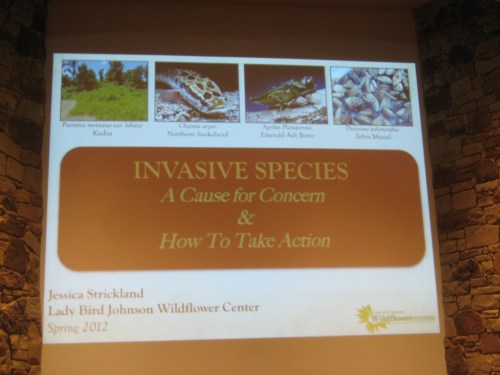
Ms. Jessica Strickland’s invasive species workshop presentation
It’s easy to become a citizen scientist for the Invaders of Texas program. You just need the knowledge and desire to take action against invasives.
To become a citizen scientist, you can join a satellite group, such as a group of master naturalists, and attend an educational workshop. The group will then report their sightings in the invasive species database.
Or you can learn about invasive species online, take a short test, and be on your way to finding and recording invasives as part of the Voyager group. I’m a Voyager, and I hope that you’ll join me too.
Equipment to record your invasive species sighting
Ms. Strickland gave us a demo of how to make an observation and enter the sighting into the Invaders of Texas database.
To record a sighting, all you need are:
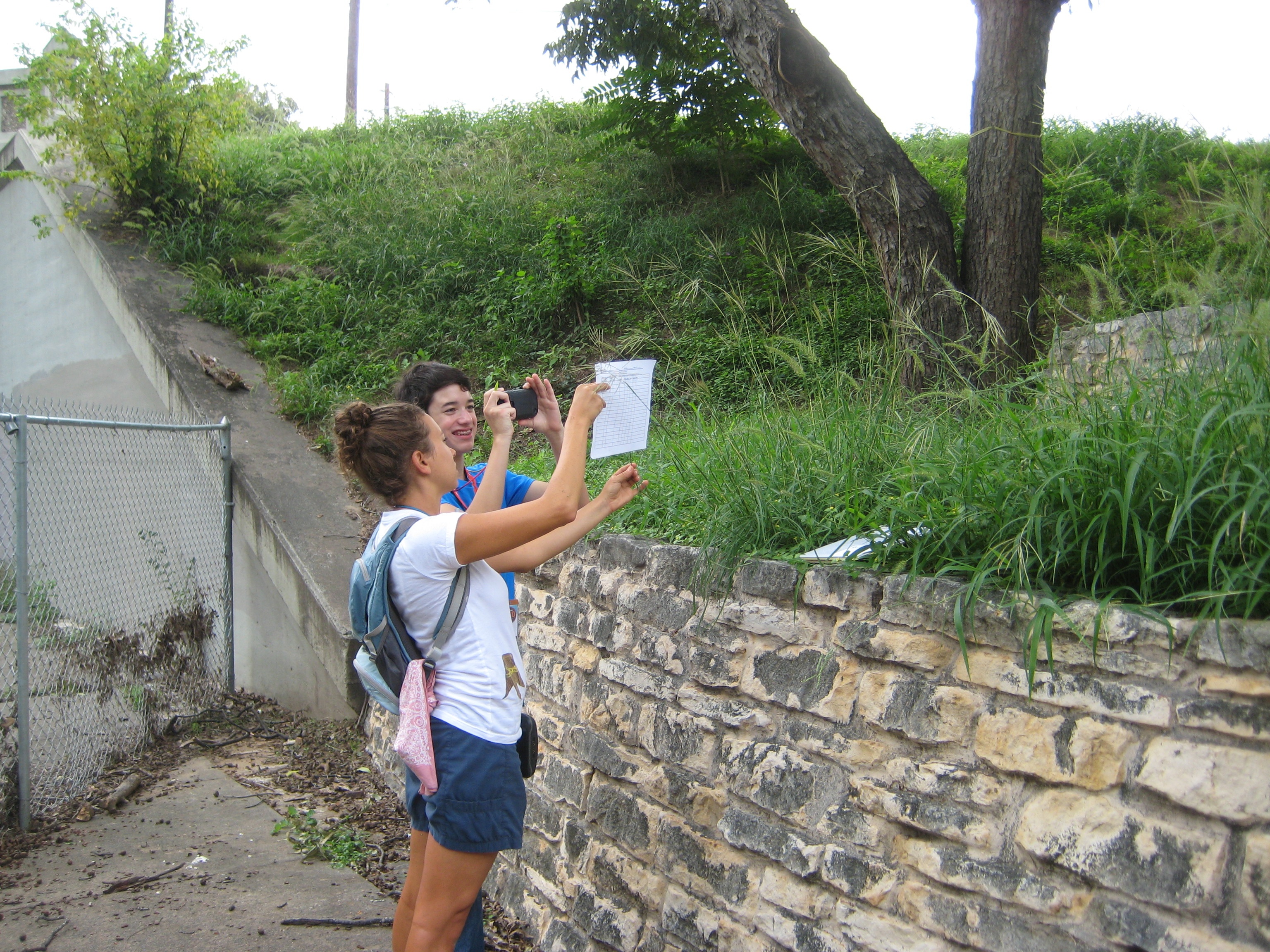
- A digital camera – Very important because Ms. Strickland will need a picture of the suspect verify your sighting. Tip: put a white piece of paper behind the leaves or distinguishing feature of the plant that you’re taking a picture of. This will help to make details visible for identification.
- GPS device – This will help pinpoint the exact location of your find. If you don’t have one, you can use Google maps with the reporting database to get as close as you can to the area where you were.
- Reporting form – Helps you record all the data about your sighting for entering on your computer later. You can’t fill out the web form on your smartphone now because you have to be able to upload a picture from your computer. (That will be changing soon!)
- Knowledge about the invasive species that you’re looking for – You don’t want to report the wrong species!
Here’s a picture of my invasive hunter suit, but you don’t have to dress up for the occasion. 🙂
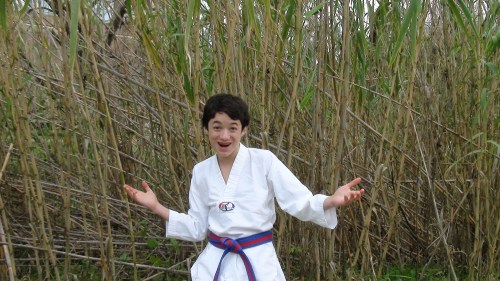
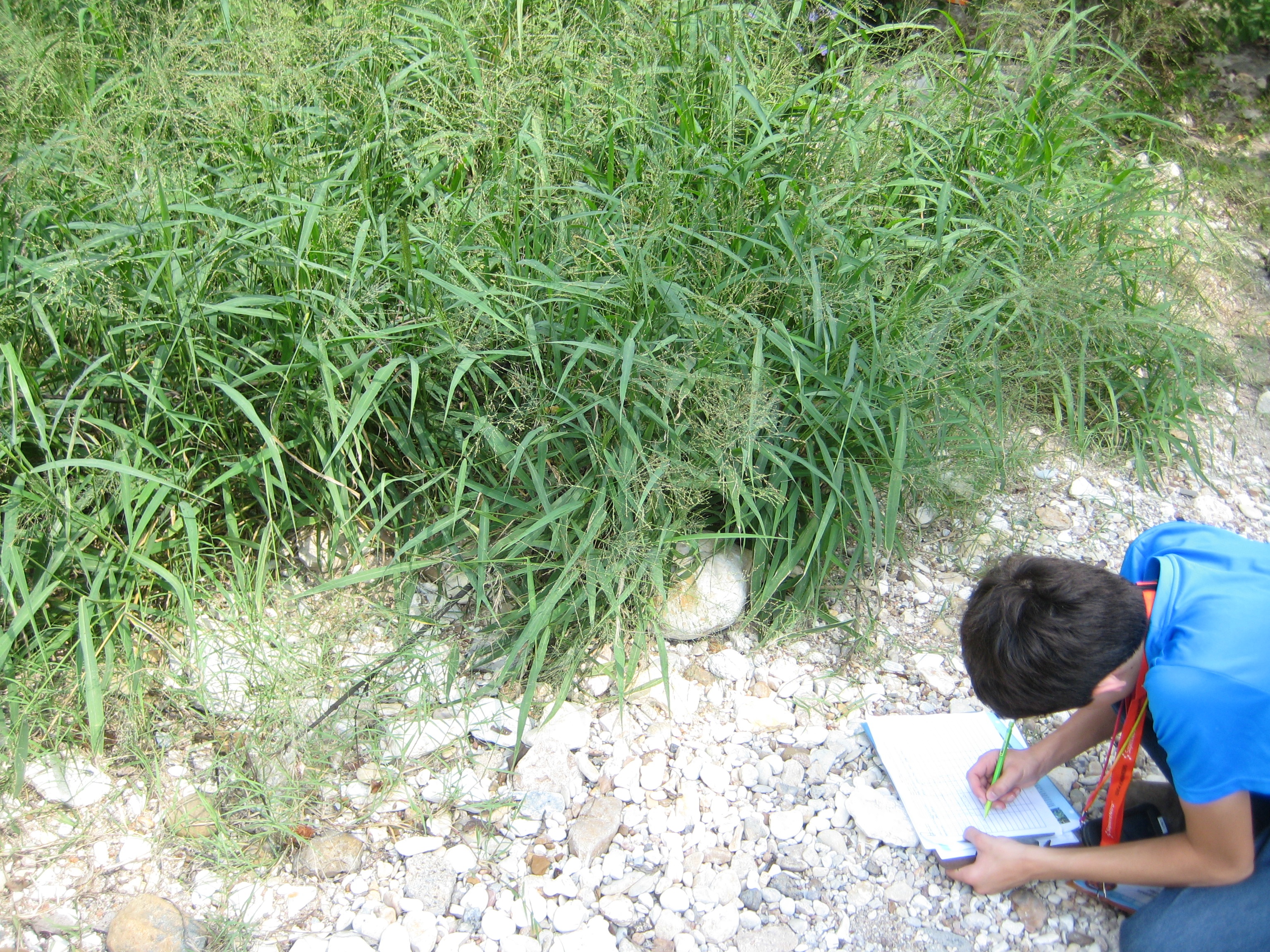
Commander Ben unfazed by the looming stand of Giant Reeds sneaking up on him.
Report your invasive species observation into the database
Once you have your sighting, just go to your computer, enter your data, and upload your picture. Once your species is verified, you’ll be part of a vast and powerful database that will help other citizen scientist and scientists take action against invasives.
There’s a space on the reporting form to ask for volunteer hours, and that’s important in case the Invaders of Texas program needs to apply for matching grants to help maintain or grow the program.
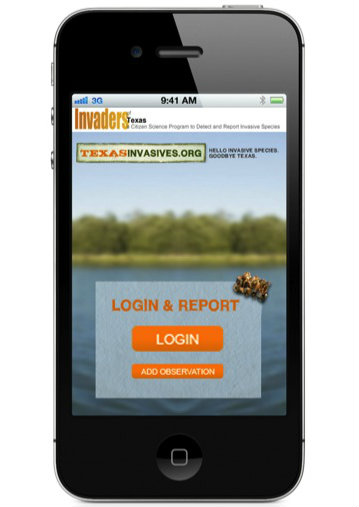
Android and iPhone app for Invasive Species coming soon!

Invaders of Texas Android and iPhone mobile app to report invasive species coming soon
I’m looking forward to when their Texas Invasives mobile app will come out that will allow citizen scientists to record their sightings instantly with their mobile phone. This will really help to increase sightings! They’re coming out with the Android version first. I’m really looking forward to the iPhone version.
Sentinel Pest Network
During the workshop, we learned about the Sentinel Pest Network that was created to help us watch out for deadly invasives that are in the United States, but have not been found in our state yet…but they may be marching our way.
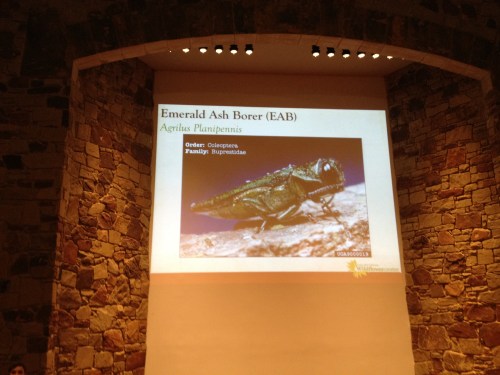
Learning about the Emerald Ash Borer
We learned more about these other invasives, including the Emerald Ash Borer (Agrilus planipennis). It’s amazing that an insect that’s smaller than a penny could do so much damage to the native ash tree population of the United States.
We also learned more about the Asian Longhorn Beetle and the Gypsy Moth (Lymantria dispar), which I didn’t know much about before this workshop.
Invasives at the Wildflower Center!
Ms. Strickland asked us to bring samples of different kinds of invasives species. I brought my nemesis, the Giant Reed (arundo donax). It was so tall that I had to be careful making my way through doorways and not knocking things over along the way.

Pressed sample of a Japanese Climbing Fern
It was great that so many people brought land and aquatic invasive species to share, some of which I had not seen in person before, like the Japanese Climbing Fern (Lygodium japonicum). This invasive spreads in the woods of East Texas, suffocating native trees and plants on the ground.
Other topics
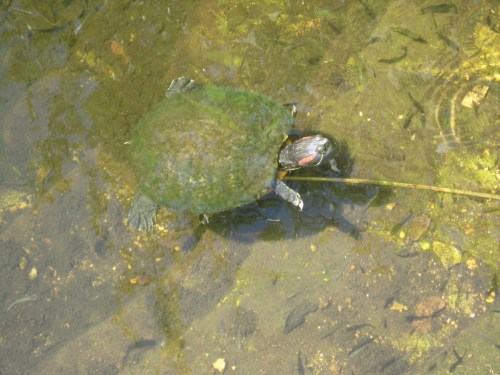
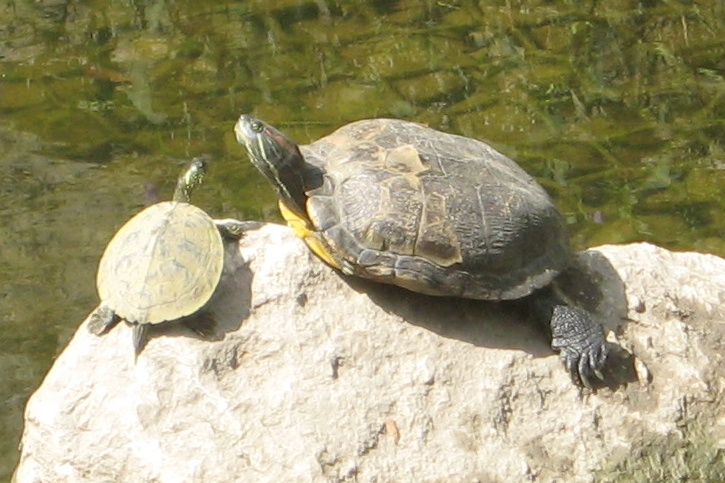
Turtle in the pond at the Lady Bird Johnson Wildflower Center
During our breaks, I enjoyed talking with my fellow citizen scientists and watching the magnificent turtles in the Wildflower Center’s pond. They were very friendly. I also saw a lot of cool damselflies and lots of flowers and plants.
At the workshop, we also learned about the Great Texas Tree Roundup from the “Tree Folks” and the Eradication Calculator that helps to publish and report volunteer efforts to get rid of invasive species.
Invasive Hunter Academy
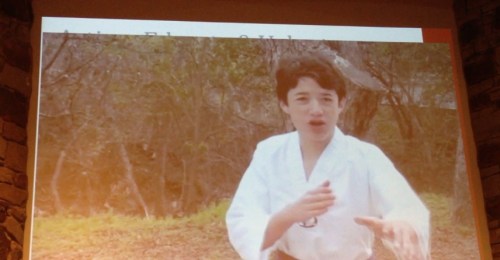
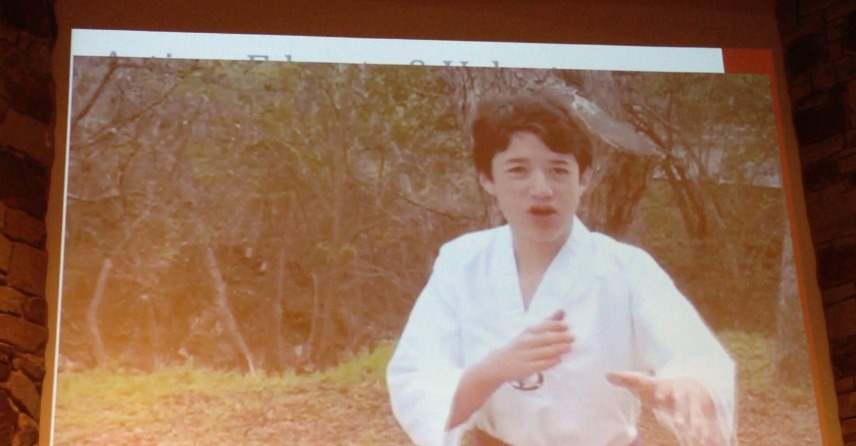
Invasive Hunter Academy video screening at the workshop
Many workshop attendees had asked for educational resources and ways to help teach kids about about invasive species and the problems that they’re causing in our ecosystem.
Ms. Strickland invited me to bring my Invasive Hunter Academy to the workshops to show teachers and master naturalists about a fun way to help educate kids about invasives. This is the same academy that I created for the National Invasive Species Awareness Week (NISAW) in Washington D.C. earlier this year.
When I first arrived in the morning, Ms. Strickland and Ms. Karen Clary provided me with a wonderful table to set up my academy, and right before the youth education session, Ms. Strickland showed my Invasive Hunter Academy preview video to the entire audience.
It was wonderful. I was so happy to hear everyone’s reactions to the video, especially all their laughter during the funny scenes. It was awesome to know that people really do enjoy my battles with invasive species videos, and they can help educate everyone about invasive species.
How to become an Invasive Hunter

Commander Ben standing at the ready in front of the Invasive Hunter Academy
During the youth education session, I talked with a group of teachers and master naturalists about the wonderful educational activities that are part of the Invasive Hunter Academy.
I described the steps for students to graduate from the academy. A few of the attendees wanted to go through the experience themselves identifying the invasives, and of course, they all succeeded!
Next, they enjoyed the action moves to take down the different invasives with a lot of laughter. Once they started showing me their their moves, I got an inkling that there may be a budding invasive hunter in them.
But they had to pass the final test, perhaps the most difficult challenge, creating their action scene. One lady picked the Giant Reed to fight against in her diorama. I asked her why, and she said that it was a big problem where she lived, and wanted to wage a battle against it.
Once they were done, I graduated them as full fledged invasive hunters, giving them a sticker, and certifying them as an official Invasive Hunter.
The master naturalists from the El Camino Real Chapter invited me to be part of their nature festival next year. It sounds like fun!
Invasive Hunter Academy at the Wildflower Center
You too can be an invasive hunter, especially if you’re in Austin, by enrolling in the Invasive Hunter Academy at the Lady Bird Johnson Wildflower Center during the Power of Plants at Nature Nights on July 5. It’s free and you’re guaranteed to have fun! You’ll have a great time becoming an invasive hunter, and you’ll make and bring home an action diorama of you protecting your native ecosystem against the invading invasives.
Fantastic invasive species workshop!

Jessica Strickland, Commander Ben, and Dr. Damon Waitt at the Invasive Hunter Academy
Ms. Strickland made me feel very welcome, and I learned so much. Thank you for inviting me to be part of your event, and thank you Dr. Damon Waitt for all your kind words and encouragement.
This was a great workshop! Ms. Strickland is giving these these workshops around the state, and you won’t want to miss attending one of these events!
Your friend,
Ben












 Commander Ben