Author Archives: invasivehunter

Commander Ben Joins Earth Week Activities at St. Edward’s University


At last year’s Texas Invasive Plant and Pest Conference, I had the opportunity to meet Mr. Mitch Robinson, Education and Land Management Coordinator for Wild Basin Preserve.

He talked with me about how Wild Basin Preserve fends off invasive species, and I was very impressed by his passion for protecting the preserve’s native ecosystem.

We’ve kept in touch since then, and he was so nice to invite me to be part of the Earth Week activities at St. Edward’s University, which were also broadcast on Google+ Hangouts. He was giving a presentation about invasive species on April 19, and he asked me to join him to talk about my experiences battling invasives and teaching others about them.

On the guard against invasives

Mr. Robinson started the event by giving an excellent presentation about invasives including several examples and how they affect our environment. I was especially intrigued by the Giant African Land Snail. Why? Because it’s giant and eats houses!

Actually, it eats the stucco off houses, but that’s close enough. They can grow up to 8 inches, and eat other snails and over 500 species of plants. They were brought into Florida as pets, but were released in the late 1960s, and Florida State University had to spend millions of dollars to battle them back.

It’s a menace to Western Civilization!

Native Plant Avengers movie trailer shown at St. Edwards

Afterwards, Mr. Robertson introduced me by first playing my latest video, Native Plant Avengers. When I saw my video played on a big screen in front of an audience, I had a great feeling of happiness because that’s why I make the videos–to help educate people about invasives and for my audience to have fun at the same time.


After my video, I talked about how I got started learning about invasives and teaching others. I also took questions from the audience and talked about my Invasive Hunter Academy as part of Kid’s Day during National Invasive Species Awareness Week at the US Botanic Garden.

Thank you so much Mr. Robinson and St. Edwards for inviting me to be part of your Earth Day events! It was a lot of fun! Down with invasives!


Your friend,
Ben

Update: Invasive Hunter Academy Returns to St. Edward’s University for Earth Day 2013

Leave a comment

Filed under 2011 Texas Invasive Plant Conference, Earth Day, Environmental, Giant African Land Snail, Googe+ Hangouts, Invasive Hunter Academy, Invasive Species, Mitch Robinson, National Invasive Species Awareness Week, Native Plant Avengers, St Edward's University, U.S. Botanic Garden, Wild Basin Wilderness Preserve

Behind the Scenes of the Native Plant Avengers Movie Trailer

The Avenger’s movie opened this weekend, and it was great! I saw it in IMAX 3D and can’t wait to see it again!

I’ve been looking forward to this movie for many months. I like action movies, and this movie had plenty of action, as do my Battles with Invasive Species video series.

After I watched their second movie trailer earlier this year, I thought, why don’t I bring together a group of native plants to fight the battles that we never could against invasives. And thus was born the Native Plant Avengers.

Here’s my movie cast and how they relate to Marvel’s Avengers movie trailer:

  • Texas bluebonnet as Captain America. Both Texas’ state flower and our great American hero wear blue.
  • Bitterweed as the Hulk. The Hulk was a challenge to me. He’s green, but I couldn’t find native plants in my area that have green flowers. I picked Bitterweed because I thought the plant name suited the Hulk so well.
  • Indian Paintbrush as Thor. Both this colorful plant and this Norse god don themselves in red.
  • Bastard Cabbage as Loki (and the alien army invading Texas roadsides and fields). I picked this invasive plant because it was causing a lot of problems with native Texas wildflowers this spring. Bastard Cabbage also has yellow flowers like Loki’s headgear.

Originally, I wanted to include a native plant for Iron Man, but I was already using a red flowering plant for Thor, and I wanted to adapt some of Iron Man’s (and Nick Fury’s) lines from their trailer.

If you haven’t seen my Native Plant Avengers video yet, I hope you enjoy it. And if you’re a Star Wars fan too, don’t miss my In an Ecesis Far, Far Away… video.

Your friend,
Commander Ben

Leave a comment

Filed under Avengers, Bastard Cabbage, Battles with Invasive Species, Bitterweed, Indian Paintbrush, Texas Bluebonnets, Texas Invasives, Texas Wildflowers

Rasberry crazy ants establish beachhead in Central Texas

Rasberry crazy ant invasive species poster at the 2011 Texas Invasive Plant and Pest Conference

In this Saturday’s Austin American Statesman newspaper, I was shocked to see that Rasberry crazy ants were found in Central Texas!

Less than six month ago, in November 2011, I interviewed Dr. Jerry Cook, Associate Vice President of Sam Houston State University, at the 2011 Texas Invasive Plant and Pest Conference.

During the first half of my video interview with Dr. Cook, he talked about his new Institute for the Study of Invasive Species. Afterwards, I asked him to tell me about the invasive species that he found the most interesting. He said he does a lot of work on ants and that he studied the red imported fire ants, but that his current favorite to work on was the Rasberry crazy ant (Nylanderia sp. near pubens).

At the time, he said that there were no sightings of crazy ants in Central Texas, but he predicted that they would be coming.

Sadly, in the back of my mind, I knew they were on the march and would be here one day. Yet, I was still surprised that it was so soon.

Stronger than fire ants?

The newspaper article said that the crazy ants were in a condominium in Briarcliff along the shores of Lake Travis, and they probably came from gardening material from Houston, where they were first found by a pest control man, Tom Rasberry, in 2002. (They named the ant after him.)

The ant probably came to Texas from South America, and Dr. Cook said they’re called crazy ants because they move around very quickly and erratically, moving here or there.

They can take over areas from fire ants, which may sound good, but they come in such massive numbers that they can overwhelm and suffocate wildlife, damage electrical systems, and make houses unlivable.

With so many and being so fast and numerous, they are hard to eradicate.

The news of crazy ants coming to Central Texas, so close to my own home, shows the importance of educating people about invasive species and preventing their spread.

Now that they are here, they’ll be very difficult to get rid of. 😦

Your friend,
Commander Ben

P.S. Learn more about the Rasberry crazy ants:

Leave a comment

Filed under 2011 Texas Invasive Plant Conference, Austin American Statesman, Fire ants, Institute for the Study of Invasive Species (ISIS), Jerry Cook, Lake Travis, Rasberry Crazy ant, Texas Invasives

Entomology adventures with Insecta Fiesta at the UT Austin Brackenridge Field Lab

I had a great time learning about insects last weekend at the Insecta Fiesta. It was held on Saturday, April 21, 2012, at the UT Austin Brackenridge Field Lab.

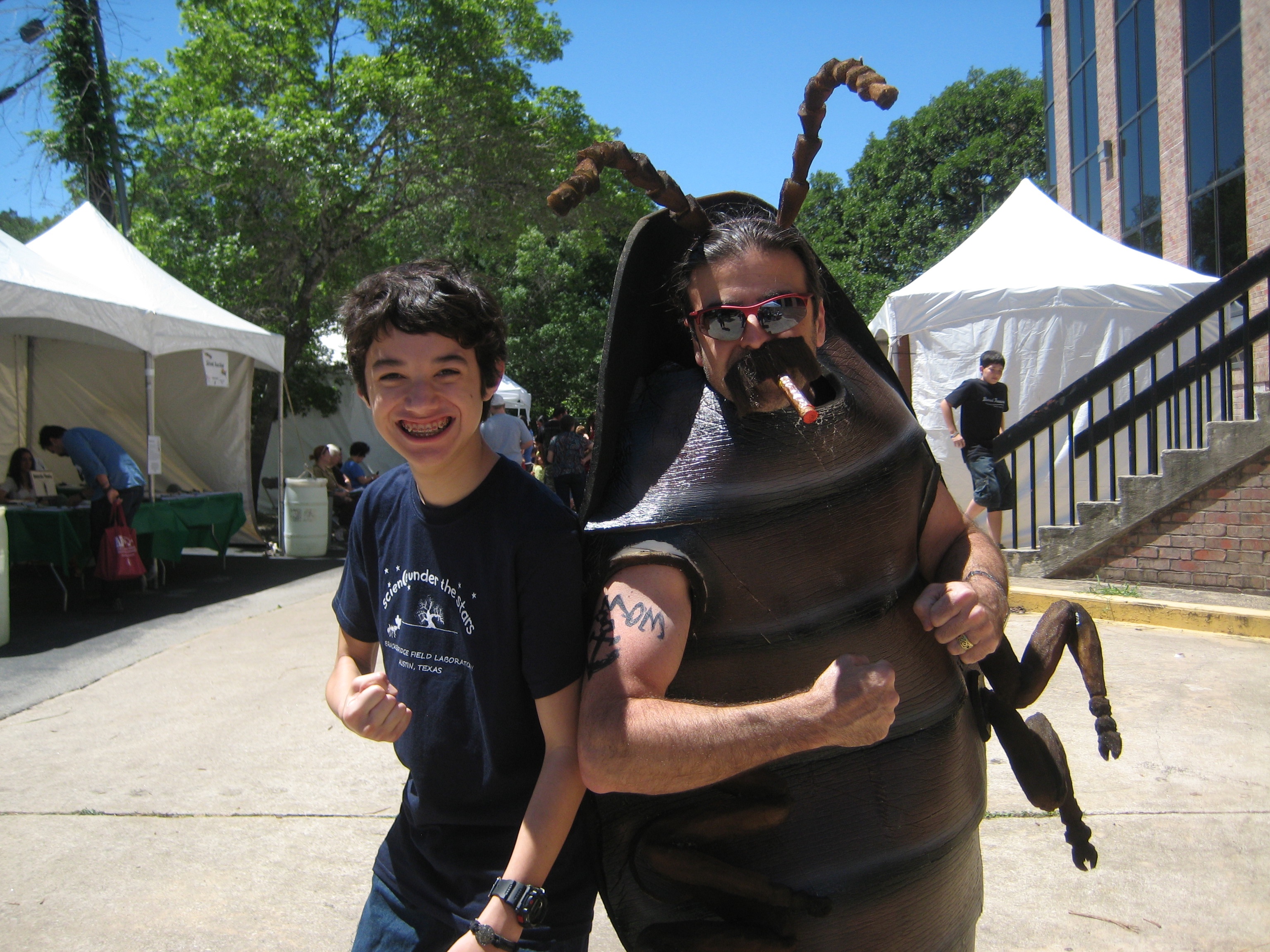
You can see from the picture above that this place had a big bug problem, but that’s a good thing. (Although you can’t see it in this picture, I kept my swatter close by in case this gigantic cockroach got out of hand.)

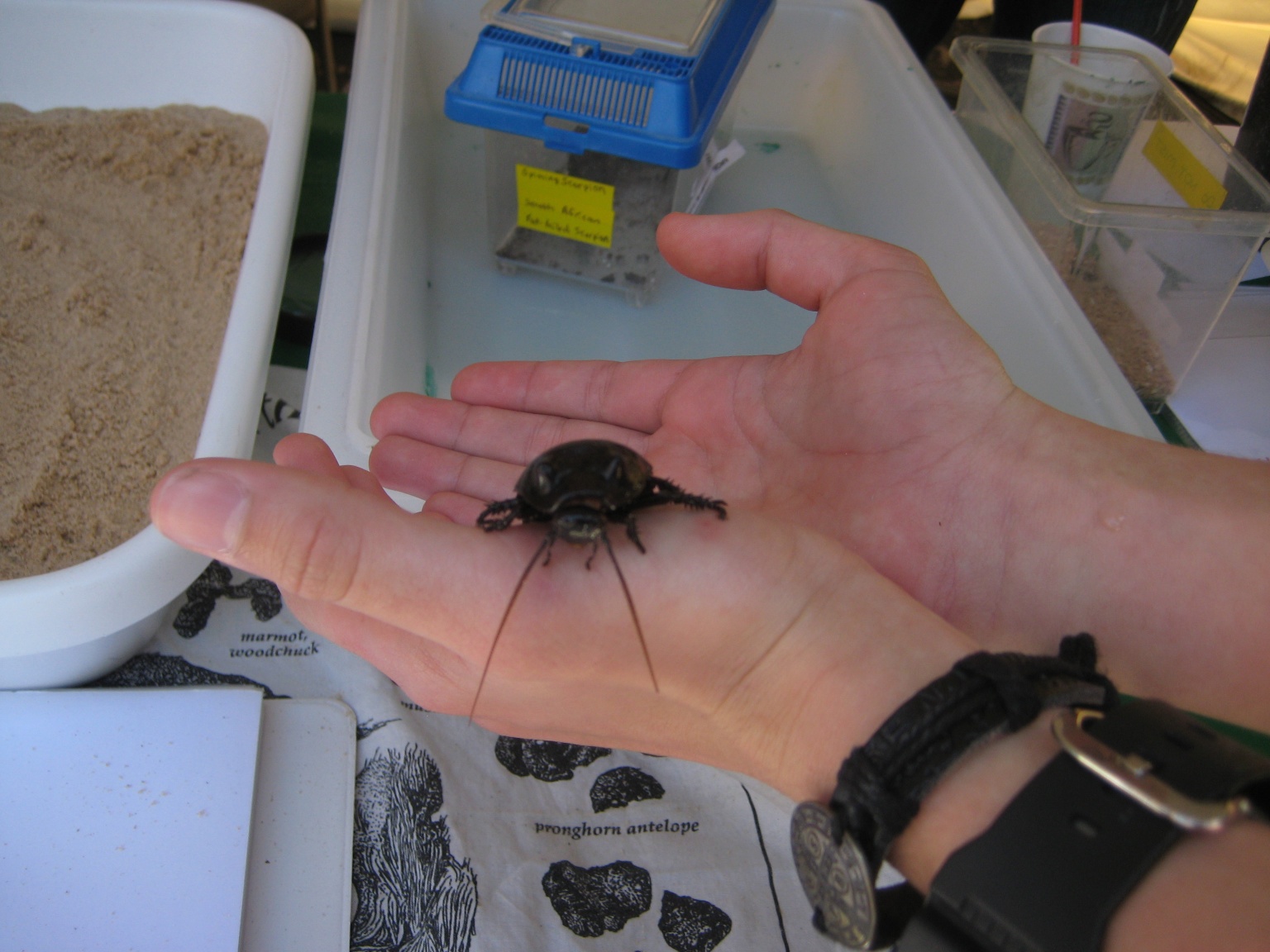
This hissing cockroach was down to size. It was cool holding him because it felt like many dull thumbtacks poking me.

Strangely, it did not hiss for me. I think it was tired of hissing at all the people that came before me. When I put him (it?) back down, it skittered away.

Here I sit next to a homemade bug city in their butterfly garden. It’s really a refuge that everyone can make because there are many places for bugs to hide and burrow in with no fear of being squished.

Magnificent UT Austin insect collection

Dr. Tom Atkinson, research scientist with College of Natural Sciences, took us on a tour of the UT Austin Insect Collection. He was really nice and showed us their extensive collection. Although it’s not as big as Texas A&Ms, he said they’re not trying to have the biggest collection (although they have a lot!), but they are trying to specialize in the insects of this area.

They have wonderful tools for preserving and pinning insects at their field lab.

Commander Ben’s insect collection

I love collecting insects, although I have not formally pinned many of the insects in my collection. After they’ve dried out, I keep my specimens in a plastic box with dividers.

Some of my favorites, I put in small, clear card boxes, and I keep my specimens safe by putting cotton balls around them.
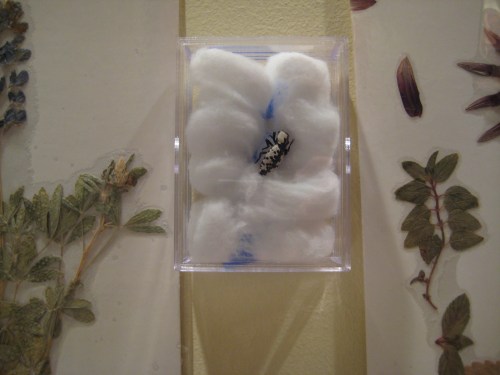
Here’s my “pièce de résistance“, an Ironclad Beetle that I found hanging on a screen door a few years ago. It has an extremely hard exoskeleton, and I learned that you have to use a small drill to pierce the exoskeleton, if you want to pin it. I like keeping it on a wall in my room.

I have many more insects in my collection, but four more that I really like are my:

* Click beetle
* Large walking stick
* Huge assassin beetle
* Unusual tree cricket.

Click beetles and butterflies at UT Austin

Here’s a picture of UT Austin’s click beetle collection. They are really cool because when you try to hold or catch them, they try to get away by clicking and hopping their bodies, almost like a seesaw. They feed on organic material and roots, and you’ll find them in central Texas, so be sure to look for them the next time you’re hunting insects.

Dr. Atkinson showed us a beautiful display of butterflies, but sadly, he said it was not very scientifically useful because the insects were not labeled or identified. Be sure to label the insects in your collection!

He said that everyone can catch the larger bugs, and they have tons in their collection. (Note to graduate students, collect more smaller insects!)

Update: Learn more about North and Central American bark and ambrosia beetles at Dr. Atkinson’s Bark Beetles website.

Beware of food with insects!
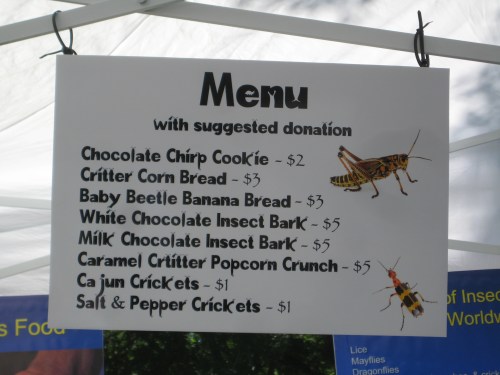
They had tons of different insect food to taste, and a lot were made with crickets. I think that people are more open to eating crickets and not mealworms, especially live ones, as that can make you squeamish. (Take a look at me eating a mealworm at Explore UT.)

They were sold out of the following when I stopped by:

  • Cajun crickets, which were dried, baked, and flavored with cajun spices
  • Salt and pepper crickets, which were also dried and baked, but with salt and pepper

The graduate student who I talked with (and who I met at Explore UT too!) said that the least favorite snacks were the ones where people could see the insects. She said that the critter popcorn crunch, which was caramel popcorn with caramelized beetle larva, was not selling well, probably because it was too easy to see the larva. (I didn’t want it either.)

I didn’t want to eat any because I was still recovering from having all four of my wisdom teeth out earlier in the week…

Cricket spitting contest

But that didn’t stop me from taking part in the cricket spitting contest. At the front of the line, where people were waiting to spit crickets, someone held a container full of crickets that had been frozen, but were thawed out.

I grabbed one of the crickets with my hand, and I was initially wary of putting one in my mouth, but I finally stuffed it in (and went back for a second time too.) I think I made it up to 13 or 14 feet both times without anyone getting hit.

They started out with 1000 crickets, but the activity was so popular that they soon began to run out.

On spider safari

Here I stand with a very nice man, Spider Joe (Joe Lapp). He didn’t like spiders, but preferred insects when he was younger. But he grew to like them and became very knowledgeable about them.

He talked about spiders to our group and asked what’s the difference between insects and spiders? The other kids had a lot of answers, like six or eight legs, but the key answer is that an insect has three body segments: head, thorax, and abdomen. Spiders only have a head and abdomen.

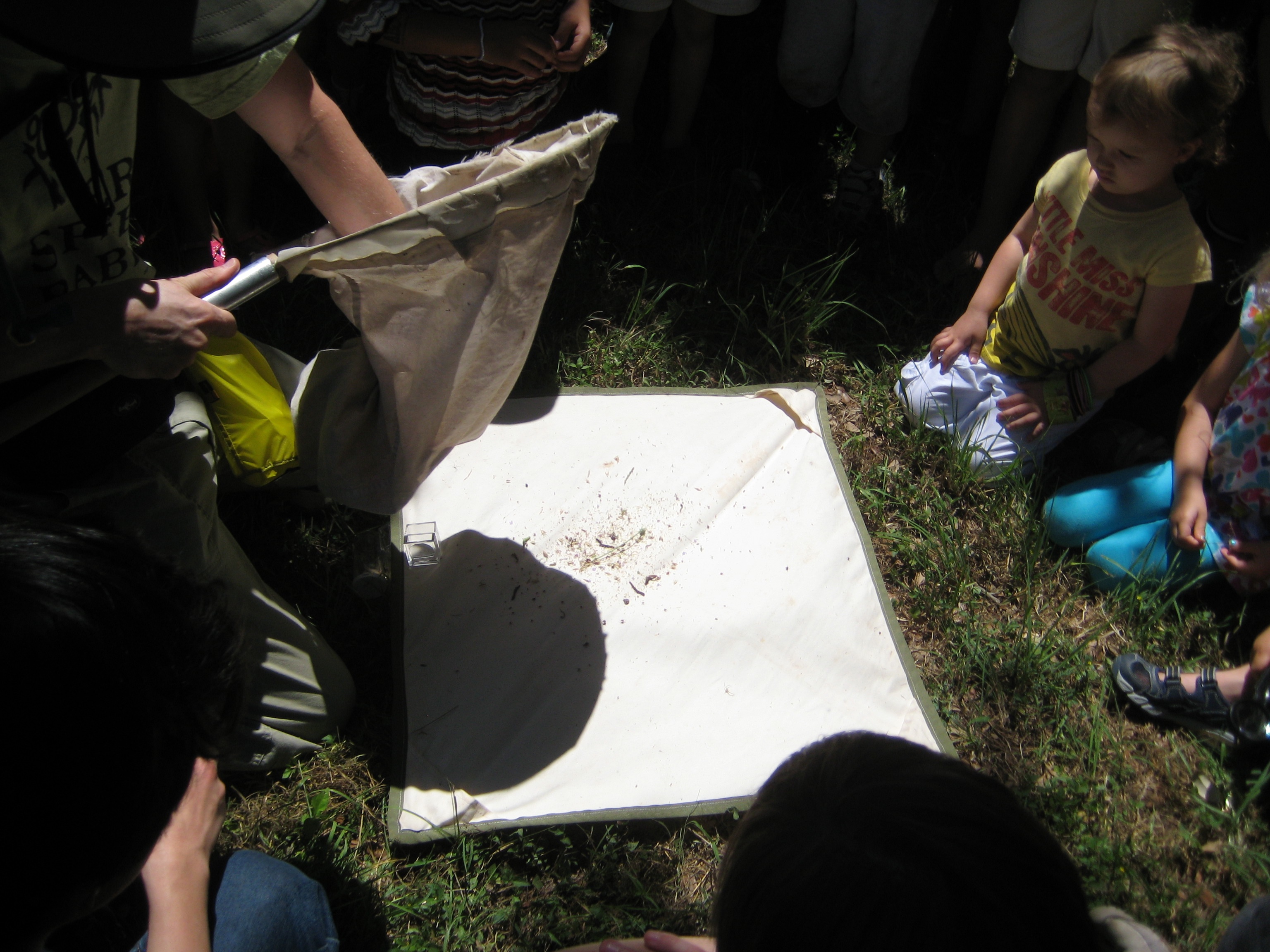
As part of his activity, he walked around through the tall grass with his spider collecting net. He dumped the insects and spiders that he caught on his inspecting canvas. He identified the arachnids that he caught and passed them around in small containers for everyone to see. He mostly caught orb weavers, like Charlotte in Charlotte’s Web. He also found a wolf spider that I liked because it has a cool way of hunting prey. (They don’t wait for the prey to come to them.)

He also showed us a brown recluse in a clear container. It was small and difficult to see, but I was able to make out a fiddle on its back.

Our group walked along a wilderness trail around Brackenridge Field Lab, and Spider Joe stopped along the way to have us look for spiders. In such a wonderfully wooded area, there were a good many spiders. That was a very fun activity. No tarantulas sadly, as I really like tarantulas.

Spider Joe was a really nice man, and if you ever get a chance to get a guided tour from him, jump at the chance.

A secret find!

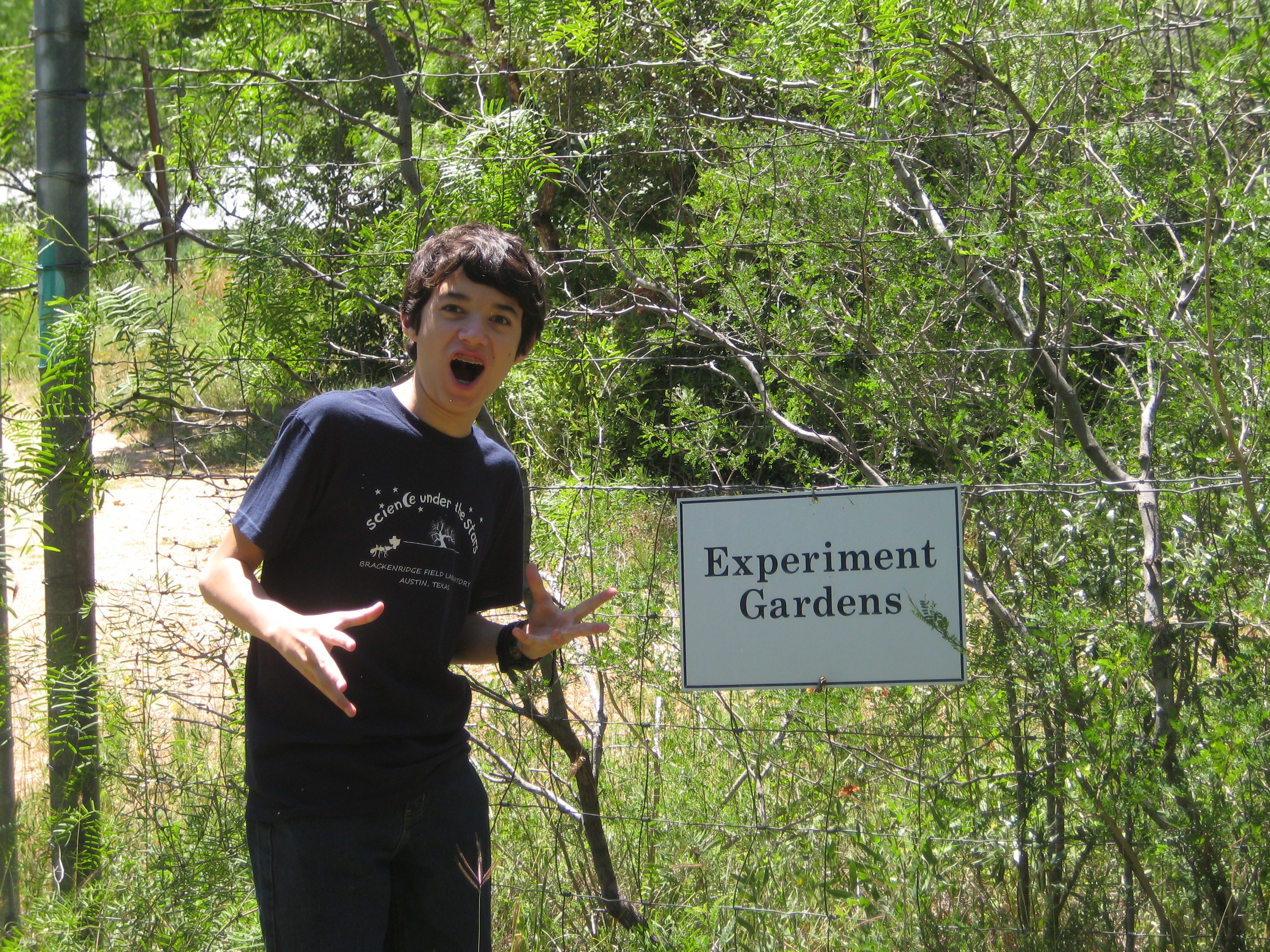
Here I stand by their experimental gardens. Who knows what secret and mysterious creatures are inside! (I took a peek, but it looks like a bunch of plants…hey…wait a minute, was that an invasive?)

I really enjoyed the Insecta Fiesta. The professors and graduate students at the Brackenridge Field Lab did a great job. It was wonderful to be around so many bugs and so many people who loved nature so much.

Your friend,
Commander Ben
Leave a comment

Filed under Brackenridge Field Lab, Click beetle, College of Natural Sciences, Crickets, Dr. Tom Atkinson, Entomology, Hissing cockroach, Insecta Fiesta, Insects, Ironclad beetle, Orb spiders, Spider Joe, Spider safari, Spiders, UT Austin Insect Collection

Native Plant Avengers – Ecosystem’s Mightiest Heroes

Although hopelessly outnumbered by the invasive species Bastard Cabbage, Texas wildflowers assemble their combined strength to battle against the choking monoculture invading their ecosystem.

The loyal heroics of Texas Bluebonnet, the hulking presence of Bitterweed, and the lighting power of Indian Paintbrush bring their native plant diversity together in a desperate fight against their invasive foe.

Learn more about the vile invader Bastard Cabbage with these recent blog posts:

Your friend,
Commander Ben

P.S. Looking for more Avengers action? Don’t miss Marvel’s Avengers movie coming out in May!

Update: Learn more about the Texas wildflowers cast in Behind the Scenes of the Native Plant Avengers Movie Trailer

1 Comment

Filed under Avengers, Bastard Cabbage, Battles with Invasive Species, Bitterweed, Indian Paintbrush, Monoculture, Texas Bluebonnets, Texas Invasives, Texas Wildflowers