Author Archives: invasivehunter

Insurgent Chinese Privet Attempts Invasive Species Comeback

In October 2011, I had a chance to work with biologist Chis Warren and a group of Austin volunteers to help clear out Chinese Privet (Ligustrum sinense) from the Balcones Canyonland Preserve (BCP). I talked about our exploits last year in Titanic Struggle with Chinese Privet Ends with Their Doom.

In August 2012, I returned to the Long Canyon portion of the BCP with volunteers from the Austin Invasive Species Corps to hunt down Chinese Privet plants that were attempting a comeback, such as from the stumps that we cut down earlier or from berries that were buried underground.

It’s important to remove Chinese Privet and other invasive species from the BCP to help protect the native habitat of the endangered Golden-Cheeked Warbler.

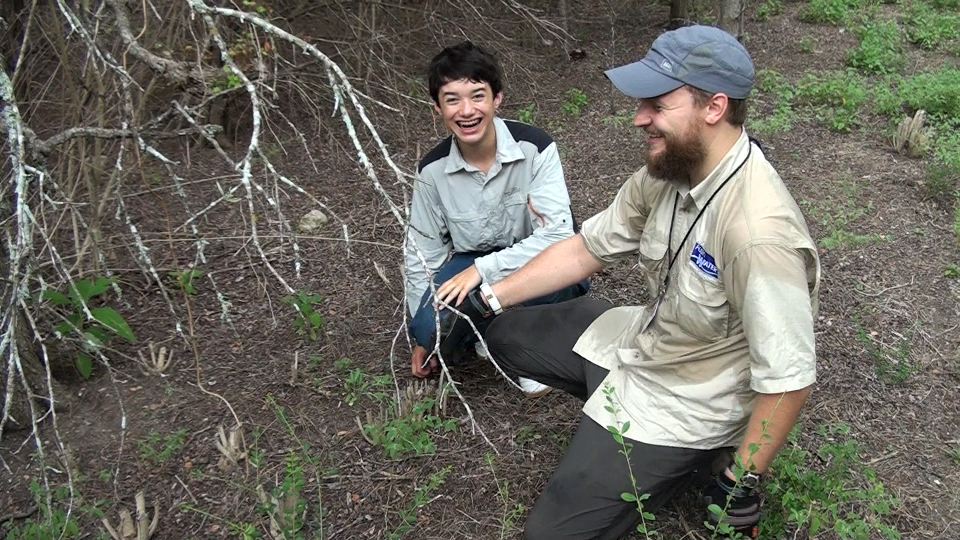
Commander Ben and biologist Chris Warren taking a break from battling Chinese Privet.

Mr. Warren talked with me about the progress that they made since last year, and in the video from our August 2012 adventures, he describes the Chinese Privet’s distinguishing features.

For example, did you know that in Central Texas, most invasive plants have leaves and branches that are strongly opposite from each other, and many native plants have alternating leaves and branches?

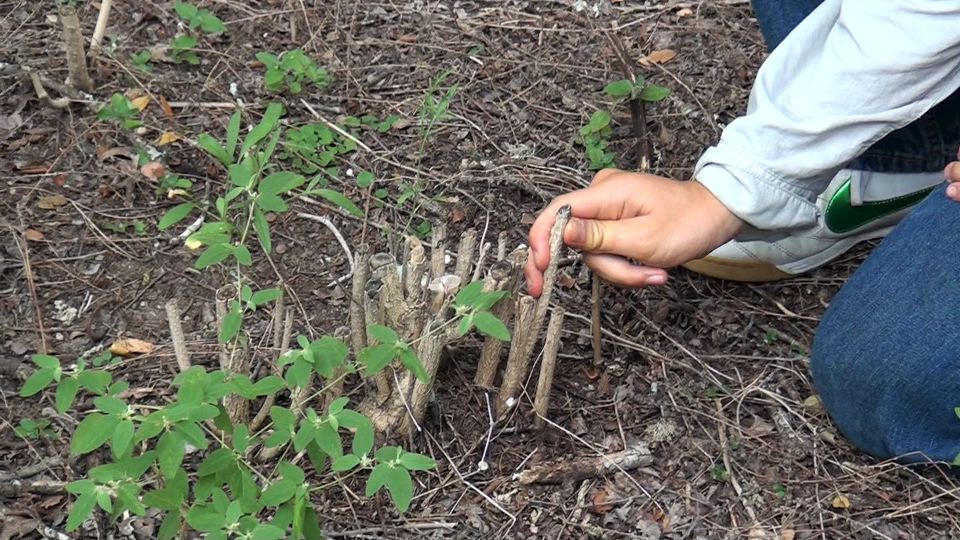
Cut stump of Chinese Privet, an invasive species on the Balcones Canyonland Preserve.

In the video, you’ll also learn why invasive species have a built in advantage over natives, such as cheap, quick growth and the lack of natural predators.

Learn more about my past adventures on the Balcones Canyonlands Preserve:

The Austin Invasive Species Corps Wants You

Would you like the enjoyment…ah…satisfaction of protecting your native ecosystem and pulling an invasive plant out of the ground with a weed wrench or other nature defense weapon of your choice?

You can!

On Saturday, September 29th, join Austin Wildlands and the Austin Parks Foundation to help clear invasive species from the BCP and around Austin as part of National Public Lands Day. You can also help to restore Black-capped Vireo habitat in the BCP, help prairie seeding restoration on Water Quality Protection Lands in Northern Hays County, and many other great volunteer activities!

Update: Because of heavy rain expected on September 29, the clean up for National Public Lands Day was postponed to October 6.

Hope to see you there!

Your friend,
Ben

2 Comments

Filed under Austin Invasive Species Corps, Austin Parks Foundation, Balcones Canyonlands Preserve, Barton Creek Greenbelt, BCP, BCP wildland conservation, Black-capped Vireo, Chinese Privet, City of Austin, City of Austin Wildland Conservation Division, City of Austin’s Wildland Conservation Division, Endangered Species, Golden Cheeked Warbler, Invasive Plants, Invasive Species, Ligustrum, Long Canyon, Mr. Chris Warren, National Public Lands Day 2012, Water Quality Protection Land, Weed wrench

If You Have Dyslexia, Make The iPad or the iPhone Speak

“Speak Selection” Function on the iPad

Many thanks to my fantastic readers for the outpouring of support about my dyslexia posts!

Over the last few days, I’ve received some emails with technology questions so I wanted to take the chance to answer them here on my blog.

Today, I want to share a short tutorial about how to make the iPad or the iPhone “speak”. This function is called “Speak Selection” and is a great text reader function for anyone who has dyslexia.

“Speak Selection” can be easily accessed by clicking on the “Settings” App icon.

The “Settings” App Icon on the iPad Screen

For me, as someone who does have dyslexia, being able to have a good text reader is essential.  I use a text reader tool on my laptop (I’ll talk about that another day), the iPad and the iPhone.

It really is as easy as 1, 2, 3.

Turn on Speak Selection for the iPad

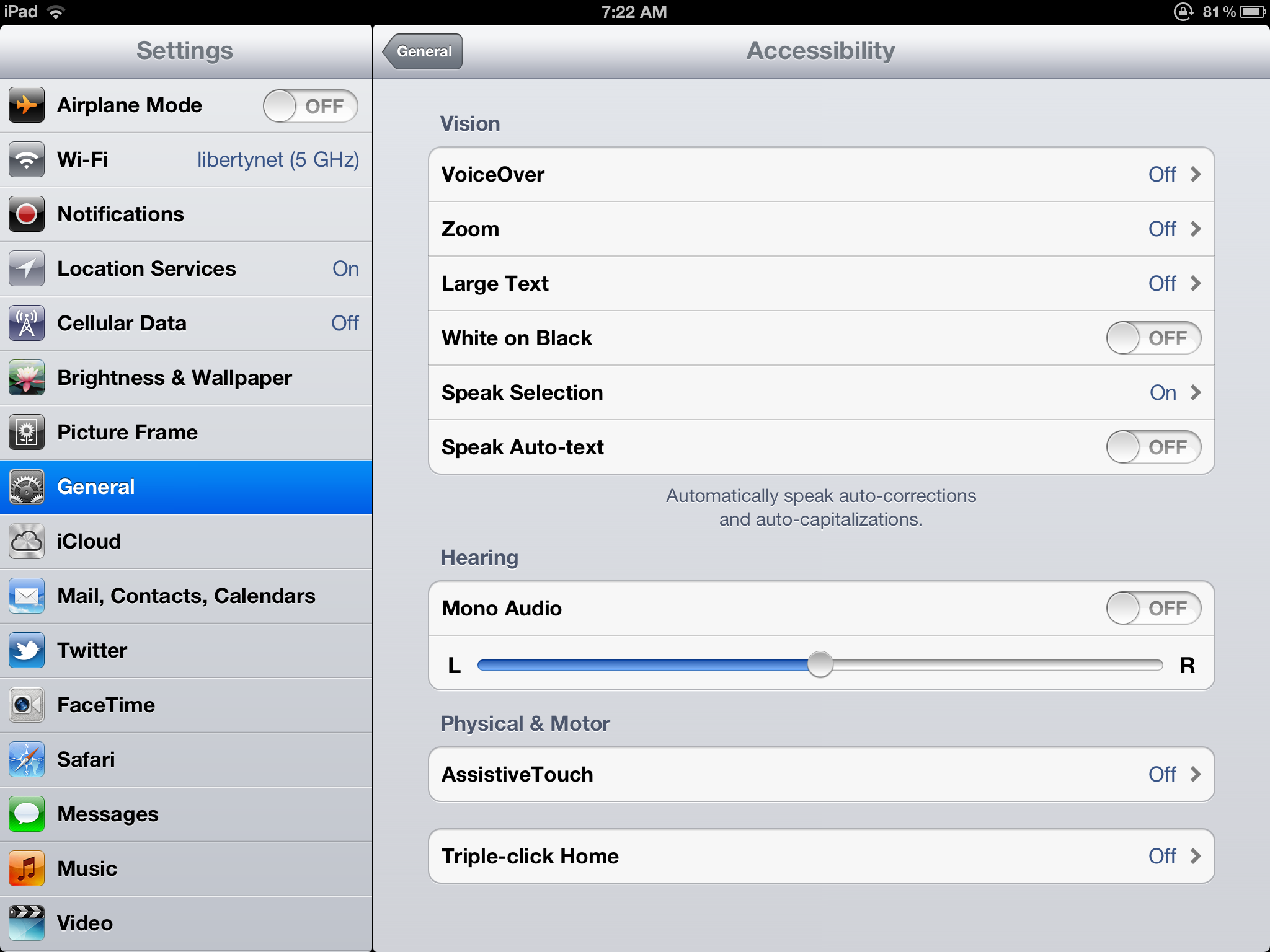
First, tap on the Accessibility bar.

Tap on the “Accessibility” Bar within “Settings” on the iPad

Second, tap on the “Speak Selection” bar.

Tap on the “Speech Selection” Bar on the iPad Screen

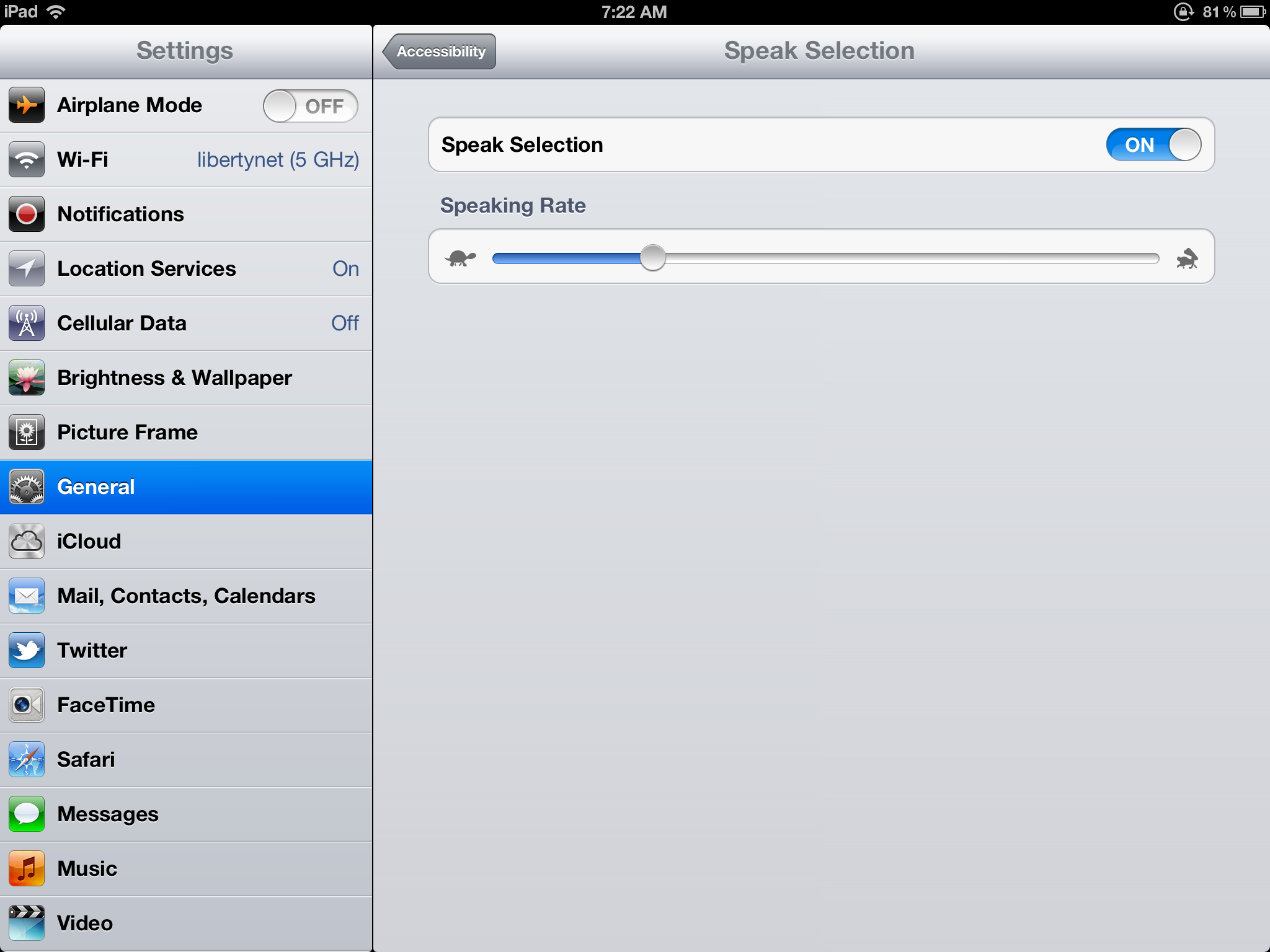
Third, after tapping on the “Speak Selection” bar, tap on the “OFF” icon to turn Speak Selection “ON”. Next, adjust the “Speaking Rate” at which you want the voice to speak – slow is to the left (the turtle icon) and fast is to the right (the hare icon).

I like to have my iPad read a bit on the faster side.  I can’t really say why, except for the fact that my brain seems to be able to process it easily.  Maybe it’s  just had lots of practice processing the spoken word from listening to so many wonderful books all these years.   Thanks Learning Ally!

Tap on the “OFF” icon to turn Speak Selection “ON”. Next, adjust the “Speaking Rate” on the iPad screen.

And now you’re done.  You’re iPad should be able to speak to you anytime you want. 😉

When you want to have your iPad speak to you, just highlight the text you want to read and when the screen instruction appears to “copy” or “speak” just tap on “speak”. That’s it!

Just highlight the text you want to read and then tap on “Speak”.

Turn on Speak Selection for the iPhone

When it comes to activating the “Speak Selection” function on the iPhone, it’s as equally easy as it is on the iPad.  Again, it’s just 1, 2, 3.

First, tap on the “Settings” icon app on the iPhone screen and then tap on the “Accessibility” bar within the Settings app.

Tap on the “Accessibility” bar on the iPhone screen within the “Settings” App.

Second, tap on the “Speak Selection” bar.

Tap on the “Speak Selection” Bar on the iPhone screen.

Third, after tapping on the “Speak Selection” bar, tap on the “OFF” icon to turn Speak Selection “ON”. Next, adjust the “Speaking Rate” at which you want the voice to speak.  As with the iPad, it’s the same on the iPhone – slow is to the left (the turtle icon) and fast is to the right (the hare icon).

Tap on OFF Button to turn “Speak Selection” ON, then adjust the reading speed.

Highlight the text you want to read on the iPhone, then tap on “Speak”.

And 0nce again, now you’re done.  You’re iPhone will speak to you anytime you want. 😉  All you have to do is highlight the text you want to read and when the screen instruction appears to “copy” or “speak” just tap on “speak”. You’re all set!

Be sure to visit the Dyslexia page of my blog to read my other posts including:

Your friend,
Ben

4 Comments

Filed under Dyslexia, iPad, iPad Speak Selection, iPad Tutorials, iPhone Speak Selection

Top 3 Sites for Invasive Species Hunters During Austin Museum Day

Commander Ben with a Giant Reed at the Lady Bird Johnson Wildflower Center

Austin has a lot of great museums to learn about science, the arts, and more! The annual Austin Museum Day will be this Sunday, September 23, and it’s a great way to get to know the exhibits and participate in fun activities all for free!

All the museums will have great events, and if you’re an inspiring invasive hunter, you’ll find the following museums a lot of fun for learning about science and nature, including how to protect our native ecosystem against invasive species.

1. Lady Bird Johnson Wildflower Center

The nice thing about the Wildflower Center is that you can see the native plants up close. Most of the plants have name tags along with some identifying information which makes it very easy to learn how to identify them when you see them in the wild.

2. Austin Nature and Science Center

This is a great place with lots of live animals which represent native animals species you can find right here in the wilds of central Texas!

And something really special about this place is that you can bring a piece of the natural world that you may have found at your own home and leave it with this museum. And for doing this, you will receive credits that allow you to browse what other kids have traded-in.

But not only do you get to browse, you can use your credits to take home a treasure that another kid has traded-in. These are basically free souvenirs! 😉  And while you’re touring the Austin Nature Science Center, see if you can spot a Giant Reed!

3. Texas Natural Science Center

Be sure to stop by the Texas Natural Science Center and enjoy Family Fossil Day from 1:00 pm to 4:45 pm. Maybe some of these fossils were invasives back in their day! 🙂

***

And of course next month, you’ll want to be part of the Invasive Hunter Academy to complete your training at the UT Austin Environmental Science Institute’s next “Hot Science. Cool Talks.” presentation on October 26, 2012.

Your friend,
Ben

Leave a comment

Filed under Austin Museum Day, Austin Nature and Science Center, Family Fossil Fun Day, Invasive Hunter, Invasive Hunter Academy, Invasive Species, Lady Bird Johnson Wildflower Center, Texas Natural Science Center, Wildflower Center

How To Make Paper Journals Dyslexic Friendly

My Notebook, Pen, and iPad

It may seem funny to talk about technology in one breath and then mention pen and paper in the other, but they really can work together. For most everything I do, I use some form of technology – my Victor Reader Stream, a laptop, an iPad or an iPhone – but sometimes , well almost daily actually, I still enjoy writing something down into my old-fashioned journal.

My journal is a small leather three-ring binder with lined paper which is actually three generations old. I found it tucked away in my dresser draw in my room where my Mom had saved it for me. She used it as a kid and her Mom used it before her.  I think that fact that it was old and looked different than other notebooks was part of it’s appeal.  Even though I am a 21st century kid, I like old-fashioned things.

Handwriting and Spelling – Always a Challenge

Mind you, this was not something I took to immediately. Having dyslexia, compounded with dysgraphia, has always made handwriting and spelling very challenging for me. But I loved the idea of having a private journal where I could scribble (literally!) my secret notes. I think it started around the time I read (thank you Learning Ally!) the first book in The 39 Clues Series.

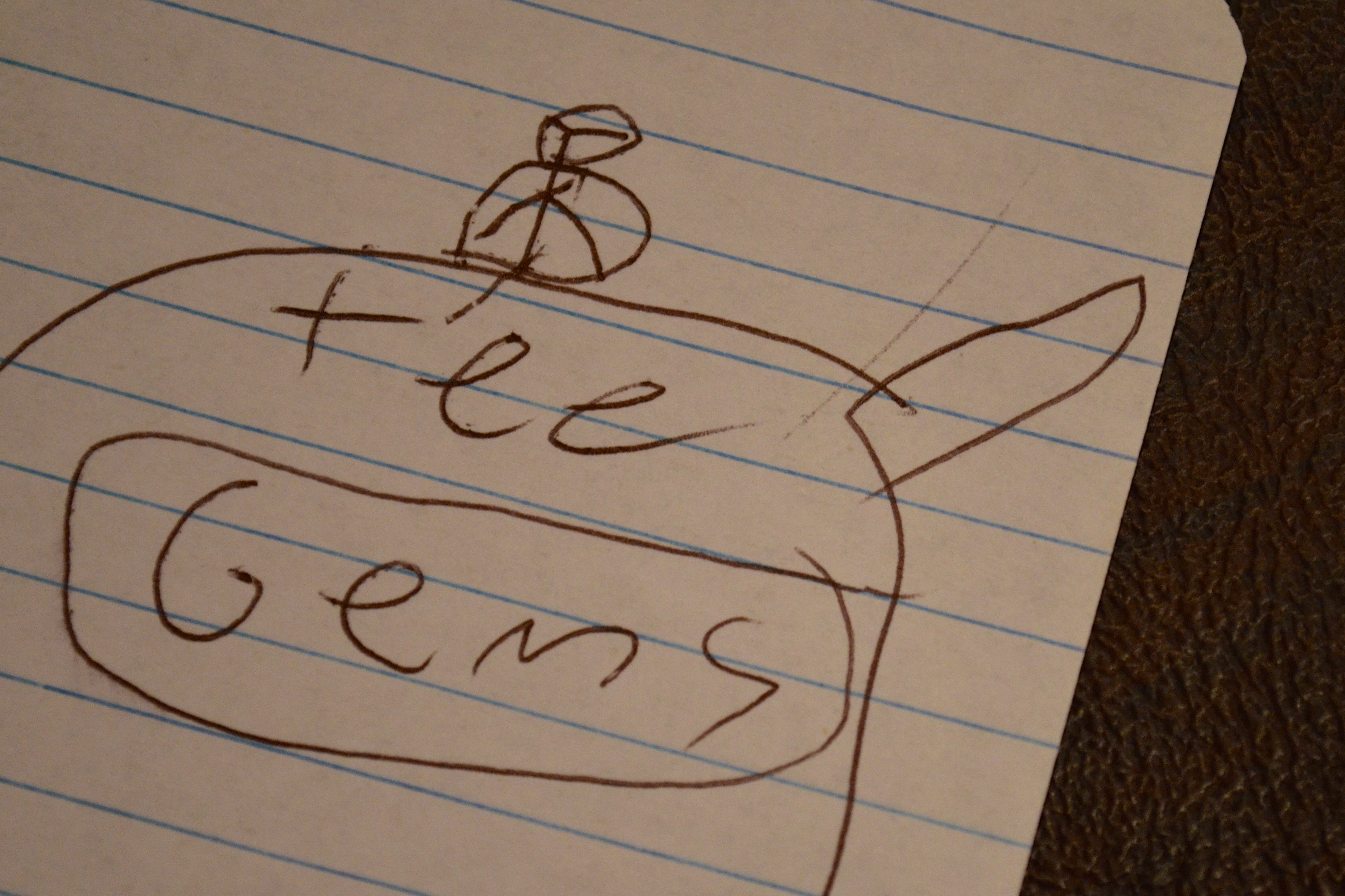
I was jotting down “clues” in my journal, ripping them out, and hiding them around the house. (My parents are still finding them and that was a few years ago!)  They were far from perfect, often misspelled notes, usually with a hand sketched picture for clarification, but suddenly writing was fun and not a chore.

My early attempts at writing – a “Clue” from The 39 Clues.

How Technology Can Help

But where my writing style differs from most kids, is that I use a combination of paper, pen…and technology to jot down my thoughts.  If I’m at home, I’ll prop the iPad in front of me as I write in my journal.  I start to write, and as I think of a word that I don’t know how to spell, I use the iPad Dictation Mode to record it.  The word will pop up on the screen and then I’ll use the text reader to read it back to me to make sure it’s the right word that I want to use.  If it is, then I copy it into my journal.
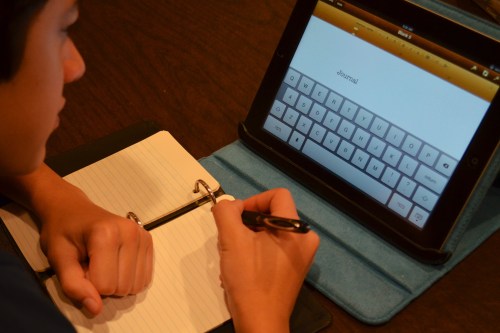
Here I am getting ready to write in my journal with the iPad ready to help.

The reason that I have the iPad read the word back to me is because  – although it’s a great tool – it’s not perfect.  Sometimes I might dictate a word, but the iPad hears it slightly differently and puts a different word on the screen…but I can’t always read it well enough to tell the difference.  Having the iPad read it back to me lets me know that the iPad understood me correctly and I am copying the right word that I want to use.

Write or Right?  Which One Is it?  How “ing” came to the rescue.

Oh!  But this just made me think of something important.  What about words that sound the same but are spelled differently such as “write” and “right”! How does the iPad know what to “write” so that I use the “right” word.  Well, it doesn’t.  But that’s OK.  Let me explain.

I may not know that the spelling of a same sounding word with different meanings might have different spellings, but I make the educated guess that it does, so I usually add “ing” to the word I dictate.  If I say “writing”, the iPad will usually not type out “righting”, (yes, “righting” is a word but it is less common, so the iPad will usually go with the more common word which is usually the word I’m looking for), so I know I have the “right” word to “write”.

The same is true with words like pear and pare.  I would have no idea how to spell either of these, and I wouldn’t even really know that they are spelled differently, but if I use my trick and add “ing” to the word, the iPad will type paring not pearing.  So then I know that the word on my iPad screen means “a pair” and the other is a fruit.  Clever, huh? 😉

But It’s All Worth It

Having to use the iPad to help me write in my journal may be an extra step compared to what other kids might have to do, but I actually find it fun because it gives me the freedom to be able to write down my own thoughts, in my own hand…and without having to call out, “Mom, how do you spell…”

And it’s a much more fun way to practice handwriting than writing the same letter over and over again.  And speaking of practice, keeping my journal has actually helped to improve my handwriting.

And one other thing I would like to share that you might be wondering about.  Why do I use a pen instead of pencil?  Wouldn’t it be easier to erase, if I used a pencil?  Well, that’s true but I like a pen for two reasons.

One, a pen is more scientific.  Scientist always write in pen in their scientific notebooks for the very reason that it can’t be erased.

And second, I simply like the weight of a pen – preferably a substantial, thick, heavy weighted pen as opposed to a light weight pencil.  It just makes writing easier for me.  I thought it was just me, but I learned that people with dyslexia often do finding writing easier when their writing instrument of choice is weighted.

So if you struggle with handwriting like me, why not try writing in a journal.  You might find it fun.  And your handwriting might improve as well.  I love the fact that I can neatly (relatively!) write my name and phone number on a piece of paper and hand it to a girl proudly! 🙂

Be sure to visit the Dyslexia page of my blog to read my other posts including:

Your friend,
Ben

14 Comments

Filed under Dysgraphia, Dyslexia, Handwriting, Learning Ally, Victor Reader Stream, Weighted Pen

Vote for my SXSWedu Presentation: What Invasive Species Taught Me About Dyslexia

I submitted a presentation proposal for the SXSWedu 2013 conference, that will be held from March 4-7 in Austin, Texas. I’ll talk about how I use technology to work with my dyslexia and use my strengths to help others and our native ecosystem at the same time.

Since SXSWedu takes into account public voting in their PanelPicker tool to determine what presentations to choose for their conference, I hope that you’ll vote for my presentation! 🙂 Voting ends on October 5.

Presentation Abstract

The Giant Reed and Elephant Ear. It was a lot easier to take down these invasive species than to read about them. I longed to battle these exotic plants in nature than confront them on the printed page, where they had the advantage. Rather than give them the upper leaf, I embraced technology to discover more about my opponents and learn how to defeat them.

Join me as I share my journey as Commander Ben, The Invasive Hunter, and describe the tools and techniques I use to protect my native ecosystem and tackle my dyslexia.

It’s been a hard path, but I’ve learned to work with my dyslexia and use my strengths and unique teaching style to help others and our native ecosystem at the same time. I’ll share with you new ways to help your dyslexic students, so they can become Invasive Hunters both on and off the printed page!

Thanks a bunch! 🙂

Be sure to visit the Dyslexia page of my blog to read my posts about dyslexia including:

Your friend,
Ben

2 Comments

Filed under Dyslexia, Invasive Hunter, Invasive Species, PanelPicker, SXSWedu, What Invasive Species Taught Me About Dyslexia