Tag Archives: Lady Bird Johnson Wildflower Center

Record Sightings of Invasives and Attend the Next Invasive Species Eradication Workshop

Reported locations of the Giant Reed (Arundo donax) around Lady Bird Lake in Austin, Texas.

You too can join the fight against invasive species by attending the next Invasive Species Eradication workshop. This workshop helps you become a more active citizen scientist by teaching you about invasive species and how to report them.

I recorded my first invasive species, my nemesis the Giant Reed (Arundo donax), early last year with my GPS, pencil and paper, and digital camera, and I reported my information on the Texas Invasives website for other scientists to understand how invasive species were spreading.

Many other citizen scientists across Texas have reported their invasive sightings too. For example, View a map of the reported Giant Reed locations in Texas.

We won’t always need pencil and paper. The May 2012 iWire newsletter talks about a new Invaders of Texas mobile app to report invasive species. The Invaders of Texas program received an empowerment grant from the Motorola Foundation to develop a mobile application for Android devices.

Attend the next invasive species workshop in Austin

These invasive species workshops are held around the state throughout the year, and the next workshop in Austin will be on Saturday, June 16th, at the Lady Bird Johnson Wildflower Center.

I look forward to attending this upcoming workshop to learn about the latest techniques for identifying and reporting invasives and meeting other citizen scientists. I want to learn more about how to use an iPhone to easily report invasives when I see them. The workshop will also cover the new Eradication Calculator, which will help to organize and coordinate removal efforts.

Learn more about this invasive species workshop and others around Texas at Texas Invasives workshops or contact Ms. Jessica Strickland, the Wildflower Center’s invasive species manager.

Your friend,
Ben
1 Comment

Filed under Android, Eradication Calculator, Giant Reed, Invaders of Texas, Invaders of Texas Citizen Science Program, Invasive Species, iPhone, Jessica Strickland, Lady Bird Johnson Wildflower Center, Motorola Foundation

Invasive Hunter Academy joins Nature Nights at the Wildflower Center to Teach Kids about Invasive Species

Since I was very young, I’ve always enjoyed Nature Nights at the Lady Bird Johnson Wildflower Center in Austin, Texas.

Nature Nights are a great way for families, especially younger kids, to learn about wildlife, plants, and the ecology and ecosystem of Central Texas. On the following Thursdays from 6-9 p.m. this summer, you can listen to presentations, go on hikes, and take part in nature activities and crafts.

2012 Summer Nature Nights Schedule

  • June 21: Butterflies
  • June 28: Hummingbirds
  • July 5: Power of Plants
  • July 12: Birds of Prey
  • July 19: Bats
  • July 26: Snakes

Admission to the Lady Bird Johnson Wildflower Center is free during Nature Nights. It’s a ton of fun for kids and adults too, and kids under 12 can also get a cool free gift from the center’s store.

Become an Invasive Hunter

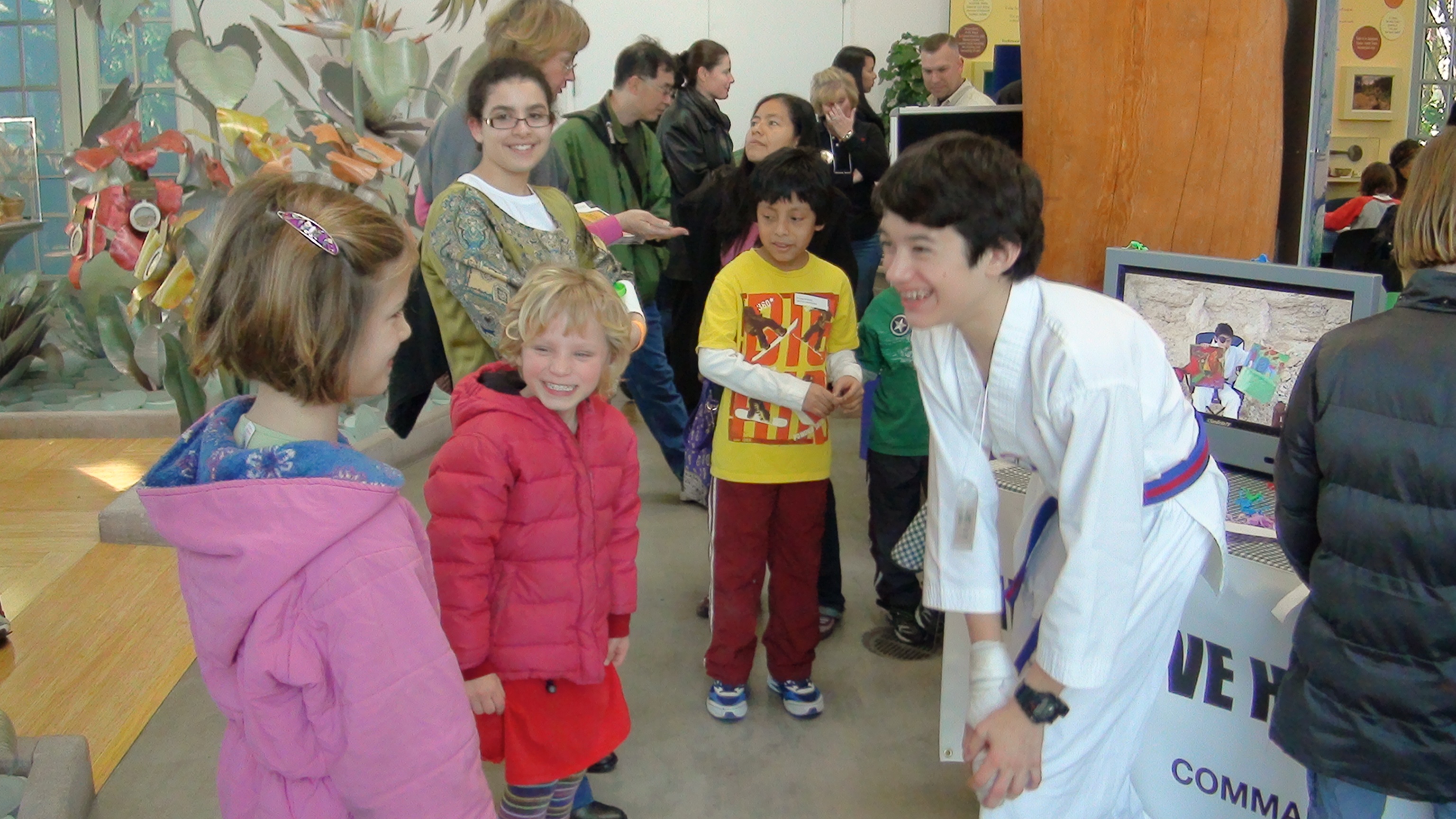
I’m bringing the Invasive Hunter Academy to Nature Nights on Thursday, July 5, during the Power of Plants event.

I created the Invasive Hunter Academy as part of Kids’ Day during National Invasive Species Awareness Week (NISAW) at the U.S. Botanic Garden in Washington D.C. earlier this year.

As part of the academy, I’ll teach you how to spot invasive plants, how to defeat your enemies with your invasive hunter moves, and how to create an action scene to capture your battle with invasives.

Learn more about the Invasive Hunter Academy:

Thank you Ms. Alice Nance, Wildflower Center Education Manager, for inviting me to be part of your wonderful Nature Nights event!

I hope to see you during Nature Nights, and be sure to join me on July 5th to learn how to become an Invasive Hunter!

Your friend,
Ben

Leave a comment

Filed under Invasive Hunter Academy, Invasive Species, Lady Bird Johnson Wildflower Center, Ms. Alice Nance, National Invasive Species Awareness Week, Nature Nights

Giant Redwoods and Lowly Ferns Nurture an Ancient Ecosystem

It’s been a few days since my last blog post, and I wanted to assure you that I haven’t been captured by invasives. I was in California enjoying the wonderful weather and the giant Redwoods.

Hiking through the Lady Bird Johnson Grove Nature Trail

Loving nature, as I do, I really enjoyed hiking the trails through the Redwood trees in the Redwood National Park. I especially liked the Lady Bird Johnson Grove Nature Trail because it reminded me of my home state of Texas and our wonderful Lady Bird Johnson Wildflower Center.

It’s amazing how old the Coastal Redwoods (Sequoia sempervirens) can get with the larger trees in the park dating back 600-700 years ago. The giant trees started growing when the Aztecs and Mayans ruled Central America, well before the first Pilgrims arrived from the Mayflower.

It’s also shocking how large they can get with some growing over 360 feet. By comparison, my arch nemesis, the Giant Reed (Arundo donax), can grow up to 20 feet. That means that it would take at least 18 of these invasive plants on top of each other to reach the top of one of the Giant Redwoods. (I guess the Giant Reed is not so giant after all!) The Redwoods are the largest trees on the planet.

When I was at the lower edge of the trail where loggers had clear cut the Redwoods many years ago, there were no large Redwoods, but there were smaller ones and other fir and hemlock trees that had grown up around the stumps of the older trees. They were starting to work together to build another ancient forest of trees. Redwoods can grow from seedings or from burls at their base.

In other areas, it was sad to see some Redwoods so badly burnt, but they were still alive. They are hardy trees, with tannin-rich bark that resists insects, and that’s why they were so coveted by people.

The Redwoods like to grow in Northern California because of the climate, the fog, and the heavy winter rains. The fog is important to the trees because they get a lot of their moisture from the fog during the dry summer months.

Ferns pioneer the way

I found the ferns that grew around the Redwoods amazing because I love pioneer plants. They’re one the first plants to come in after a fire or other disasters. There haven’t been any large fires in the Redwoods lately, but the ferns are a key part of the forest ecosystem. Ferns reproduce by spore instead of seed, and they love the foggy wet weather along the Northern California coast.

There are many kinds of ferns and without a careful eye, they can look similar to each other. At the National Park Visitor Center, I picked up a book called Pacific Coast Fern Finder by Dr. Glenn Keator and Ms. Ruth Heady.

This handy pocket book uses dichotomous keys to help identify ferns. The technique of dichotomous keys asks at least two description questions at each step to help you identify what you’re studying.

For example, here’s a simple dichotomous key to help identify birds in central Texas:

Step 1.
If the bird has a red chest, go to step 2.
If the bird is gray and white, you sighted a Mockingbird.

Step 2.
If the bird has brown wings, you found a North American Robin.
If the bird is all red, you discovered a male Cardinal.

One of the ferns that I saw was the Common Sword Fern (Polystichum munitum). Turning the leaves over, you can really see the sorus, which are clusters of sporangia that bear the spores.

Your friend,
Ben

4 Comments

Filed under California, Common Sword Fern, dichotomous key, Giant Reed, Lady Bird Johnson Grove Nature Trail, Lady Bird Johnson Wildflower Center, Pioneer plant, Redwood National Park, Redwoods

The Unstoppable, Invasive Bastard Cabbage

Commander Ben gives Bastard Cabbage the business

There has been A LOT of interest in Bastard Cabbage (Rapistrum rugosum) lately.

If you travel along the roads in Central Texas and you don’t know about invasive species, you might think that the Bastard Cabbage is a nice, big wildflower on the roadsides. It’s not. It’s a terrible invasive plant that causes havoc by overrunning and towering over all the Texas wildflowers. The seedlings of the native plants don’t get light, and they die or can’t sprout and the Bastard Cabbage takes over, creating a monoculture.

Once you know what the plant looks like, you’ll see it everywhere. Instead of beautiful reds, blues, and other colors from our diverse native wildflowers, you’ll just see a suffocating blanket of yellow mustard colored flowers.

Is it unstoppable?

Dr. Damon Waitt, Senior Director and Botanist at the Lady Bird Johnson Wildflower Center, had a popular interview with Mr. Jim Swift on KXAN TV last month, and during the interview, Dr. Waitt said that he was very worried that it would take over Texas roadsides and fields and overwhelm the native species.

His interview inspired me to learn more about this terrible invasive, and I wrote a blog post about it, “Bastard Cabbage Fouls Texas Bluebonnets“. I’m amazed and happy to see the heavy web traffic that I’ve received from this post. It’s great that everyone wants to learn more about this invasive plant!

Learn more about Texas invasives with the iWire newsletter

The March issue of the iWire newsletter also talks about this invasive plant with their “Hello Bastard Cabbage. Goodbye Bluebonnets.” article. You can learn what you can do to help get rid of Bastard Cabbage too.

And thank you iWire for talking about my “Invasive Hunter Academy” for Kids’ Day during National Invasive Species Awareness Week in Washington D.C. in your March 2012 and February 2012 issues!

The February issue also introduces, Ms. Jessica Strickland, the new the Invasive Species Program Coordinator at the Lady Bird Johnson Wildflower Center. I was happy to meet her over Spring break. She was very nice and welcoming to me, but the invasive species better watch out!

If you don’t already get iWire, I encourage you to subscribe to this monthly e-newsletter to learn the latest news about invasive plants and pests in Texas each month.

Commander Ben…signing off

Update: See Native Plant Avengers – Ecosystem’s Mightiest Heroes – battle Bastard Cabbage

Leave a comment

Filed under Bastard Cabbage, Damon Waitt, Invasive Hunter Academy, iWire Texas Invasives Newsletter, Jessica Strickland, KXAN, Lady Bird Johnson Wildflower Center, National Invasive Species Awareness Week, Texas Invasives

Bastard Cabbage Fouls Texas Bluebonnets

Commander Ben beseiged by Bastard Cabbage

What a nice surprise to see Dr. Damon Waitt on TV last night! Dr. Waitt is the Senior Director and Botanist at the Lady Bird Johnson Wildflower Center.

He was talking about Bastard Cabbage (Rapistrum rugosum), also known as Mediterranean Mustard. It’s a terrible invasive species that is overrunning Texas wildflowers, especially our beloved Texas Bluebonnets.

I first learned about Bastard Cabbage from him last fall in my video interview with him at the 2011 Texas Invasive Plant and Pest Conference. He said that this plant was the invasive species that really worried him.

Seeing Dr. Waitt interviewed by Mr. Jim Swift on KXAN reminded me of that plant, and I had to go out today to learn more about it.

Invasive Species Create Terrible Monocultures

Bastard Cabbage crowds out the wonderful Texas bluebonnets and creates a terrible monoculture. It towers over the bluebonnets, and the rosette at the base of the plant and long tap root steal resources that could have gone to the native Texas wildflowers.

They have a long stem and small yellow flowers. When I saw it when I was younger, I thought it was a native Texas wildflower.

Fight Back Against this Invasive Plant

In the KXAN article, Dr. Waitt said that with enough seed, Indian Blanket wildflowers might be able to compete with this invasive plant, but that’s a hard fight to win.

Bastard Cabbage overruns Texas Bluebonnets along highway 360 in Austin, Texas

Dr. Waitt said it’s best to hand pull Bastard Cabbage. I did my part pulling some up on highway 360 in Austin, and I took some down with my moves from the Invasive Hunter Academy. I also took a plant sample for my herbarium.

He said that on a 10 point worry scale, he’s at a 9.5. If Dr. Waitt’s worried about our Texas Bluebonnets, we should all be worried too!

Thanks, Dr. Waitt, and the Texas Invasives website for teaching me about this terrible invasive!

Your friend,
Commander Ben

Update: Video: See Native Plant Avengers – Ecosystem’s Mightiest Heroes – battle Bastard Cabbage

Update: Bastard Cabbage Takes Over Texas Wildflowers

1 Comment

Filed under 2011 Texas Invasive Plant Conference, Bastard Cabbage, Damon Waitt, Herbarium, Invasive Hunter Academy, Jim Swift, KXAN, Lady Bird Johnson Wildflower Center, Texas Bluebonnets, Texas Invasives