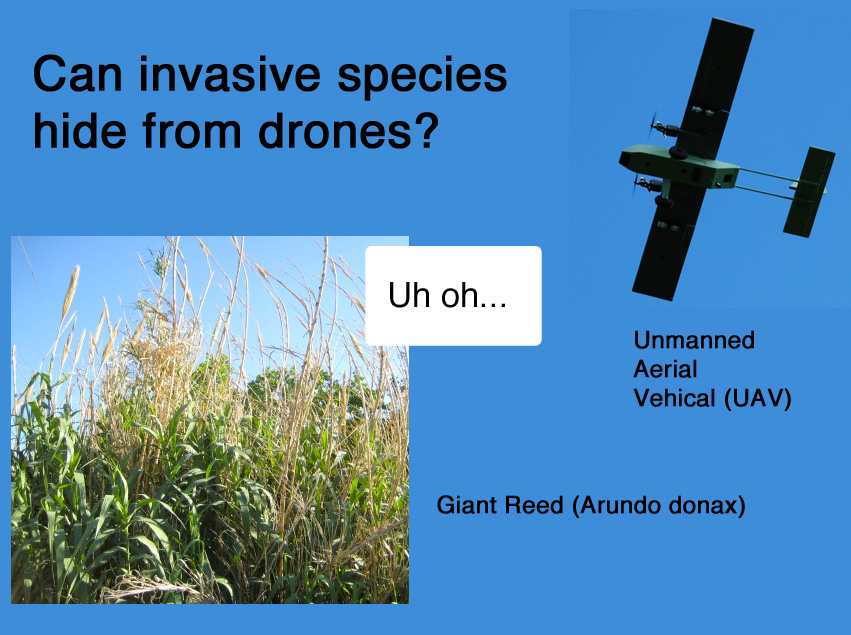
The Giant Reed can run, but it can’t hide from drones (Photo credit: InView Unmanned Aircraft by Fasicle Wikipedia)
Many researchers are using drones to help find and identify invasive species in those hard to reach places. Here are just a few recent articles about where they are using drones to hunt invasive species:
Smile, Hawaiian Wildlife: You’re on Candid Camera
Researchers are using drones to take photos of seabirds and island vegetation. They’ll use these images to determine how to manage native and invasive species.
The Drone Report: Do Unmanned Aerial Systems Have a Place in Hunting and Fishing?
Plants show different signature colors under infrared light. If they have a high photosynthesis production, they will look brighter. Because of this, farmers can use drones with infrared detectors to spot invasive species with specific light signatures.
Texas State University UAV Program
The university is using small, autonomous unmanned aerial vehicles (UAVs) to manage invasive plant species, mapping riparian and river habitats, and more.
Learn more about drones with Hot Science – Cool Talks
You can learn more about drones this Friday, November 21, 2014, with the latest Hot Science – Cool Talks presentation, Drones: Myths, Facts, Hacks, and The Future, by Dr. Todd Humphreys, Assistant Professor of Aerospace Engineering and Engineering Mechanics with the University of Texas at Austin.
The presentation starts at 7 pm in Welch Hall, but be sure to arrive early, since fun science activities will start at 5:45 pm!
Dr. Humphreys will talk about how we can use drones in the future and how that may be different from how movies portray drones. He and his team were the first to show how GPS hacking can take over a drone.
The invasive plant Giant Reed (Arundo donax) better be on the lookout!
Dr. David Laude’s Chemistry Cool Talk at UT Austin
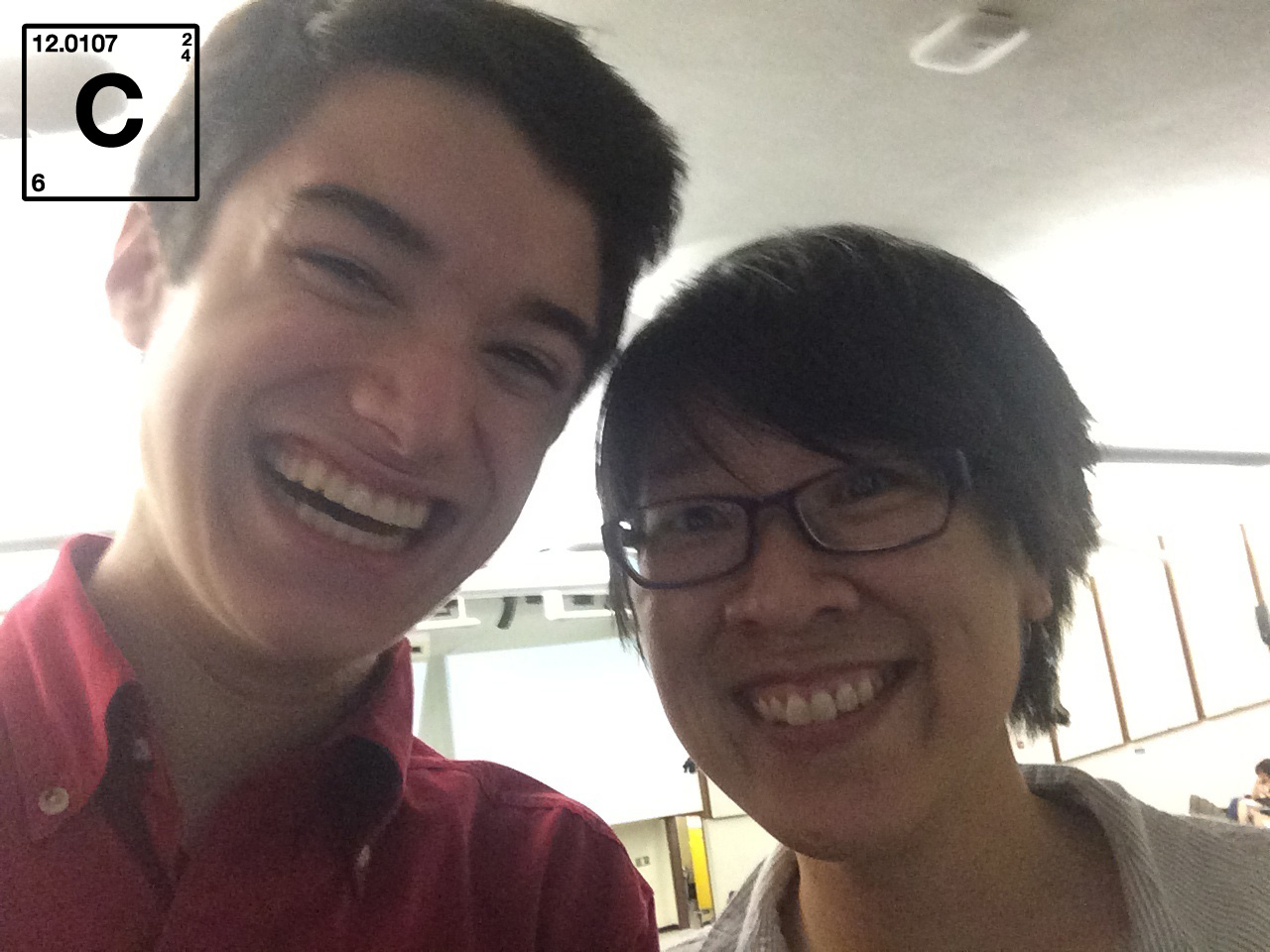
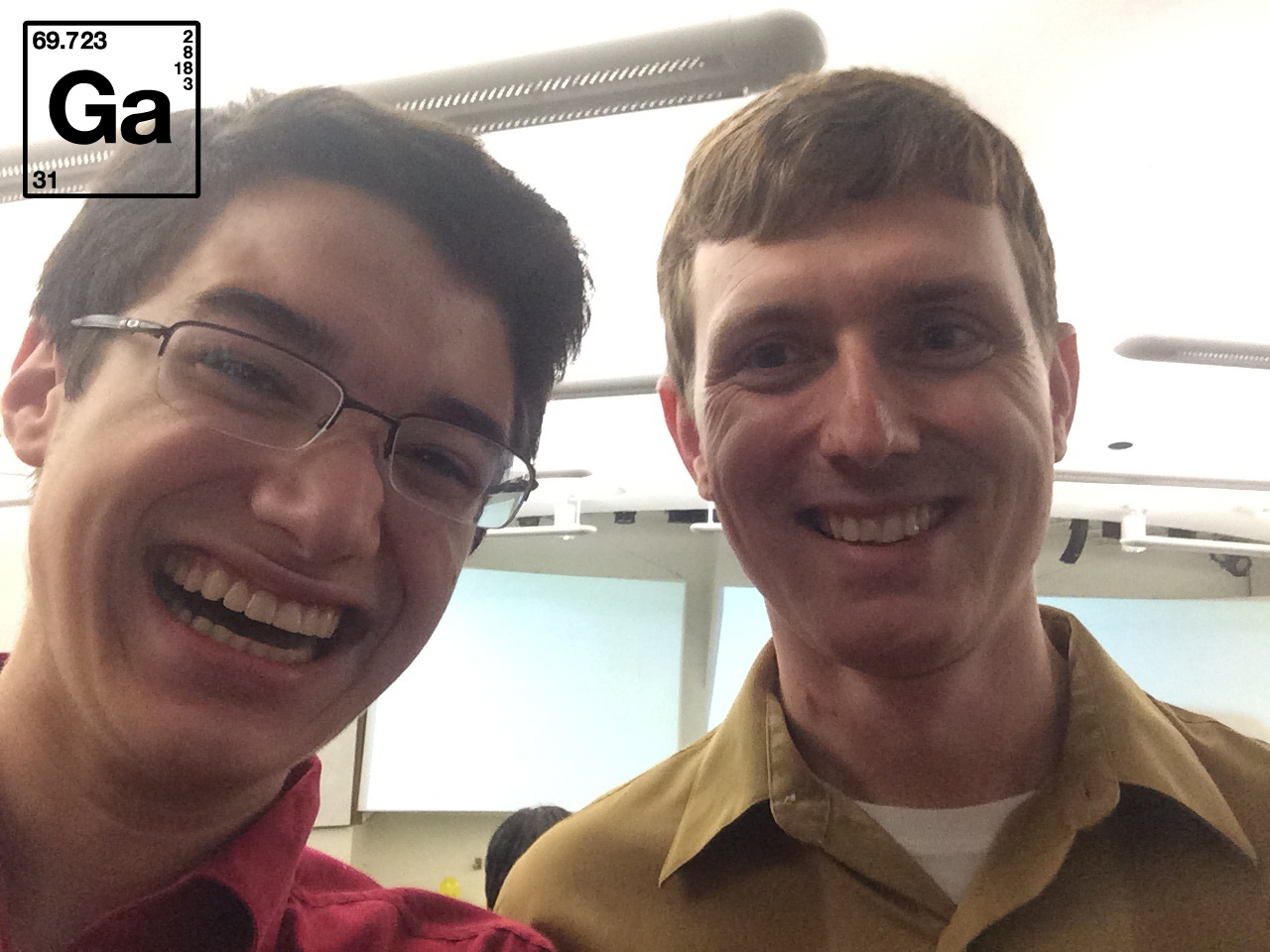
My friends and I enjoy taking selfies. I enjoy science, and I thought what better way to bring the two together (like an exothermic chemical reaction!) at last month’s Hot Science event about chemistry at UT Austin.
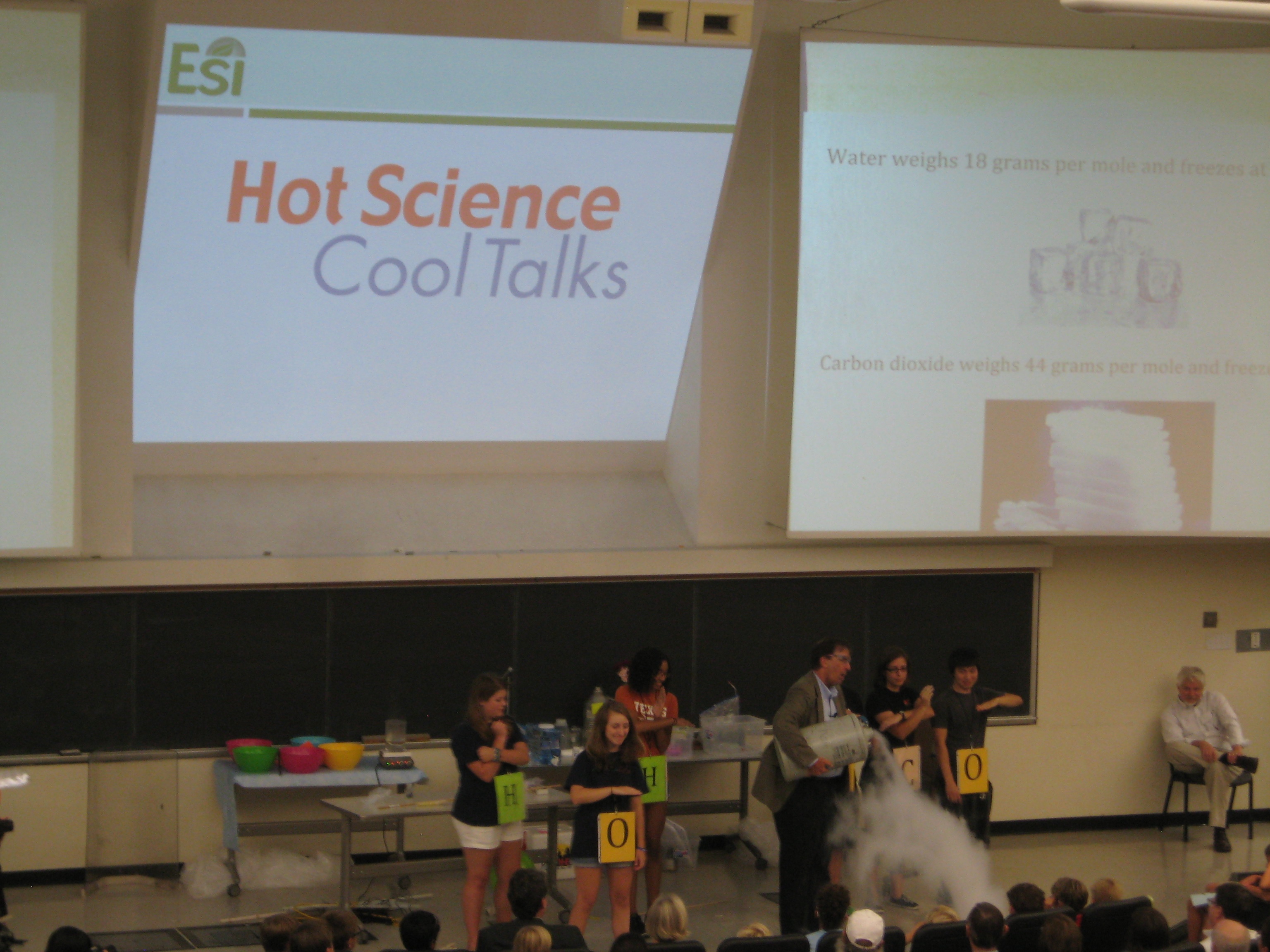
The first Hot Science – Cool Talk of the Fall 2014 semester, How I Learned to Love Chemistry, by Dr. David Laude was packed! There was a huge rainstorm before the event, but that didn’t discourage young and old chemistry enthusiasts from attending in force (F=ma).
I think this is the most people that have ever been to a Hot Science event. If anything, the rain made people more determined to learn, especially with the pre-lecture activities. Everyone came out, including friends that I haven’t seen in years. The entire Welch Hall main auditorium was full with standing room only. What density (D=m/v)!
Many people, including myself, a friend from school, and our chemistry teacher watched the event from the overflow auditorium. (I even arrived early!) Even with the time delay in the video simulcast, Dr. Laude’s talk was enlightening (c=2.9×10^8 m/s).
Dr. Jay Banner, Director, UT Environmental Science Institute (ESI), is the best!
Dr. David Laude, UT Chemistry professor, gave a lively and interactive talk about chemistry. Loves to blow things up!
Ms. Melinda Chow, coordinates fun events and activities for the UT Environmental Science Institute.
Mr. Patrick Goertz, my great chemistry teacher!
More chemistry selfies
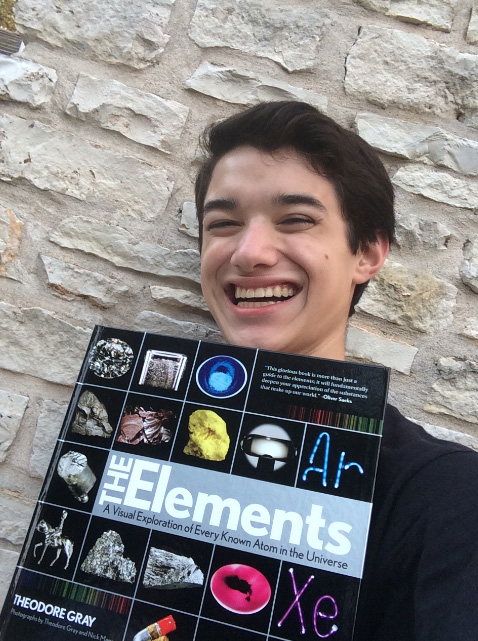
I am in an electron shell of knowledge with Theodore Gray’s The Elements book
Theodore Gray’s The Elements book in print and on the iPad is an excellent and fun way to learn about the elements in the periodic table. I’ve used his book to learn more about the elements in my high school chemistry class.
While I’ve enjoyed looking through the printed book, the app is more interactive and offers animations. To help dyslexic readers, I hope that the creators of the app, TouchPress, will publish an update that allows you to highlight portions of the text and use the iOS text-to-speech accessibility feature to have my iPad read the content out loud.
Bismuth, a cicada, and a live oak tree join me for a chemistry and biology mashup selfie
Bismuth (one of the most beautiful element structures), a cicada (at least its exoskeleton), and a live oak tree (Yea, biology!) wanted in on the selfies too.
During this year’s SXSW Eco event, you’ll learn about the science behind extreme weather, like tornadoes and superstorms, and how meteorologists factor in uncertainty.
Sounds like another super Hot Science is on it’s way, and the forecast for selfies with Dr. Klosel are favorable!
Update: Remember that this special event is free and is at the Austin Convention Center (and not at UT Austin.) The National Weather Service is bringing a tornado machine, and you’ll also be able to create lighting with a Van de Graaff machine and erupt snow to create an avalanche. Sounds like lots of fun!
Ms. Sarah Richards, Executive Director, and Mr. Geoff Hensgen, Program Director, of the Colorado River Alliance invited me to be part of the press boat for the event, and what an exciting honor it was!
Commander Ben and Sarah Richards on the marina dock getting ready to board the press boat.
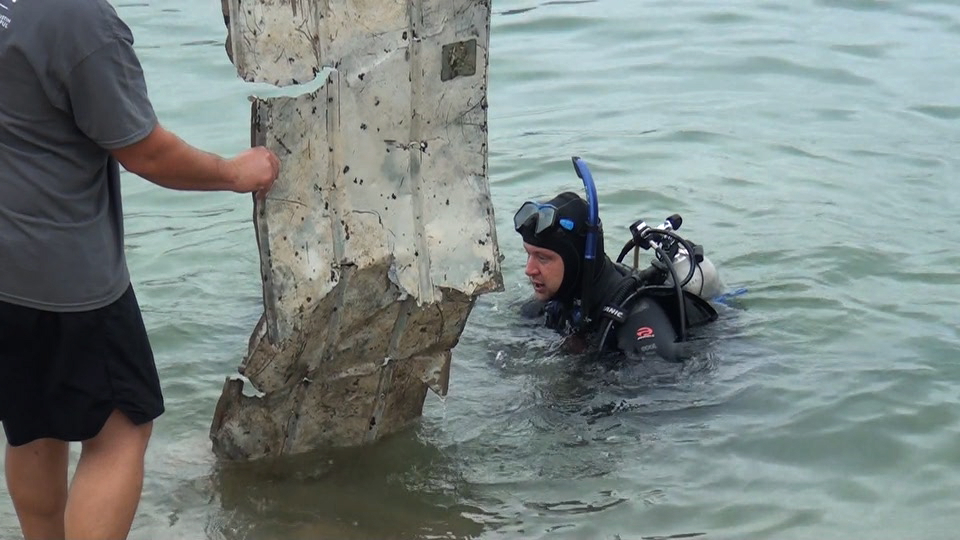
Divers near Starnes Island
One of the many boats with divers near Starnes Island for the Lake Travis underwater cleanup
Our press boat left early in the morning from a nearby marina and traveled to Starnes Island on Lake Travis, where scuba divers were hauling up trash from underwater and storing the trash in orange nylon bags. It was surprisingly cool in the morning. We had rain and colder weather (for September in Texas!) leading up to the event, and volunteers said it was one of the cooler cleanups that they remembered being part of.
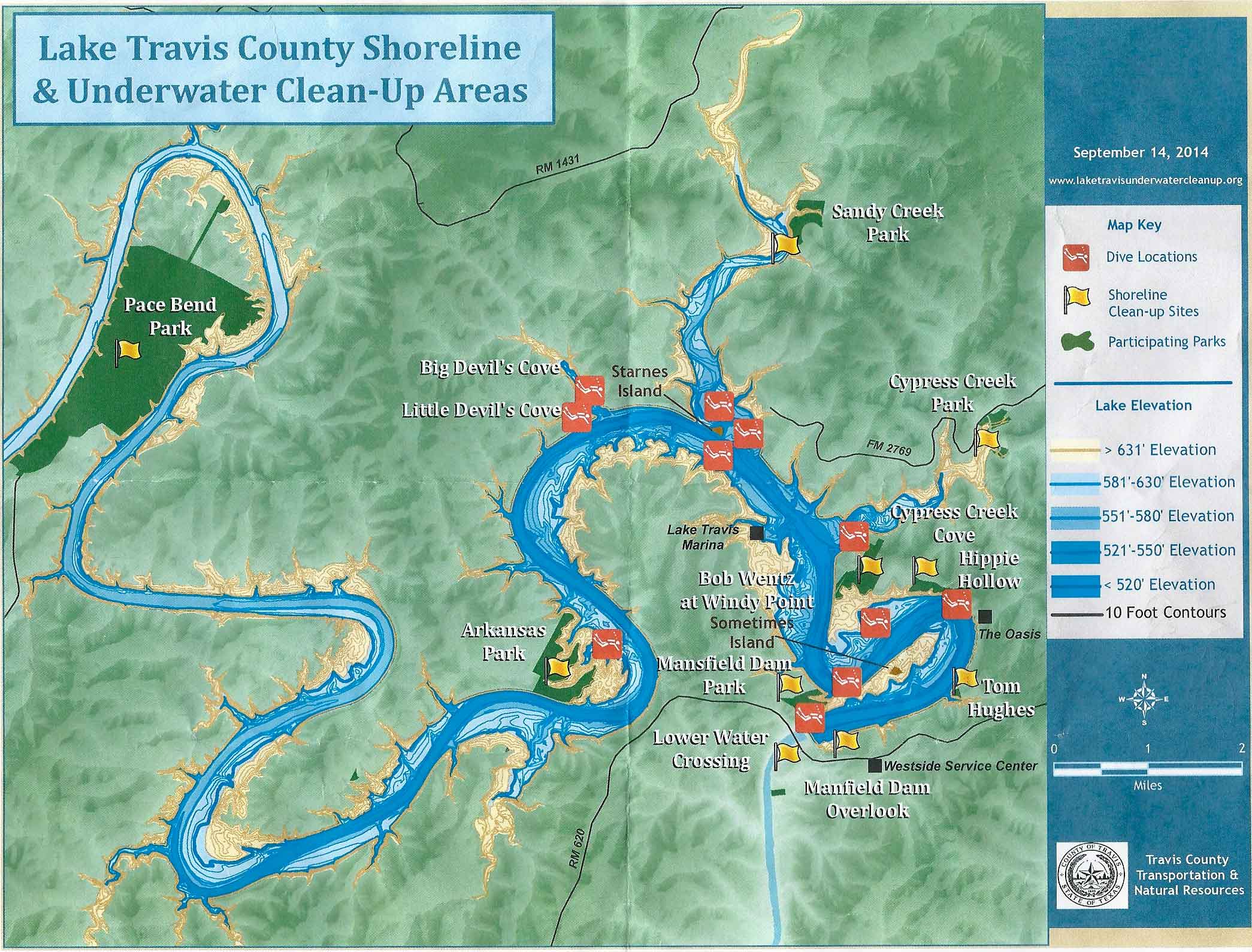
Volunteers met for the clean up at different spots around Lake Travis, including shoreline clean up sites near Pace Bend and Tom Hughes Parks and dive locations near Arkansas Park and Cypress Creek Cove. Approximately 1000 shoreline volunteers and scuba divers took part in this event. Wow!
The divers could see about 15 feet below the surface of the water, and with the low water levels because of the Texas drought, they were able to find trash at depths that would normally be harder to see in.
Map of the 2014 Lake Travis Underwater and Shoreline Cleanup locations (Map credit: Colorado River Alliance)
At the intersection of a inlet to Sandy Creek Park from Lake Travis, Starnes Island is only accessible by boat, and it was a critical clean up site since many party boats dock near this island and throw their trash overboard (ugh!). The scuba divers brought up bags and bags of trash, and boats would bring the trash over to the Lake Travis Marina where it was collected and hauled away for proper disposal.
Lake Travis Cleanup press boat crew outside of the Hudson Bend collection site
I talked with Ms. Shaun Marie Auckland, Conservation Coordinator for Travis County Parks, who said Travis County became involved in 1994 to provide volunteers with access to the parks and to help scuba divers dispose of trash with trash barges.
Packed volunteer event at the Oasis
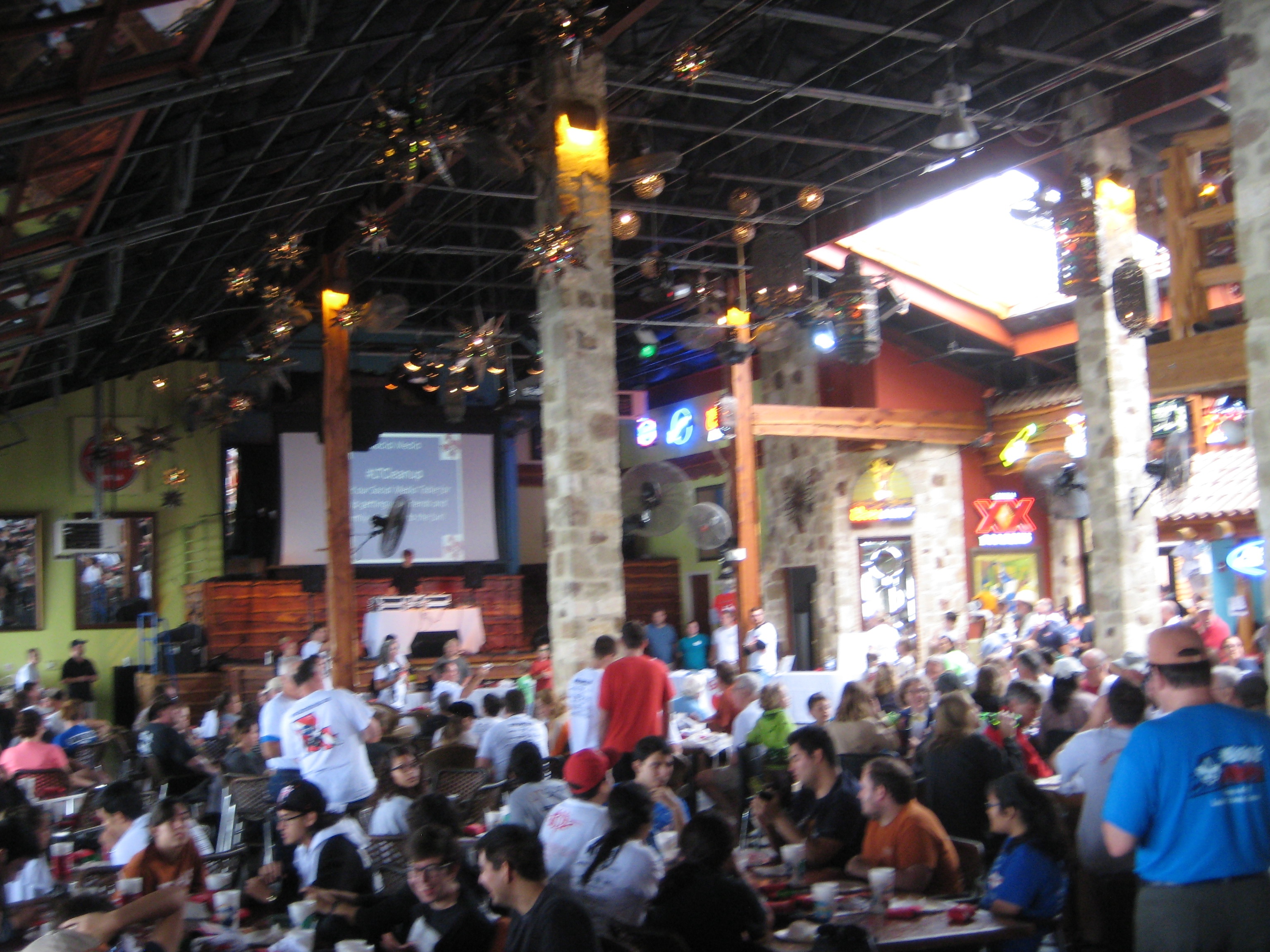
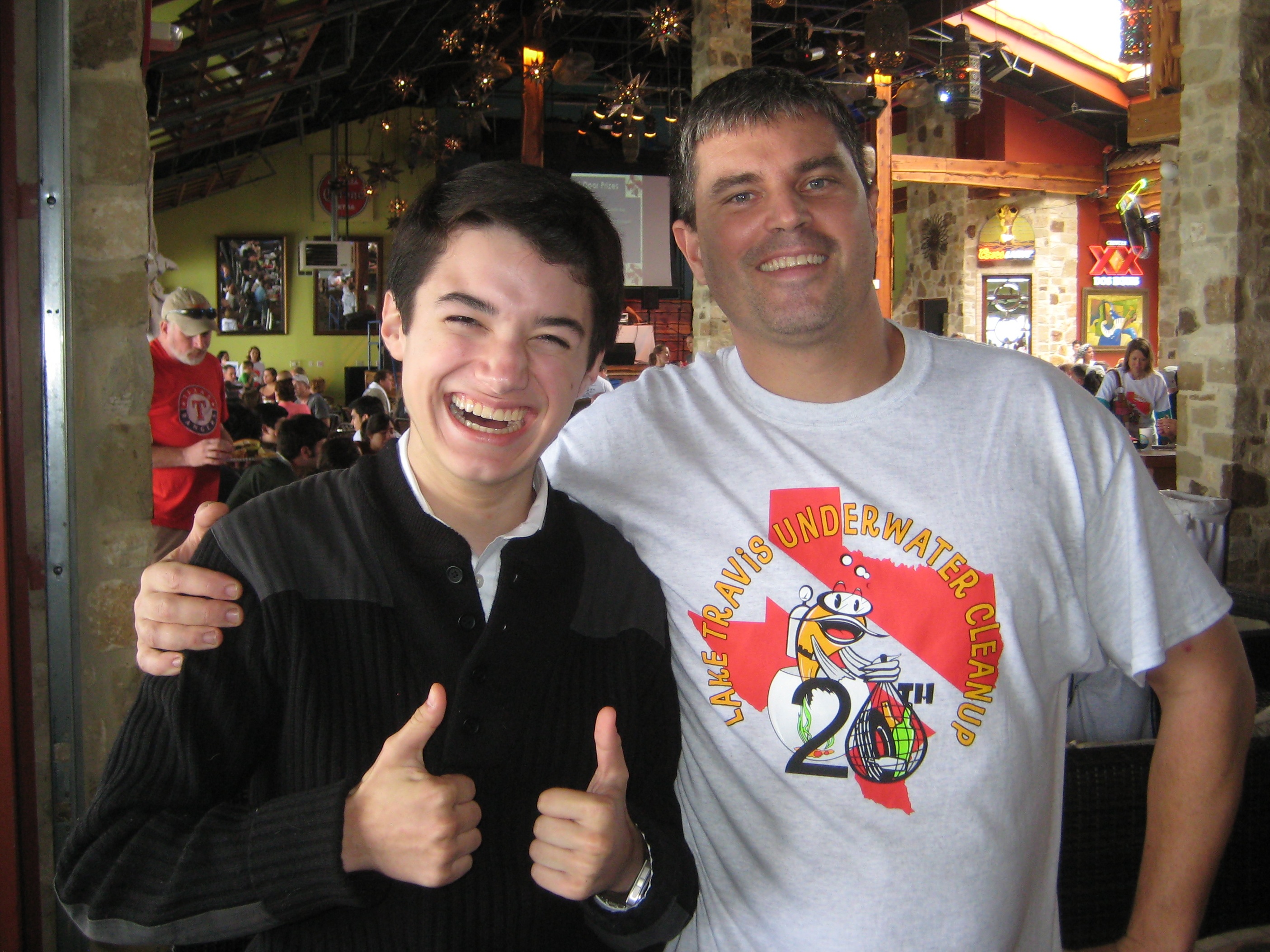
The Lake Travis Cleanup volunteer party at the Oasis was packed!
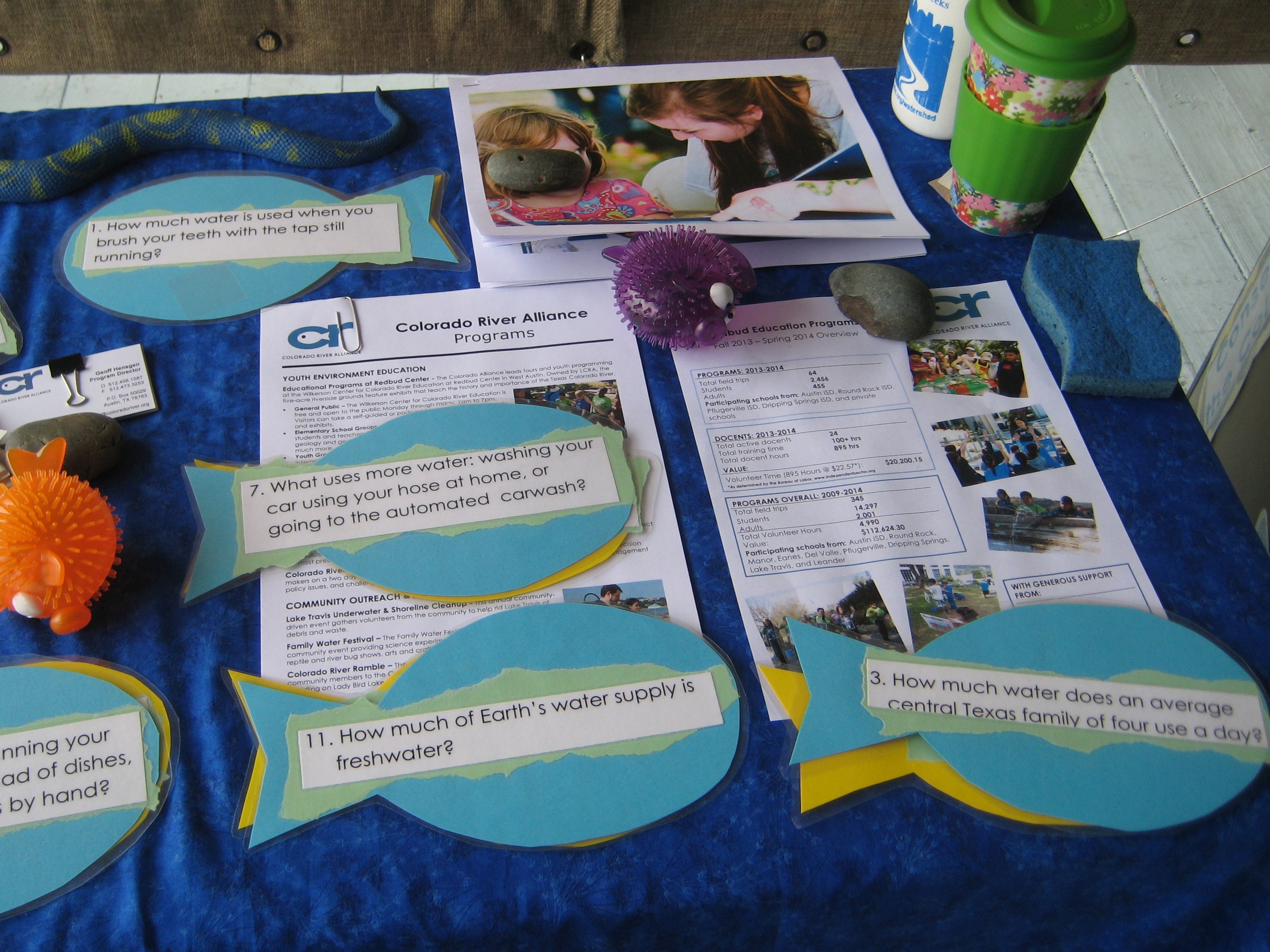
After the clean up, the volunteers celebrated with food, drinks, and door prizes at the Oasis restaurant overlooking Lake Travis. There were many educational booths for kids of all ages about Lake Travis, the aquatic food chain, water quality, and more.
Some of the Colorado River Alliance educational materials
Colorado River Alliance volunteers talking about the ecological water food web
Commander Ben and Colorado River Alliance education volunteers give a thumbs up to this year’s Lake Travis Cleanup event
I enjoyed hamburgers, chips, and iced tea with volunteers at the party after the event, and I sat with volunteers who were cleaning up around the low water crossing below Mansfield Dam.
From volunteer Dean Woodley, I learned that the concrete structures on the Sometimes Islands were part of the materials that were used to build Mansfield Dam. The blocks were likely the base of tall pulleys that were used to haul material down to the dam. (I wonder if they were like Archimedes’ pulleys that I’m learning about in my World History high school class.)
Commander Ben and volunteer Dean Woodley at the Lake Travis Cleanup Volunteer Party at the Oasis restaurant
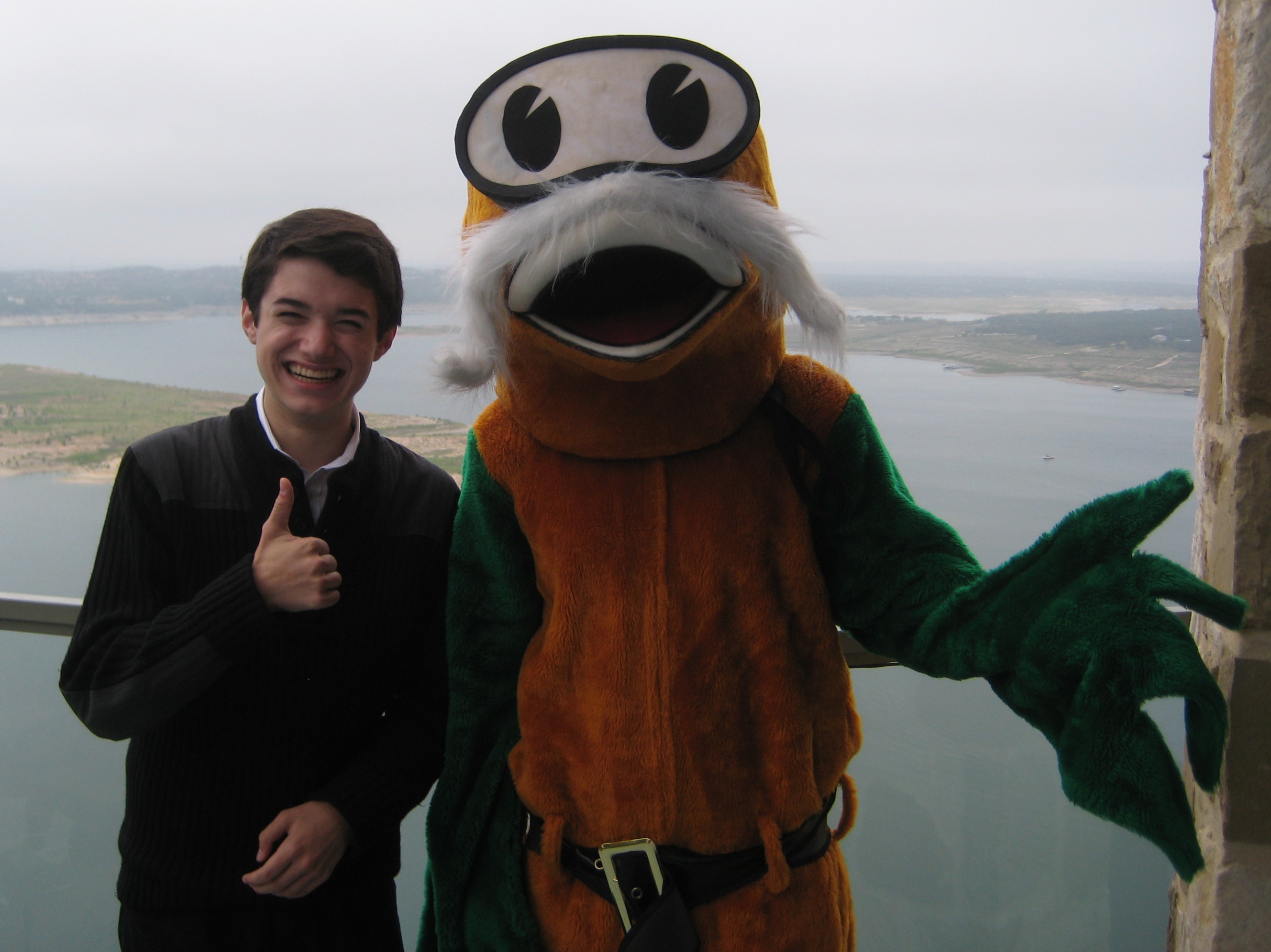
Commander Ben and Finley the Fish overlooking the Sometimes Islands on Lake Travis
During the volunteer party, the event organizers showed some of the unusual items the volunteers brought in, including sunglasses and a pink flamingo. I heard that someone also found an iPhone (not working – no surprise), and at a past event, they even found an old car motor.
Some of the unusual underwater Lake Travis Cleanup items found (is that a catfish skeleton?)
Some of the unique objects found by Lake Travis Cleanup volunteers
For this year’s event, they announced the winner of the most unusual clean up item: a plastic bottle with a note in it. The note was a reward for a missing wedding ring. Hope someone found it!
TV coverage of the event
Getting ready to hop back on the press boat from Starnes Island with KVUE cameraman J.P.
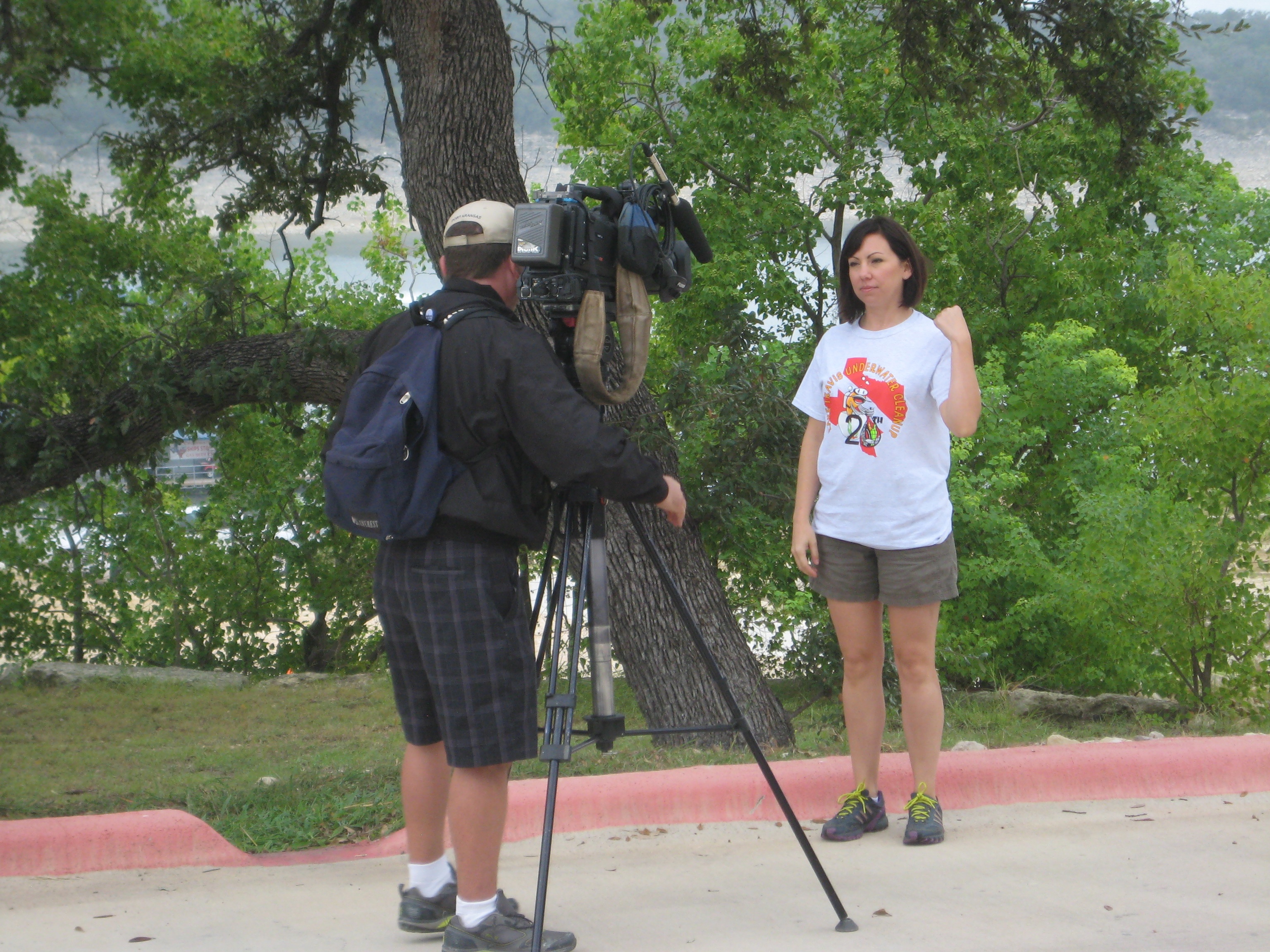
As part of our press boat, I met J.P., a friendly cameraman from KVUE who shared his experiences filming many events around Austin. I also saw the KTBC camera crew covering the event during the after party at the Oasis.
Sarah Richards being interviewed by KVUE about the Lake Travis Cleanup event
Science activities for primary and middle schoolers
Bringing the River to Our Schools mobile museum (Image credit: Colorado River Alliance)
During the school year, the Colorado River Alliance has educational activities for primary and middle schoolers. Kids in grades 3-5 can take field trips to LCRA building near Red Bud Island on Lady Bird Lake for hands-on activities to learn about water, wetlands, geography, and more.
The Colorado River Alliance also created the Bringing the River to Our Schools mobile museum to give 7th graders a high quality STEM experience and to educate the next generation of water stewards.
These are great programs for young naturalists and remind me of my science classes. I loved learning about biology in my freshman year in high school. This year, I’m learning about chemistry, and we’re going over the structure of the atom in class right now.
Celebrating 20 years of Lake Travis Cleanup volunteers
Lake Travis Underwater and Shoreline Cleanup celebrates 20 years!
The Lake Travis Underwater and Shoreline Cleanup started in 1994, and on September 14, 2014, celebrated 20 years of helping to clean Lake Travis, a vital water supply for the people and animals of Central Texas. Next year, the 21st annual event will be on September 13, 2015.
Commander Ben and Geoff Hensgen at the Lake Travis Cleanup volunteer party
Thanks again Ms. Richards and Mr. Hensgen for inviting me to be part of your wonderful event. How great it was to see so many enthusiastic volunteers, both above and below the water, helping to keep our native ecosystem clean!
Hooray for Modern Chemistry (and yes, I have a Periodic Table shower curtain)
I recently started my sophomore year in high school, and my classes have been a lot of fun. As many of you know, I have a great love of biology (and in learning about and battling invasive plant species!), but recently, I found a similar love for chemistry. (I’ll just admit right now that I love science.)
In the first few weeks of my chemistry class, it’s been fascinating learning about the basics of chemistry, including measurements and states of matter.
Volcanoes in Austin, Texas
For our first lab, we mixed acetic acid and sodium bicarbonate and measured the temperature of the mixture. We found that it created an endothermic reaction, which means that the temperature drops as the reaction progresses.
I’ll let you in on a secret. Acetic acid is vinegar, and sodium bicarbonate is baking soda, and this is a common mixture for volcano science fair projects. You just need to add detergent so you can make soap bubbles from the escaping gasses. With a little red food coloring, it looks like lava bubbling!
We’re using a very interesting piece of equipment, the Vernier LabQuest 2. This device is amazing since you can hook up different probes to measure temperature, light, sound, pressure, and even radiation! You can get information on almost everything. It’s a great tool, and one I wish I had at home too.
Modern Chemistry textbook, audiobook, and iBook
Modern Chemistry iBook available from iTunes
We’re using the Modern Chemistry book from Holt, Rinehart and Winston in my class. With my dyslexia, it’s not easy for me to learn from just the printed word. Finding the audio book and iBook for my biology textbook helped me out during my high school freshman year.
I was also able to find the audio version of my current Modern Chemistry book from Learning Ally and a newer version of the Modern Chemistry iBook from iTunes. With Learning Ally, a human reader reads the entire page, including figures. With my iBook version, I can select portions of the text for my Apple MacBook’s or iPad’s electronic voice to read. The iBook version also contains videos, quizzes, and other nice interactive features.
Hot science – Cool Talks – Chemistry
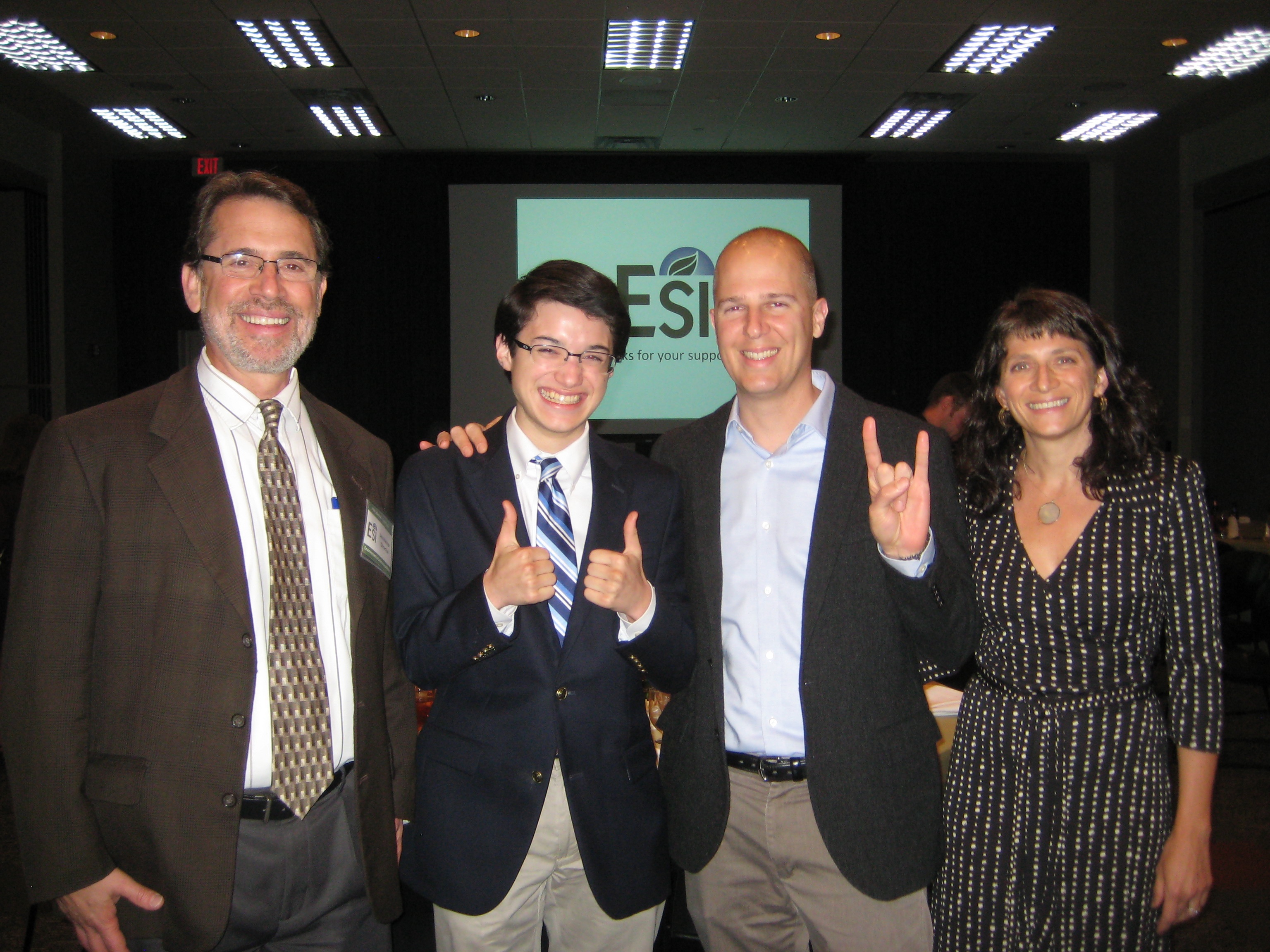
Dr. Jay Banner, Commander Ben, Dr. Chris Kirk, and Dr. Rebecca Lewis at the 2014 UT ESI Education and Outreach Dinner
Hot Science – Cool Talks are a series of presentations where you can enjoy fun prelecture activities and learn a lot about science during presentations given by distinguished scientists. They’ve become very popular over the years, and I’ve been going to them since I’ve been a little scientist guy.
Thanks to Dr. Jay Banner, UT ESI director, I’ve had the great fortune to interview many of the previous presenting scientists. (Here are some of my video interviews with Dr. Chris Kirk for his Hot Science – Cool Talks presentation, “Your Eye, My Eye, and the Eye of the Aye-Aye”.)
With myself and many other Austin-area sophomores learning about chemistry in science this year, what great fortune that the first Hot Science presentation is on chemistry!
Dr. David Laude will give a presentation on How I Learned to Love Chemistry on Friday, September 12, 2014. The fun prelecture activities start at 5:45 p.m., and Dr. Laude’s presentation starts at 7:00 p.m.
I’m counting on his promise that Dr. Laude will blow stuff up! He’ll make liquid nitrogen ice cream for everyone at the end. See! Science can be fascinating and delicious at the same time.
Fall 2014: Hot Science – Cool Talks presentations
Now you know why it’s called Hot Science! (Photo credit: UT ESI)
Amazonian Primate (Photo credit: UT Austin – Environmental Science Institute.)
Science is my favorite subject, and this spring in my high school freshman biology class, I’ve been learning about plants, the diversity of animals, evolution, and more.
We learned about the common characteristics that all primates share: fingers and toes with nails, not claws; arms that rotate around a shoulder joint; binocular vision; and a well-developed cerebrum, which is helpful for complex thinking.
We’re now studying the different systems of the human body, including the nervous and skeletal systems. (We have 206 bones in our adult human skeleton!)
Primate evolution and the evolution of senses
When I was a young naturalist (younger than I am now), I had the chance to interview Dr. Chris Kirk before his “Your Eye, My Eye, and the Eye of the Aye-Aye” presentation. Dr. Kirk is an Associate Professor in the Department of Anthropology, and his talk was part of the Hot Science – Cool Talks series, presented by the UT Austin Environmental Science Institute.
There are more awesome anthropological presentations in store with Hot Science – Cool Talks! You can learn more about primate social behavior with Dr. Anthony Di Fiore during his presentation this Friday, April 4, 2014. A Professor of Biological Anthropology and the Chair of the UT Austin Department of Anthropology, Dr. Di Fiore will talk about the monkeys that he’s studying in the Amazonian Ecuador and how their native ecosystem helps to shape their behavior and society.
His presentation starts at 7:00 pm in Welch Hall on the UT Austin campus, but be sure to arrive early, because the pre-lecture fair, full of fun kids activities and learning, starts at 5:45 pm.
My name is Commander Ben and I'm the Invasive Hunter. I educate kids of all ages - and all learning styles - about invasive species, science, and dyslexia.
















 Commander Ben