Dr. Stephen Clarke describes efforts to prevent the spread of the Emerald Ash Borer in Texas. Learn if researchers have discovered a native champion against this invasive pest and if warmer temperatures could halt its spread from the Northern United States. Dr. Clarke is a Forest Entomologist with the U.S. Forest Service.
Dr. Ronald F. Billings talks about the expanding range of the Soapberry Borer and how this invasive pest attacks native Western Soapberry trees in Texas. Also, learn how not moving firewood can help prevent the spread of the Emerald Ash Borer, another invasive species in the same genus. Dr. Billings is a Forest Health Manager with the Texas Forest Service.
Ms. Darcy Bontempo talks about the Texas Parks and Wildlife Department’s continuing campaign against invasives with their spotlight on the Zebra Mussel, a species that presents an insidious danger with their millions of microscopic larva. She talks about the mussels’ economic and environmental impact and key steps boaters can take to stop their spread. Ms. Bontempo is the Marketing Director for the Communications Division of Texas Parks and Wildlife.
Texas Parks and Wildlife needs our help! This year’s drought, heat, and terrible wildfires has led to a drop in park attendance, and park visitor’s fees provide about half of the funding for our state parks.
If you can, please join me in making a donation to help our wonderful natural treasures, our state parks.
Dr. Karen Clary describes the threat that invasive species pose to our rare Texas plants and recounts the ground-running, native Prostrate Milkweed’s struggle against the tall, invasive King Ranch Bluestem. She also talks about her two most disliked invasive plants, Giant Salvania and Heavenly Bamboo. Dr. Clary is a biologist with the Wildlife Habitat Assessment Program for the Wildlife Division of the Texas Parks and Wildlife Department.
Dr. Clary is also an instructor with Go Native U, which provides a great set of classes to learn more about our native environment. The classes on the flora and fauna of central Texas look really neat, especially those on our native wildflowers, plants, insects, mammals, birds, and reptiles. I look forward to attending these classes in the future!
In part two of his interview, Mr. Chuck Bargeron talks about his work on EDDMapS to make invasive species mapping easy; IveGot1, the iPhone app to help citizen scientists report invasives in Florida; and his eagerly anticipated iPhone app to help with the reporting of invasives in Texas. He also brings out the important role that herbariums play to documenting the location of species. Mr. Bargeron is the technology director for Invasive Species and Ecosystem Health at the University of Georgia.
My name is Commander Ben and I'm the Invasive Hunter. I educate kids of all ages - and all learning styles - about invasive species, science, and dyslexia.
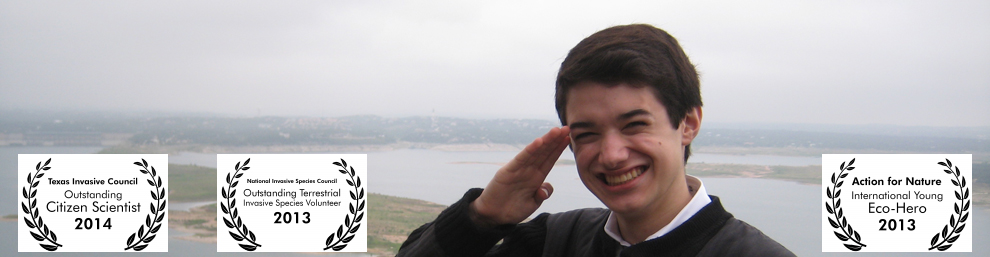

 Commander Ben