
Commander Ben near the Cripple Crawfish Cave whirlpool in Onion Creek
As part of National Ground Water Awareness Week earlier this month, the City of Austin’s Wildland Conservation Division scheduled a “wonderful whirlpool” hike along Onion Creek.
What a fantastic place and what a rare treat to see so much green vegetation and water. We’ve been under a terrible drought in Texas. (The water level on Lake Travis dropped so low that I was able to walk to the sometimes islands late last year. These islands are normally submerged when the Highland Lakes are full.)
We’ve been blessed with recent rains. The rainwater has given life back to our land, lakes, and creeks. I hope that we keep getting more rain.
Karst features help recharge the Edwards Aquifer
The Orr Track on Onion Creek is part of the Barton Springs recharge segment of the Edwards Aquifer. Water that falls on the savannah and prairie land in this area flows through karst features to reach the aquifer underneath.
Carbon Dioxide (CO2) in the air and water (H20) combine to create carbonic acid H2CO3. This acid eats the calcite in the limestone under the soil to create the karst features, and these features consists of big and small cracks and caves under the surface.

Slowly draining karst feature near Onion Creek
Because of our recent rains, there’s water on the surface, but it’s slowly draining underground with the small cracks in this karst.

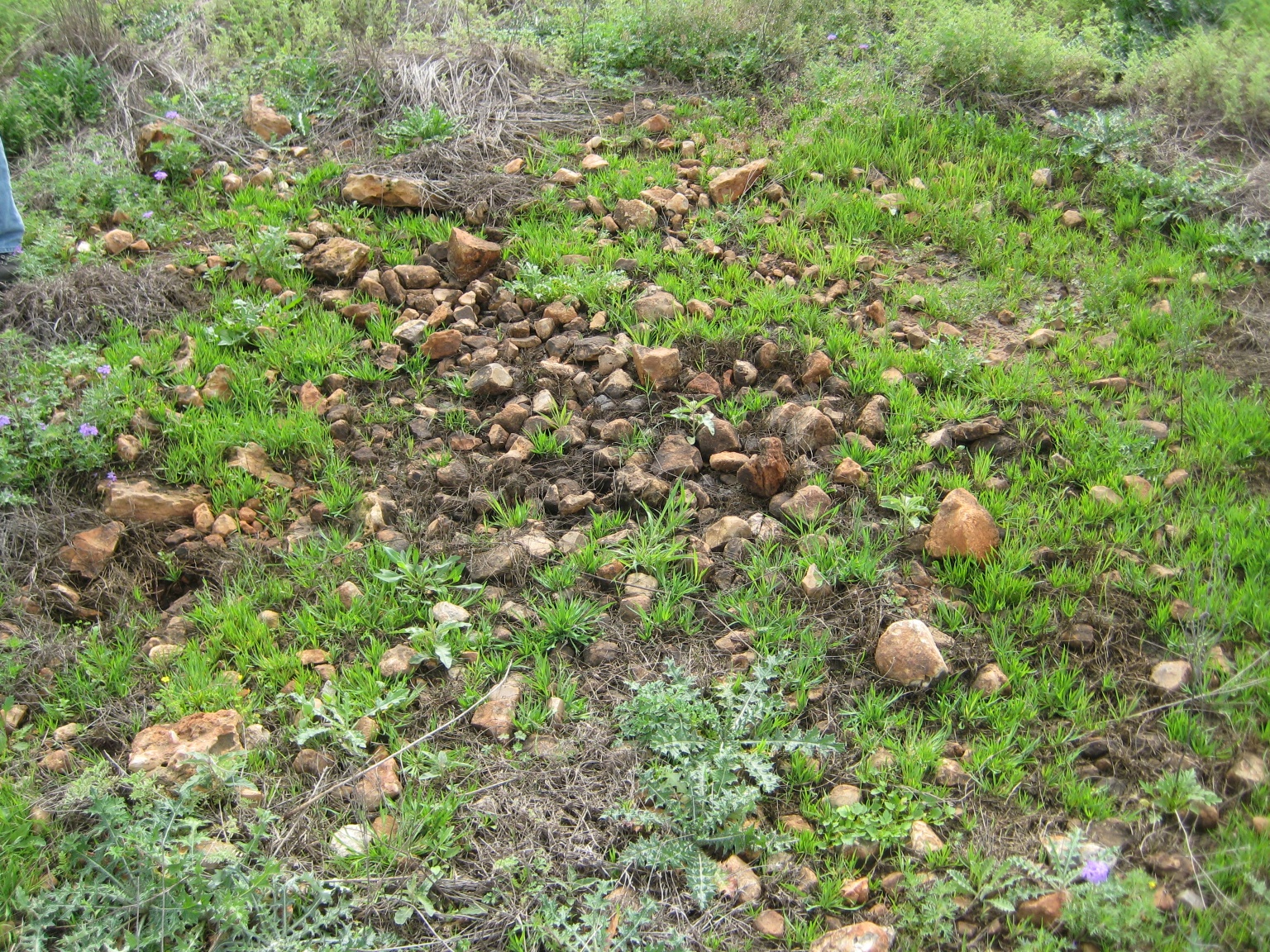
Dry karst feature with flint rocks
This karst feature has bigger cracks, which causes it to drain faster. There’s no standing water here, but there’s lots of flint. Dr. Kevin Thuesen, Environmental Conservation Program Manager, helped to lead our hike, and he said that there’s evidence of native Americas in this area who have tried out the different pieces of flint to see if any would be good to use.
(I had a chance to try out flintknapping and other great nature activities at the Wild Basin Preserve a few months ago.)

Karst feature with a huge draining crack
This karst feature has a huge crack to help water drain quickly to the aquifer. No standing water here.
Watch out for the rattlesnakes

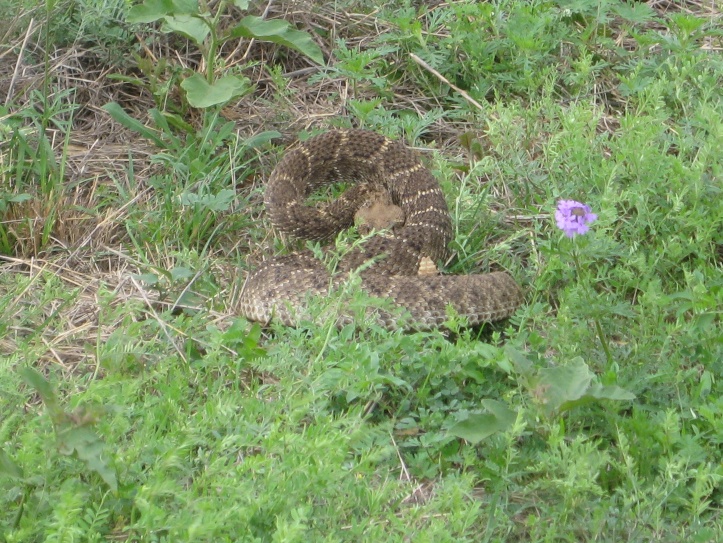
We saw a few rattlesnakes on our hike, and Dr. Thuesen cautioned us to watch out for them. When the snake started rattling as I walked by, my heart jumped!

This one was near the karst feature with the huge crack, and it was very hard to see at first. (Can you spot the rattlesnake in this picture?)
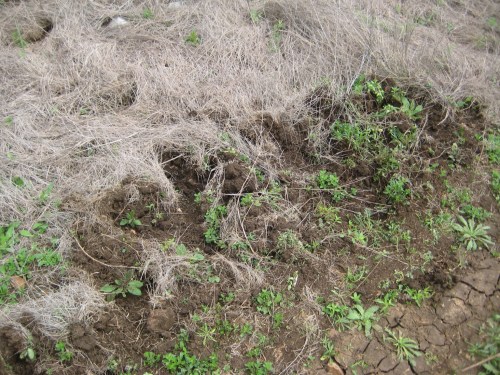
No snake in this picture, but here’s evidence of feral hogs. They were digging for food (grubs?) in this area earlier. They’re omnivores and will eat just about anything.
Wonderful whirlpool!

Cripple Crawfish Cave Whirlpool in Onion Creek
The treat at the far end of the hike was the whirlpool that flows into Cripple Crawfish Cave (another karst feature!) in Onion Creek. They haven’t seen water in the creek for about a year, so this was a special occasion.
Dr. Thuesen said that they installed a screen over the cave opening to keep out debris and to help water flow more easily into the cave and eventually into the aquifer. Scientists have used a special dye to discover that water that flows down this whirlpool can reach Barton Springs Pool in about 22 days or so.
I’ve only seen a whirlpool in my bathtub before. It was great to see a real one in nature!
Thanks for the great hike!

Ms. Amanda Ross, Commander Ben, and Dr. Kevin Thuesen and the end of our wonderful whirlpool hike
Thank you Ms. Amanda Ross, Conservation Program Coordinator, Dr. Thuesen, and the other knowledgeable guides for the fantastic hike!
Ms. Ross has always been kind and helpful, and she had some neat posters. (I first met Ms. Ross when I learned about rare Texas plants and took a tour of the Balcones Canyonlands Preserve.)
I enjoyed talking with Dr. Thuesen about the different rattlesnakes. He also knew a lot about invasive plants and talked with me about some of the ones in the area, including the Malta star-thistle and King Ranch Bluestem (KR Bluestem).
Don’t miss these wonderful hikes to learn about the native ecosystems of Central Texas. Check out the latest events on the City of Austin’s Wildland Conservation Division event page and be sure to join their email list to learn about upcoming events.
Commander Ben signing off





 Commander Ben