Category Archives: Invasive Species

Black Swan Events Explored at Hot Science – Cool Talks

Oh no! Black Swan (Cygnus atratus)
Photo credit: Calvin Teo on wikipedia

This Fall 2012 kicks off another great semester of “Hot Science. Cool Talks.” presentations with Dr. David W. Orr’s “Black Swans & the U.S. Future: Creating Sustainable & Resilient Societies” on Friday, September 14, at 7:00 p.m. in UT Austin’s Student Activity Center. However, you’ll want to arrive early, as the fun pre-lecture events start at 5:45 p.m.

A professor of Environmental Studies and Politics at Oberlin College, Dr. Orr will talk about “Black Swans” as infrequent and unpredictable events that drive change in human and natural systems. This summer, I wondered if
invasive species could trigger a black swan event, such as with the Mediterranean Sea and Oregon incidents.

The “Hot Science. Cool Talks.” presentations are fantastic for kids of all ages, but especially for middle and high school students. (I should add elementary students too since as young Commander Ben, I was able to meet Dr. John Grotzinger at a presentation in 2005. Dr. Grotzinger is now a project scientist for the Mars Science Laboratory that is part of the Curiosity Mars rover.)

Invasive Hunter Academy coming to Hot Science – Cool Talks

I’m sorry that I’ll miss this Friday’s presentation, but I’ll be at the “Lights. Camera. Help.” Focus on Good Film Festival! My Native Plant Avengers video about Texas wildflowers banding together to fight invasive species was selected to be shown at the festival.

However, I’m excited to announce that I’ll be bringing my Invasive Hunter Academy to the prelecture fun for the “Last Call at the Oasis: Will There be Enough Water for the 21st Century?” presentation by Dr. Jay Famiglietti on October 26, 2012.

I’ll bring fun activities to help kids learn about invasive species, and I’ll have special information about the Giant Reed, an invasive species that threatens our water and riparian ecosystems, for this special event.

Thanks Mr. Geoff Hensgen, Outreach coordinator, and Dr. Jay Banner, Director of the UT Austin Environmental Science Institute, for inviting me to join your wonderful event!

I hope to see you there!

Your friend,
Ben

Leave a comment

Filed under black swan, Curiosity Rover, Dr. David Orr, Dr. Jay Famiglietti, Dr. John Grotzinger, Environmental, Environmental Science Institute, ESI, Geoff Hensgen, Hot Science - Cool Talks, Invasive Hunter Academy, Invasive Species, Jay Banner, Lights Camera Help Annual Nonprofit Film Festival, Lights. Camera. Help., Mars Rover, Mars Science Laboratory, Native Plant Avengers, University of Texas, UT Austin

Austin Invasive Species Corps Aid Golden-Cheeked Warbler

Mr. Darrell Hutchinson describes his work helping to track and protect the habitat for the Golden-Cheeked Warbler, an endangered species that breeds only in central Texas. He demonstrates how the weed wrench helps to remove invasive species that crowd out the native plants and trees in the warbler’s ecosystem.

Mr. Hutchinson is a biologist in Austin, Texas, and a member of Austin’s Invasive Species Corps. I interviewed “Corporal” Hutchinson during our invasive species volunteer day in August 2012. Learn more about my adventures with Austin’s Invasive Species Corps.

This video is part of my “Invasive Species: Secrets Revealed” series of interviews with scientists that I first started at the 2011 Texas Invasive Plant and Pest Conference.

Your friend,
Ben

Leave a comment

Filed under Austin Invasive Species Corps, Citizen Scientist, Endangered Species, Golden Cheeked Warbler, Invasive Species, Invasive Species: Secrets Revealed, Mr. Darrell Hutchinson, Volunteer, Weed wrench

Adventures with Austin’s Invasive Species Corps

Last weekend, I joined the Austin Invasive Species Corps to identify locations of Chinese Privet (Ligustrum sinense), an invasive species invading in the Long Canyon portion of the Balcones Canyonland Preserve (BCP).

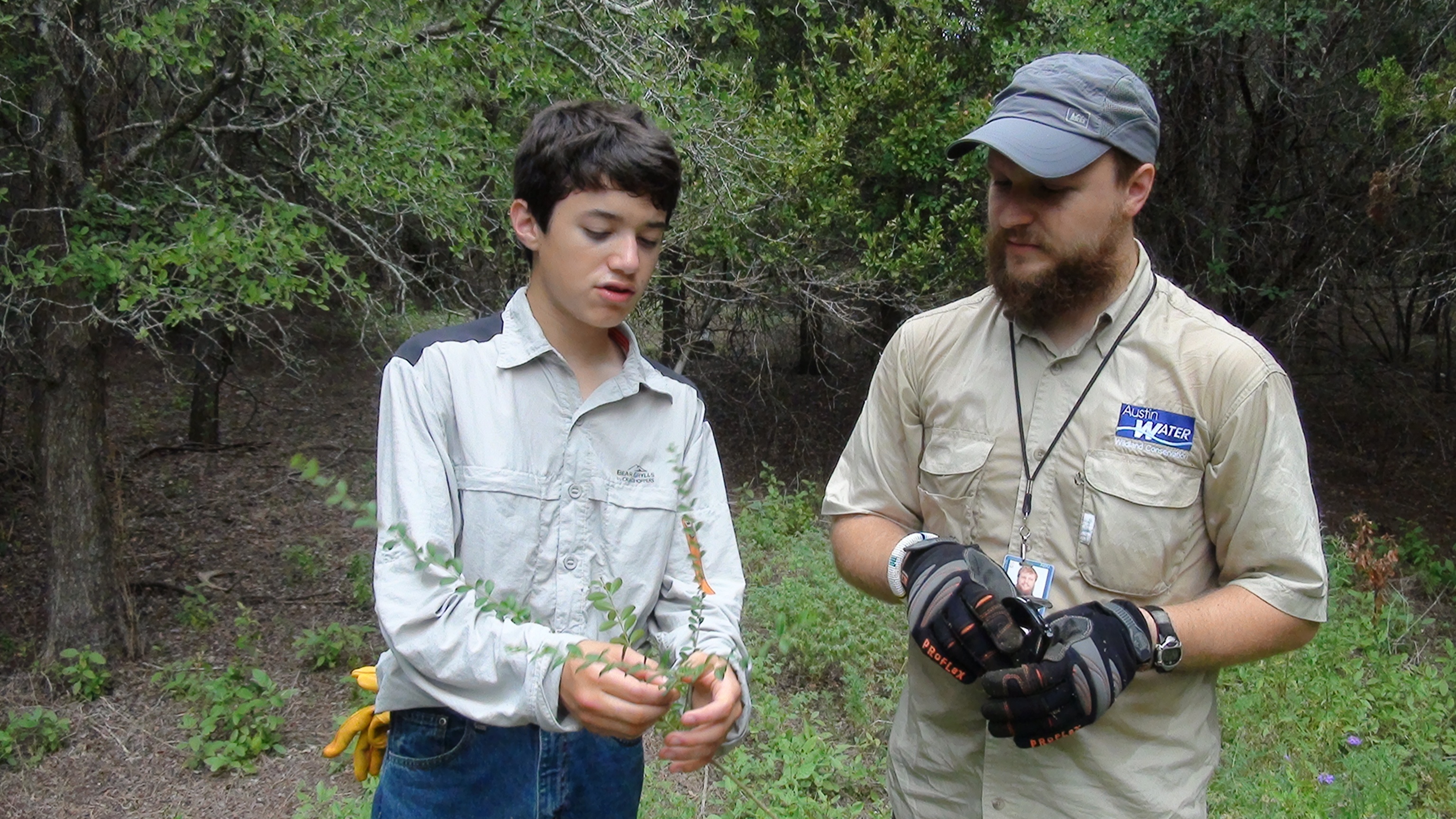
I was happy to talk again with Mr. Chris Warren, a biologist with the BCP, and see the area that we helped to clear last year in my video, Titanic Struggle with Chinese Privet Ends with their Doom. (I’ll post another great video interview with him soon!)

Commander Ben and Biologist Chris Warren examine a small Chinese Privet.

It was nice to see a lot of native plants starting to grow back in the open spaces that the Chinese Privet plants used to occupy. We had pulled up a lot, but more were starting to creep back in and there were other areas too where the Ligustrum overran the native plants. (Sometimes the biologists in our group would call Chinese Privet by its scientific name, Ligustrum.)

Pulling up Chinese Privet with a weed wrench.

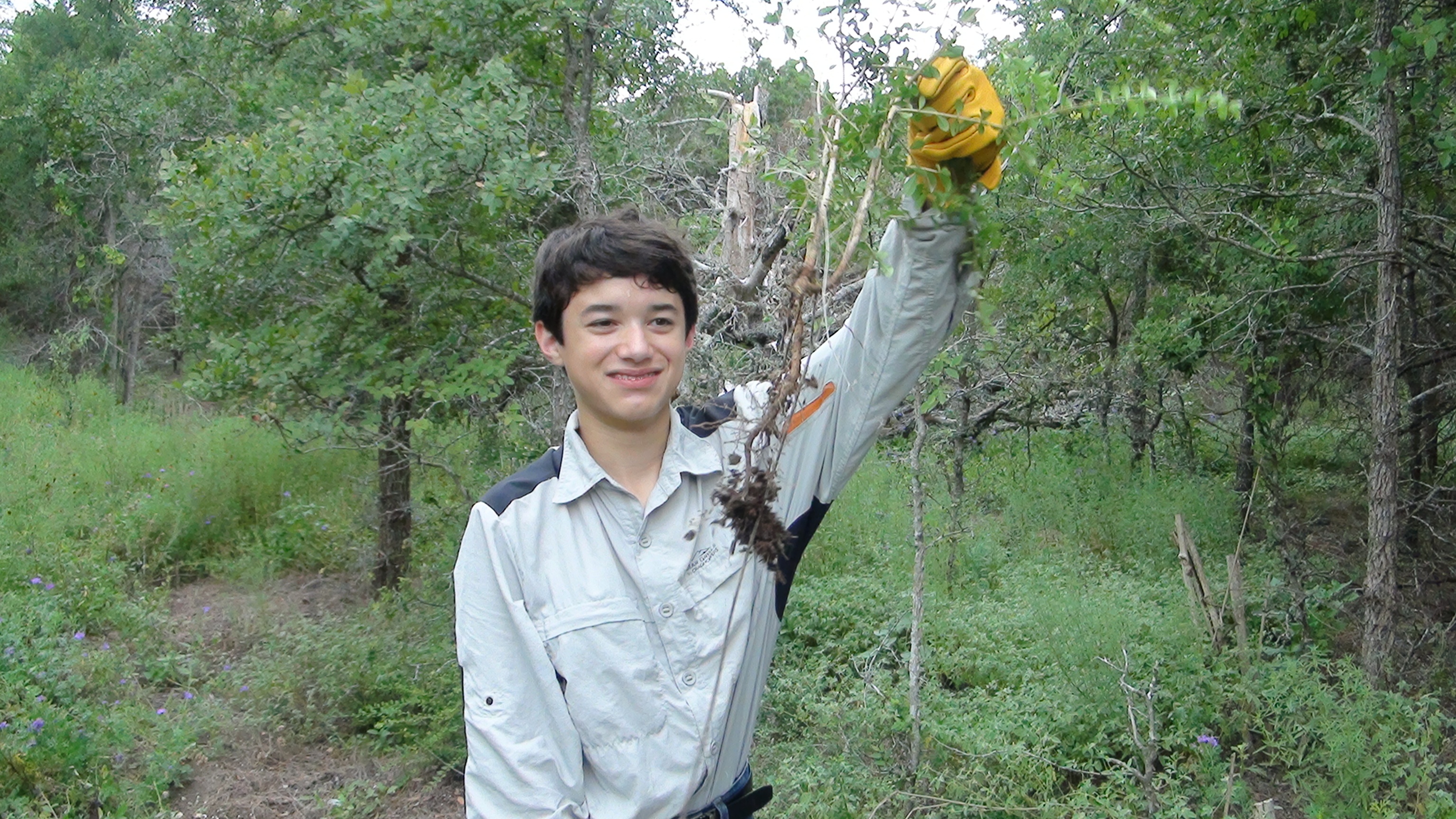
We used special weed wrenches to hand pull as much Chinese Privet as we could find. These heavy tools help to pull up the plant, roots and all, otherwise it could grow back from a stump.

It was a fun day filled with hunting invasives, hard work, and listening also to some wonderful presentations from many different people who are experts in the field of invasive species.

Know your invasive species: Chinese Privet
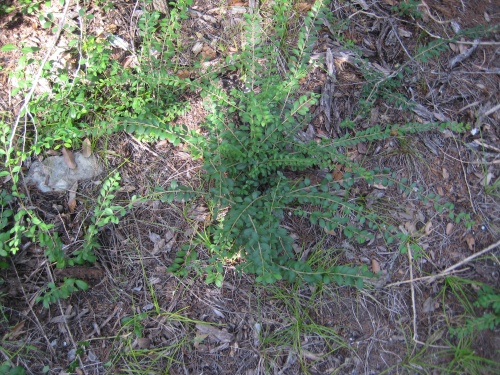
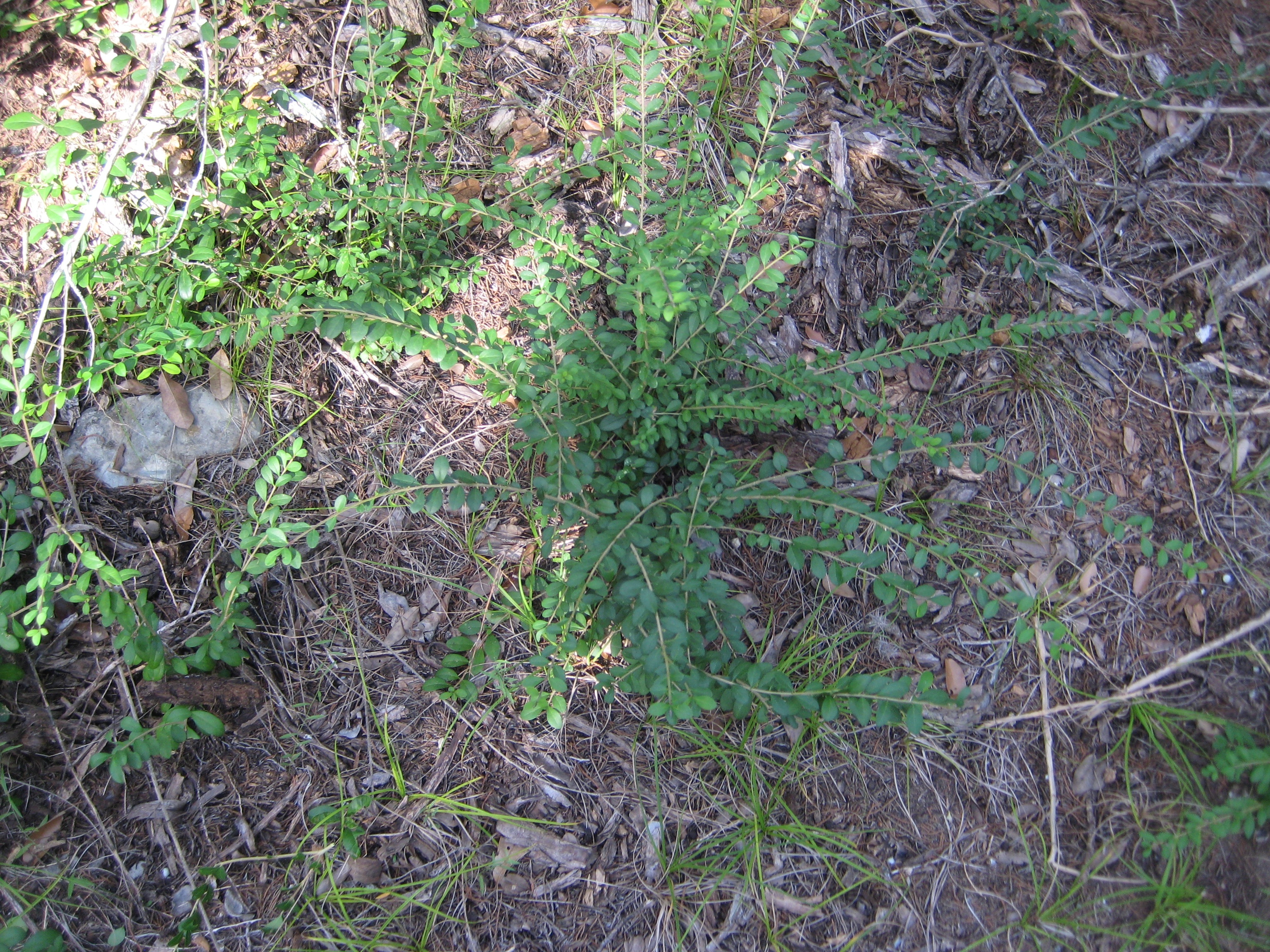
Small Chinese Privet plant (But they get much bigger!)

Chinese Privet is a woody bush with green leaves that break off easily and has lots of shoots growing out from the stalk.  It can sometimes be confused with the following native plants:

  • Elbow bush (Forestiera pubescens)
    How to tell them apart: Elbow Bush has branches that grow at 90 degree angles
  • Yaupon (Ilex vomitoria)
    How to tell them apart: The Yaupon has a tooth edge leaf instead of smooth edge leaf like the Chinese privet.

Unfortunately, Chinese Privet invaded the lower area of Long Canyon where it crowded out the native plants to create a monoculture.  Seeds from “Godzilla” sized Chinese Privet that were planted in the landscapes of homes up on a ridge, washed downhill, grew, and quickly multiplied.  This process happens over and over again when it rains and when birds carry the seed berries too.

In Asia, Chinese Privet’s native home, it stays in check because it has to contend with disease, parasites, and wildlife “eaters”.  Here in the U.S., Chinese Privet is essentially free of predators, and this allows it to spread aggressively.  Even our deer don’t like to eat it!  They prefer our native Texas plants instead.

As a non-native and pioneer species, this invasive plant can grow and spread quickly.

So why is it a problem if Chinese Privet establishes a monoculture in our area?

Know your Endangered Species: Golden cheeked warbler
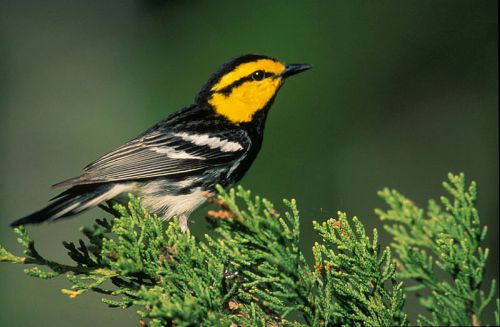
Golden-Cheeked Warbler
Photo Credit: U.S. Fish and Wildlife Service

Well, it all has to do with water and the cute…and endangered…Golden-Cheeked Warbler.

The Golden-Cheeked Warbler, is a native bird and it uses the bark of the Ashe Juniper (Cedar) tree to make its nests.  These birds eat the larva of moths and butterflies that live on the Texas Live Oak trees.  Unfortunately, the Chinese Privet hogs the water and crowds out the the Cedars and the Oaks, and this eliminates the habitat and food for the Warbler.

This is especially troubling because the Golden-Cheeked Warbler is the only bird species with a breeding range confined to Texas from Palo Pinto County southwestward along the eastern and southern edge of the Edwards Plateau to Kinney County. The Balcones Canyonland Preserve is part of the Warblers’ habitat.

By clearing the Chinese Privet, we hope to create more habitat and food for the Golden-Cheeked Warbler.

Another opportunity to clear invasive species next month

Mark your calendars on Saturday, September 29, when the Austin Invasive Species Corps will get together again for a land management workday to fight against invasive plants in a new area of Long Canyon. This time, they’ll grapple with a team of two villains:

This is your chance to be an Invasive Hunter in action to battle against invasive species and help save the Golden-Cheeked Warbler!

Many thanks to Ms. Louise Liller, volunteer coordinator for the Austin Water Utility’s Wildland Conservation Division; Mr. Chris Warren; Austin biologists Mr. Darrell Hutchinson and Mr. Matt McCaw; and the valiant voluteers of the Austin Invasive Species Corp for hosting this event and making a difference for our endangered songbird and our native ecosystem.

Your friend,
Ben
2 Comments

Filed under Ashe juniper, Austin Invasive Species Corps, Austin Water Utility's Wildland Conservation Division, Balcones Canyonlands Preserve, BCP, BCP wildland conservation, Chinese Privet, Edwards Plateau, Elbow bush, Endangered Species, Golden Cheeked Warbler, Ligustrum, Long Canyon, Mr. Chris Warren, Mr. Darrell Hutchinson, Mr. Matt McCaw, Ms. Louise Liller, Pioneer plant, Texas Live Oak, Wax Leaf Privet, Waxyleaf privet, Yaupon

“Lights. Camera. Help.” Film Festival Selects “Native Plant Avengers” Video

A few months ago, I submitted one of my “Battles with Invasive Species” videos to the “Lights. Camera. Help.” Focus on Good film festival for their consideration. This nonprofit organization is dedicated to encouraging other nonprofit and cause-driven organizations to use film and video to tell their stories. One of the ways they do this is through their annual film festival.

I am so happy to share with you that my Native Plant Avengers – Ecosystem’s Mightiest Heroes video was selected to be part of the “Lights. Camera. Help.” 4th Annual Film Festival.  It will be screened to a live audience on Wednesday, September 12, 2012, at 7:00pm in the Spirit of Texas Theater at the Bob Bullock Texas State History Museum.  The winner of the film festival will be announced at 7:30pm on Friday, September 14, 2012, at their awards party at the Scottish Rite Theater.

Winners of the film festival will receive prize money to donate to the charity of their choosing.  If I win, I’ve asked to donate my proceeds to one of my favorite organizations whose hard work fighting invasive species everyday keeps native plants going strong in central Texas…The Lady Bird Johnson Wildflower Center!

If you’d like to join me at the “Lights. Camera. Help.” Film Festival, you can view the three day schedule and buy tickets here.  Hope you’ll come out and support a great cause!

Your friend,
Ben

Leave a comment

Filed under Battles with Invasive Species, Invasive Species, Lady Bird Johnson Wildflower Center, Lights Camera Help Annual Nonprofit Film Festival, Lights. Camera. Help., Native Plant Avengers, Nonprofit Organization, Scottish Rite Theater, Spirit of Texas Theater, Texas State History Museum

Research Brings Invasive Jewel Cichlid to the End of the Line at the Brackenridge Field Lab

Ms. Laura Dugan and Commander Ben with captured invasive species

Earlier this year, I met Ms. Laura Dugan during a Science Under the Stars event at the University of Texas at Austin Brackenridge Field Laboratory, and she talked with me about how the invasive Jewel Cichlid shatters native ecosystems.

Ms. Dugan is pursing a doctoral degree in biology, and she is studying the effects that the invasive species, Jewel Cichlid (Hemichromis guttatus), is having on the native species, Minckley’s Cichlid (Herichthys minckleyi), found in Northern Mexico.

She invited me to help her with her research.  I was a little nervous, since I had not worked on a university science project before, but I was looking forward to it because I thought that I could learn a lot and it could help in the fight against invasive species.  Plus it sounded like fun too!

Rounding up the usual suspects

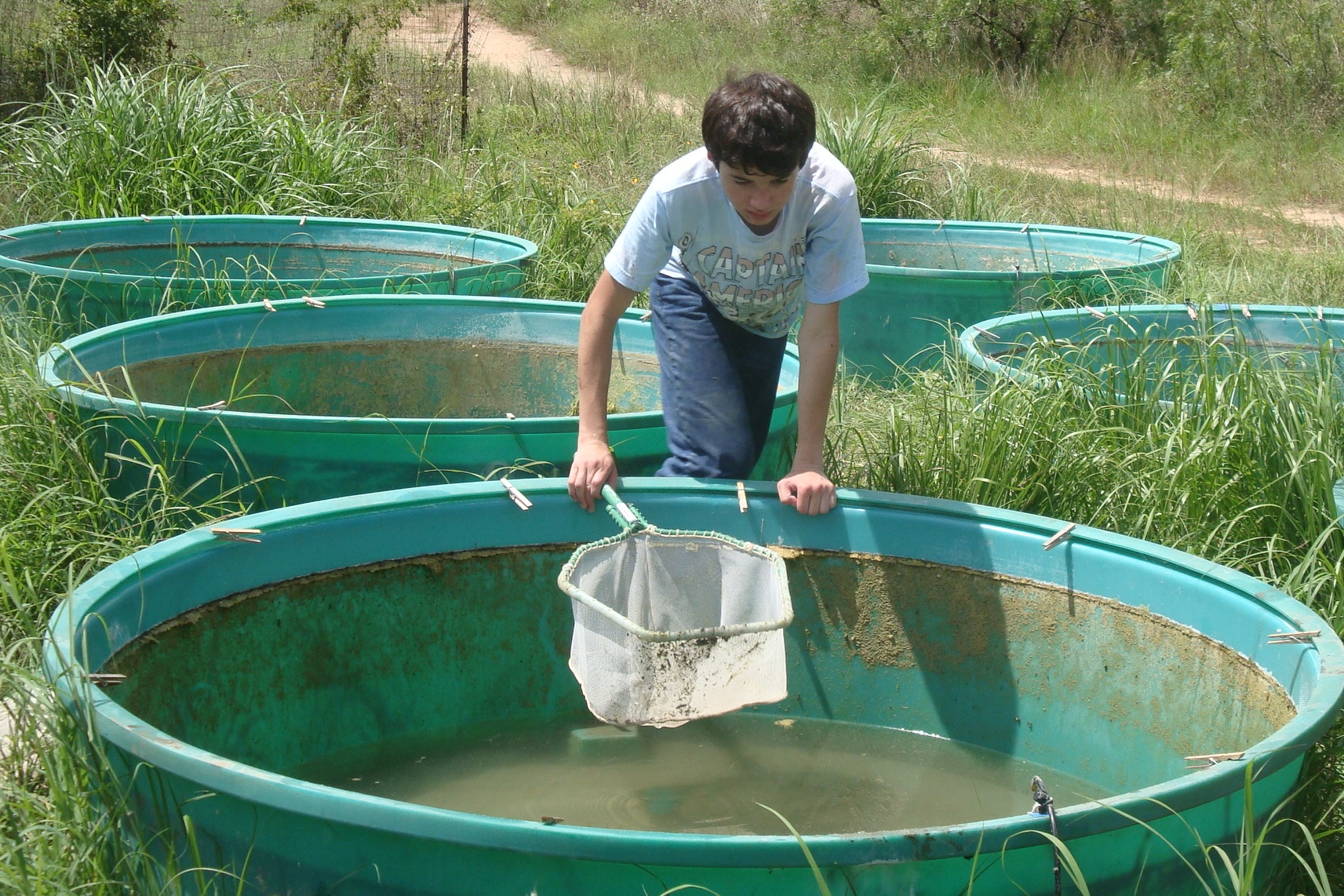
Commander Ben hunting Jewel Cichlid at the Brackenridge Field Lab to help with invasive species research

For two days last week, I worked with Ms. Dugan to collect both the invasive Jewel Cichlid and the native Cichlid from the field lab’s outdoor circular water tanks.  These tanks were so big that I couldn’t put my arms around them even if I tried.  Some tanks just had invasives, just natives, or a mixture of both.  The tanks were covered with a net to keep fish from jumping out.

First, we put down the pipes for all the tanks so they could drain, and we turned off the inflow of water.  We gave the tanks a few minutes to drain about 3/4 of the way down.

With the water drained, it was easier to catch the fish.  We used larger nets for the adults and smaller ones for the babies, the “fry”.  Both types of fish liked to hide in the algae, but they were no match for us. We caught a lot!

We put the fish in pickle buckets with water, and we wrote the tank number on blue tape that we stuck to the side of the buckets so we knew where the fish came from.

After we collected all the samples, we took the buckets back up to the lab building where Ms. Dugan started using them as part of her doctoral studies.

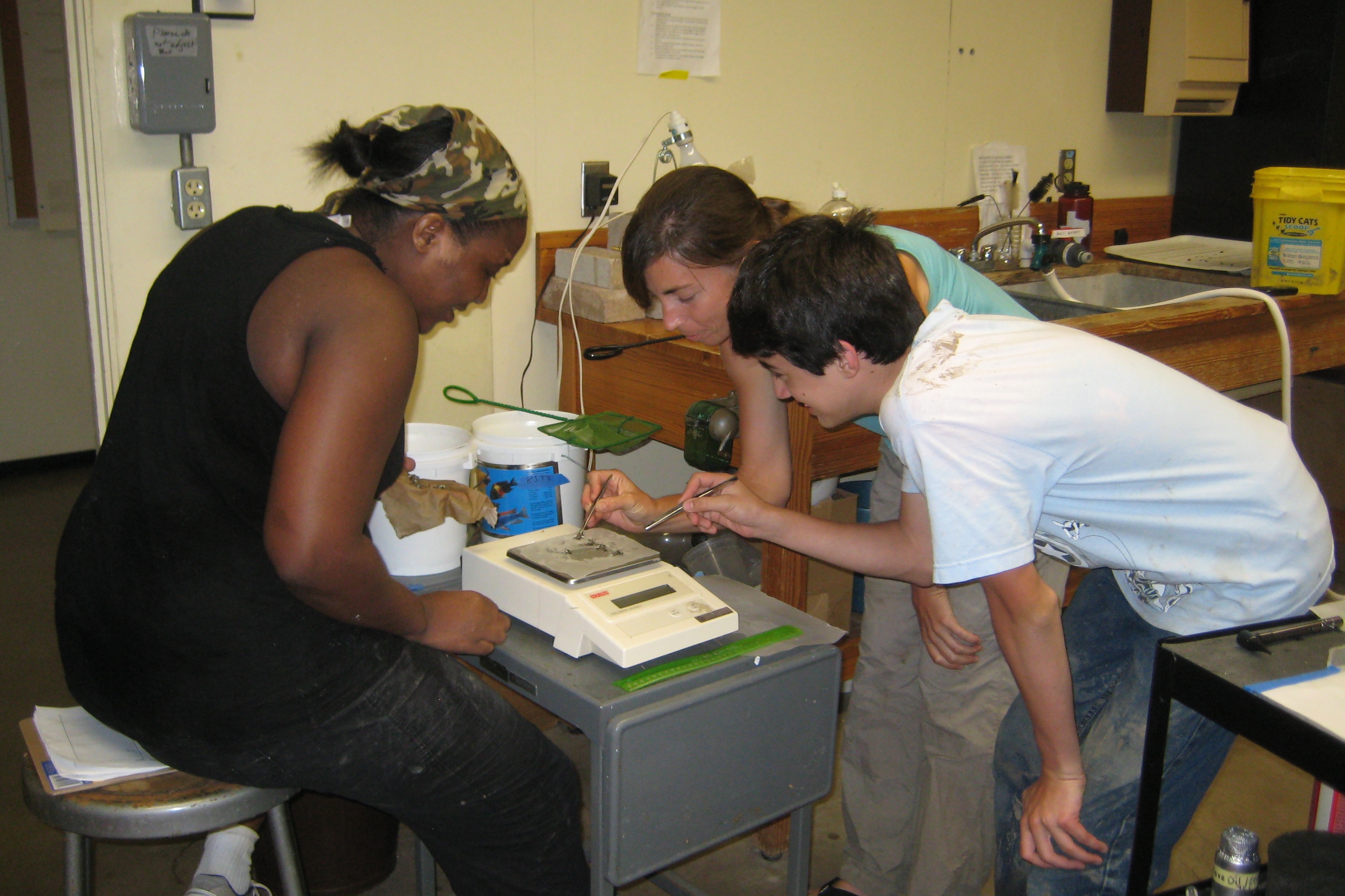
Ms. Laura Dugan, Ms. Jeanine Abrams McLean, and Commander Ben examining the Jewel Cichlid, an invasive species

Ms. Jeanine Abrams McLean also volunteered to help Ms. Dugan.  I met Ms. McLean earlier this year during her presentation at the Brackenridge Field Lab entitled, “Contagion: How Emerging Infectious Diseases Impact Amphibian Population Declines”.

Thanks, Ms. Dugan, for the wonderful opportunity to work with you and learn more about invasive species.  I can’t wait to see the results of your research and to see you again at the next Science Under the Stars!

Your friend,
Ben

1 Comment

Filed under Brackenridge Field Lab, Invasive Species, Jewel Cichlid, Laura Dugan, Minckley’s Cichlid, Ms. Jeanine Abrams McLean, Science Under the Stars, University of Texas, UT Austin