Author Archives: invasivehunter

Austin Invasive Species Corps Aid Golden-Cheeked Warbler

Mr. Darrell Hutchinson describes his work helping to track and protect the habitat for the Golden-Cheeked Warbler, an endangered species that breeds only in central Texas. He demonstrates how the weed wrench helps to remove invasive species that crowd out the native plants and trees in the warbler’s ecosystem.

Mr. Hutchinson is a biologist in Austin, Texas, and a member of Austin’s Invasive Species Corps. I interviewed “Corporal” Hutchinson during our invasive species volunteer day in August 2012. Learn more about my adventures with Austin’s Invasive Species Corps.

This video is part of my “Invasive Species: Secrets Revealed” series of interviews with scientists that I first started at the 2011 Texas Invasive Plant and Pest Conference.

Your friend,
Ben

Leave a comment

Filed under Austin Invasive Species Corps, Citizen Scientist, Endangered Species, Golden Cheeked Warbler, Invasive Species, Invasive Species: Secrets Revealed, Mr. Darrell Hutchinson, Volunteer, Weed wrench

Adventures with Austin’s Invasive Species Corps

Last weekend, I joined the Austin Invasive Species Corps to identify locations of Chinese Privet (Ligustrum sinense), an invasive species invading in the Long Canyon portion of the Balcones Canyonland Preserve (BCP).

I was happy to talk again with Mr. Chris Warren, a biologist with the BCP, and see the area that we helped to clear last year in my video, Titanic Struggle with Chinese Privet Ends with their Doom. (I’ll post another great video interview with him soon!)

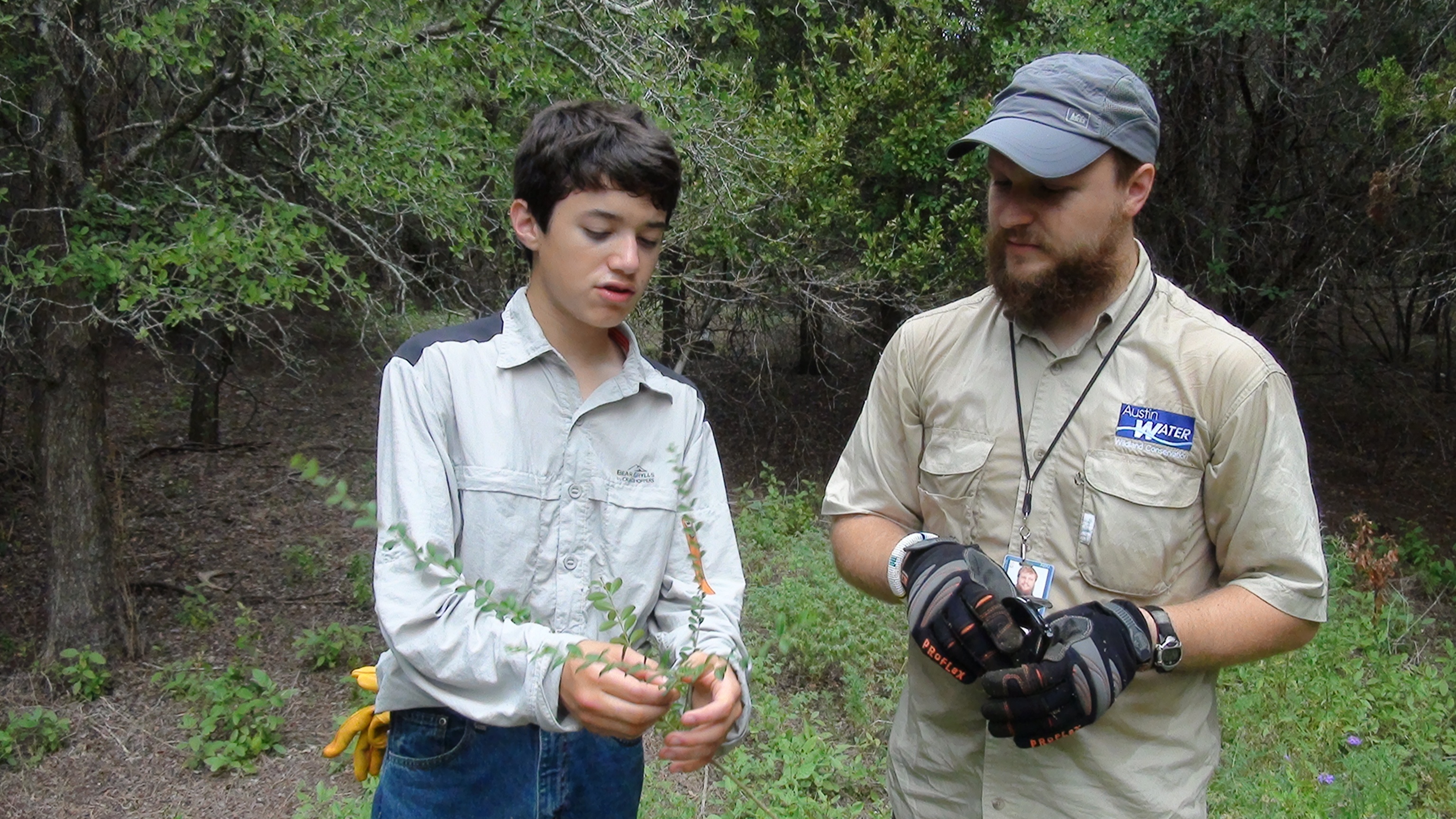
Commander Ben and Biologist Chris Warren examine a small Chinese Privet.

It was nice to see a lot of native plants starting to grow back in the open spaces that the Chinese Privet plants used to occupy. We had pulled up a lot, but more were starting to creep back in and there were other areas too where the Ligustrum overran the native plants. (Sometimes the biologists in our group would call Chinese Privet by its scientific name, Ligustrum.)

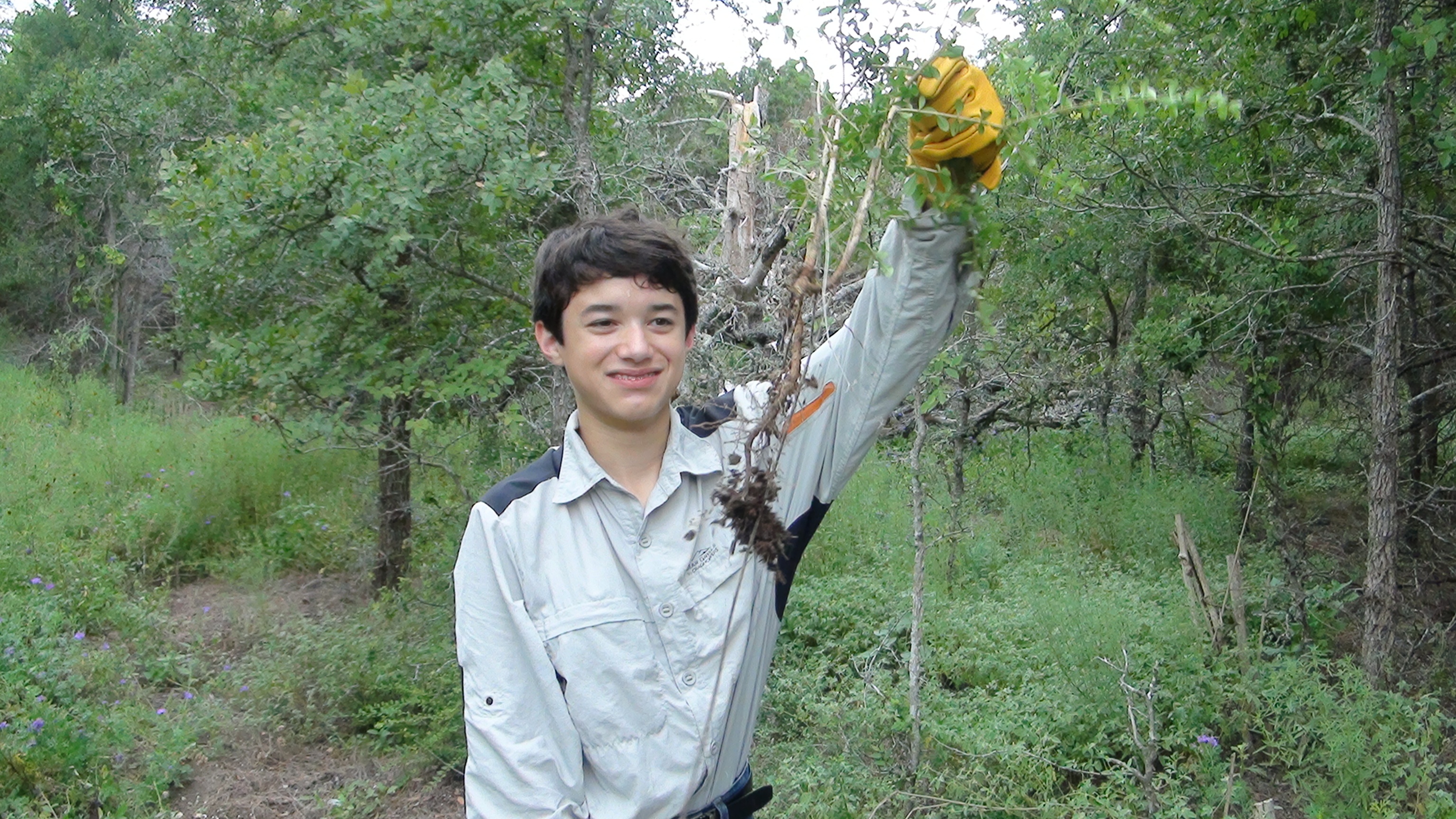
Pulling up Chinese Privet with a weed wrench.

We used special weed wrenches to hand pull as much Chinese Privet as we could find. These heavy tools help to pull up the plant, roots and all, otherwise it could grow back from a stump.

It was a fun day filled with hunting invasives, hard work, and listening also to some wonderful presentations from many different people who are experts in the field of invasive species.

Know your invasive species: Chinese Privet
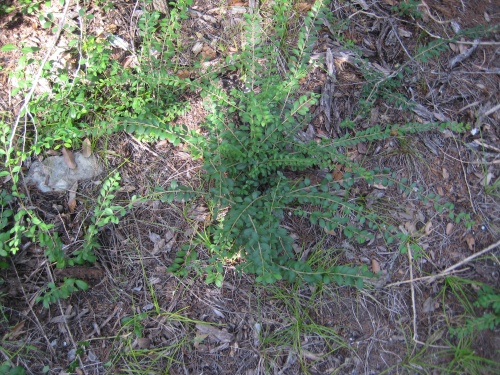
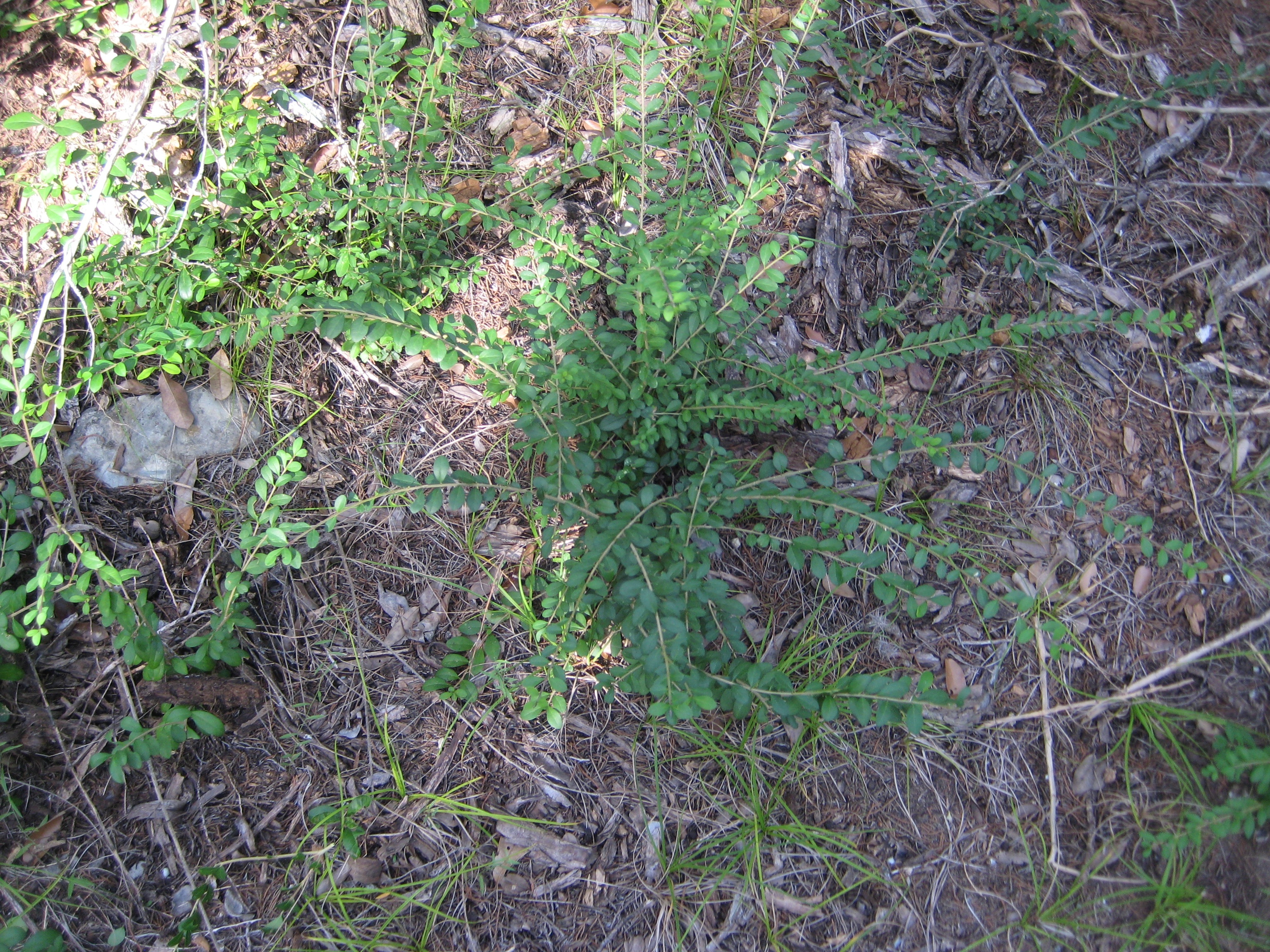
Small Chinese Privet plant (But they get much bigger!)

Chinese Privet is a woody bush with green leaves that break off easily and has lots of shoots growing out from the stalk.  It can sometimes be confused with the following native plants:

  • Elbow bush (Forestiera pubescens)
    How to tell them apart: Elbow Bush has branches that grow at 90 degree angles
  • Yaupon (Ilex vomitoria)
    How to tell them apart: The Yaupon has a tooth edge leaf instead of smooth edge leaf like the Chinese privet.

Unfortunately, Chinese Privet invaded the lower area of Long Canyon where it crowded out the native plants to create a monoculture.  Seeds from “Godzilla” sized Chinese Privet that were planted in the landscapes of homes up on a ridge, washed downhill, grew, and quickly multiplied.  This process happens over and over again when it rains and when birds carry the seed berries too.

In Asia, Chinese Privet’s native home, it stays in check because it has to contend with disease, parasites, and wildlife “eaters”.  Here in the U.S., Chinese Privet is essentially free of predators, and this allows it to spread aggressively.  Even our deer don’t like to eat it!  They prefer our native Texas plants instead.

As a non-native and pioneer species, this invasive plant can grow and spread quickly.

So why is it a problem if Chinese Privet establishes a monoculture in our area?

Know your Endangered Species: Golden cheeked warbler

Golden-Cheeked Warbler
Photo Credit: U.S. Fish and Wildlife Service

Well, it all has to do with water and the cute…and endangered…Golden-Cheeked Warbler.

The Golden-Cheeked Warbler, is a native bird and it uses the bark of the Ashe Juniper (Cedar) tree to make its nests.  These birds eat the larva of moths and butterflies that live on the Texas Live Oak trees.  Unfortunately, the Chinese Privet hogs the water and crowds out the the Cedars and the Oaks, and this eliminates the habitat and food for the Warbler.

This is especially troubling because the Golden-Cheeked Warbler is the only bird species with a breeding range confined to Texas from Palo Pinto County southwestward along the eastern and southern edge of the Edwards Plateau to Kinney County. The Balcones Canyonland Preserve is part of the Warblers’ habitat.

By clearing the Chinese Privet, we hope to create more habitat and food for the Golden-Cheeked Warbler.

Another opportunity to clear invasive species next month

Mark your calendars on Saturday, September 29, when the Austin Invasive Species Corps will get together again for a land management workday to fight against invasive plants in a new area of Long Canyon. This time, they’ll grapple with a team of two villains:

This is your chance to be an Invasive Hunter in action to battle against invasive species and help save the Golden-Cheeked Warbler!

Many thanks to Ms. Louise Liller, volunteer coordinator for the Austin Water Utility’s Wildland Conservation Division; Mr. Chris Warren; Austin biologists Mr. Darrell Hutchinson and Mr. Matt McCaw; and the valiant voluteers of the Austin Invasive Species Corp for hosting this event and making a difference for our endangered songbird and our native ecosystem.

Your friend,
Ben
2 Comments

Filed under Ashe juniper, Austin Invasive Species Corps, Austin Water Utility's Wildland Conservation Division, Balcones Canyonlands Preserve, BCP, BCP wildland conservation, Chinese Privet, Edwards Plateau, Elbow bush, Endangered Species, Golden Cheeked Warbler, Ligustrum, Long Canyon, Mr. Chris Warren, Mr. Darrell Hutchinson, Mr. Matt McCaw, Ms. Louise Liller, Pioneer plant, Texas Live Oak, Wax Leaf Privet, Waxyleaf privet, Yaupon

“Lights. Camera. Help.” Film Festival Selects “Native Plant Avengers” Video

A few months ago, I submitted one of my “Battles with Invasive Species” videos to the “Lights. Camera. Help.” Focus on Good film festival for their consideration. This nonprofit organization is dedicated to encouraging other nonprofit and cause-driven organizations to use film and video to tell their stories. One of the ways they do this is through their annual film festival.

I am so happy to share with you that my Native Plant Avengers – Ecosystem’s Mightiest Heroes video was selected to be part of the “Lights. Camera. Help.” 4th Annual Film Festival.  It will be screened to a live audience on Wednesday, September 12, 2012, at 7:00pm in the Spirit of Texas Theater at the Bob Bullock Texas State History Museum.  The winner of the film festival will be announced at 7:30pm on Friday, September 14, 2012, at their awards party at the Scottish Rite Theater.

Winners of the film festival will receive prize money to donate to the charity of their choosing.  If I win, I’ve asked to donate my proceeds to one of my favorite organizations whose hard work fighting invasive species everyday keeps native plants going strong in central Texas…The Lady Bird Johnson Wildflower Center!

If you’d like to join me at the “Lights. Camera. Help.” Film Festival, you can view the three day schedule and buy tickets here.  Hope you’ll come out and support a great cause!

Your friend,
Ben

Leave a comment

Filed under Battles with Invasive Species, Invasive Species, Lady Bird Johnson Wildflower Center, Lights Camera Help Annual Nonprofit Film Festival, Lights. Camera. Help., Native Plant Avengers, Nonprofit Organization, Scottish Rite Theater, Spirit of Texas Theater, Texas State History Museum

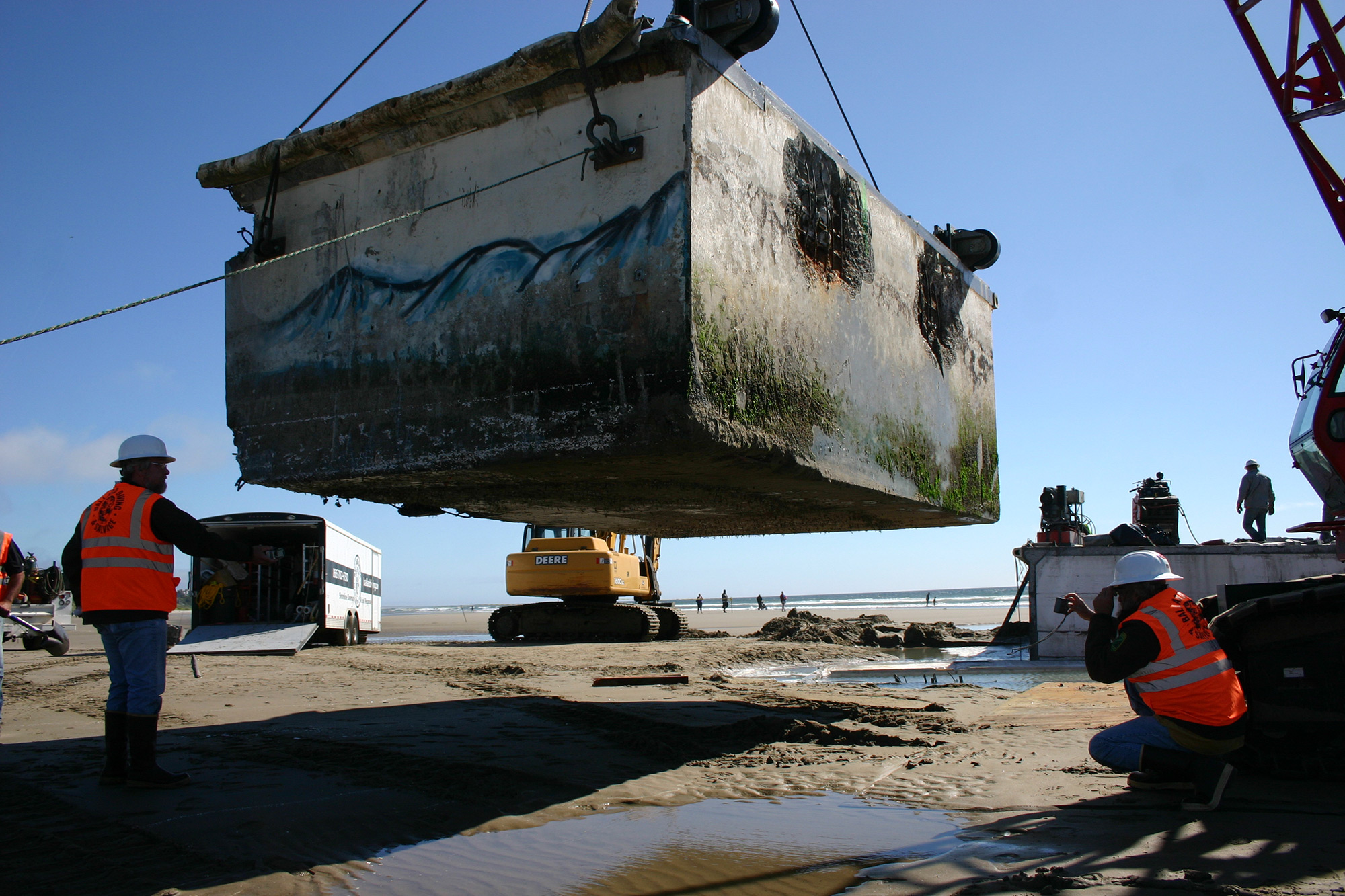
Tsunami dock beachhead with invasive species contained and dismantled on Oregon beach

Tsunami dock dismantled and removed from Oregon beach
Photo credit: Oregon Parks and Recreation Department

Since I first wrote about the dock carrying invasive plants and animals washing up on an Oregon beach in my early June blog post, “First wave of tsunami debris brings dock loaded with invasive species to the US West Coast“, a lot has happened!  This is what I’ve learned so far…

How do you get rid of a 47 ton dock?

In March 2011, a terrible tsunami washed away a shipping dock from Japan’s coast. It took about 15 months for the floating dock to travel across the vast Pacific Ocean and wash up on an Oregon beach in June 2012.

After workers and volunteers from the Oregon Parks and Recreation Department scrambled to remove the invasive plants and animals that they could find on the dock, they had to figure out how to dispose of the dock.  This presented a challenging problem!

The Oregon Parks and Recreation Department looked at three options:

  • Demolishing it in place
  • Towing it from the beach to the Port of Newport
  • Or a bit of both

The large amount of styrofoam in the dock, needed to keep it afloat, made demolishing it a problem, since I imagine that pieces can easily fly around and float away as the dock is being dismantled. This means taking it apart was expected to be more expensive and time consuming.

The department decided to award the removal contract to Ballard Diving and Salvage with a plan to dismantle the dock on shore and remove it in pieces by land. This helps keep the debris and any remaining creatures on the dock from washing away in the water.

The company cut the dock into sections with a wire saw and used a crane to lift the dock sections onto trucks. The trucks took the sections to Portland for final dismantling and recycling.

Were invasive species still hiding on the dismantled dock?

Although the Oregon Fish and Wildlife Department removed and buried a lot of plants and animals from the dock (more than two tons!), they couldn’t be sure that they removed everything, such as algae and smaller animals that might be hiding inside portions of the dock.

Invasive species can cause millions of dollars in economic and ecological damage, so the department wanted to handle the dock and the invasive plants and animals with extreme care.

Among other creatures, department workers found and removed two of the world’s 100 worst invasive species from the dock:

  • Northern Pacific Sea Star (Asterias amurensis)
  • Wakame, a marine alga (Undaria pinnatifid)

They didn’t want to try to reuse the dock because of the same concerns that they have about moving it through the water. So, they dismantled it, and they said that they would save part of it too for a museum.

And yes, when department biologists inspected the bottom and insides of the dock, they found more invasive species, including pink Japanese acorn barnacles…

…but thankfully, they were no longer alive.

What happens if more debris wash up on shore?

The department also talked about what to do if people find more debris on our West Coast beaches:

  • Litter, like plastic bottles or cans, that people can dispose of or recycle
  • Derelict vessels or other large debris that the U.S. Coast Guard can help remove
  • Mementos or possessions that the department can help return back to Japan
  • Hazardous materials, such as oil or chemicals, that the U.S. Coast Guard’s National Response center can also help remove

Timeline

  • March 11, 2011 – Tsunami strikes Japan and carries off the dock
  • June 5, 2012 – Dock carrying invasive species washes up on an Oregon beach
  • June 7-8, 2012 – Oregon Parks and Recreation Department cleans over two tons of invasive plants and animals from the dock
  • August 4, 2012 – Company hired by the Oregon Parks and Recreation Department dismantles the dock on the beach and carries it away overland for disposal

Learn more about the dock and the terrible tsunami

Your friend,
Ben

Leave a comment

Filed under Agate Beach, dock, Early detection, Japanese tsunami, Northern Pacific Sea Star, Oregon, Oregon Department of Fish and Wildlife, Oregon Parks and Recreation Department, Rapid response, tsunami debris, Wakame

NASA Curiosity Rover Lands on Mars and in Texas with Austin Planetarium Party

Tomorrow night brings another great historical milestone for astronomy and for the possibility of discovering alien life.

The newest Mars rover, Curiosity, will land on the red planet at 12:30 a.m. CT, Monday morning, August 6, 2012. This rover contains the Mars Science Laboratory (MSL), which NASA scientists will use to investigate if life existed or still exists on Mars.

After it gets settled, the rover will bring the laboratory to Gale Crater to drill into Martian rock, collect and heat up dust, and examine the emitted gases to detect the minerals or organic molecules contained in the minerals.

When watching the animated video of the Curiosity Rover landing, “Challenges of Getting to Mars: Curiosity’s Seven Minutes of Terror”, at the top of my blog post, I noticed that it wasn’t a “bouncing” landing like the earlier rover landing as shown in the NASA animated video of the 2003 Mars rover.

The Curiosity Rover has a sky crane that will help it land slowly and safely in the rough terrain and to keep a dust cloud from damaging the instruments on the rover.

Mars Landing Party Hosted by the Austin Planetarium

Overnight, from Sunday, August 5, to Monday, August 6, the Austin Planetarium will host a free party to celebrate the landing of NASA’s Curiosity Rover at ND Studios as part of the Get curious campaign.

Here are the activities that you can look forward to:

  • 4:00 – 8:00 p.m.– Lots of family and kids activities
    • Enjoy Austin Planetarium’s Discovery Dome, their mobile planetarium, as well as their Magic Planet
    • Play Mars Bingo with the Texas Space Grant Consortium
    • View a robot replica of the Curiosity Rover
    • Get tasty snacks, including real astronaut ice cream and drinks
  • 9:00 p.m. – 1:00 a.m. – Adult activities and the lander live
    • Hear from science speakers
    • Watch live feeds from NASA with the latest updates from the lander
    • Listen to live music
  • 12:30 a.m. – Watch the Curiosity Rover touch down on the Mars surface!!!!

I’m really looking forward to seeing the live landing. (Actually, almost live since it takes the rover’s signal 14 minutes to reach Earth.) It’s going to be a blast!

Update: Hooray! The Mars rover, Curiosity, landed safely. How exciting to learn that Dr. John Grotzinger is a research scientist for the Mars Science Laboratory. As young Commander Ben, I met Dr. Grotzinger in 2005 at a UT Austin Environmental Science Institute Hot Science. Cool Talks. presentation.

Austin Planetarium at Hot Science – Cool Talks

Commander Ben and the Austin Planetarium team at UT Austin before Dr. Brittany Schmidt’s Hot Science – Cool Talks Presentation

I had a chance to meet the Austin Planetarium team and take part in their fun activities twice earlier this year as part of the great UT Austin Environmental Science Institute’s Hot Science – Cool Talks presentations:

You’ll find fun, interactive activities before every Hot Science – Cool Talks presentation. For example, before Dr. Schmidt’s talk, I entered the Austin Planetarium’s Discovery Dome. The speaker inside the planetarium used a computer to control a projector that led us through the night sky and zoomed in on Jupiter and its Galilean moons.

P.S. The Austin Planetarium team is working on building a world-class science and technology museum in Austin!

What about life on Europa?

Dr. Britney Schmidt and Commander Ben are excited by the possibility of life on Europa

Earlier this year, and I had the opportunity to interview Dr. Schimdt to talk about the possibility of life on Europa, one of Jupiter’s moons, as part of her Hot Science – Cool Talks presentation.

Dr. Schmidt thought that if there was life on Mars, it existed in the past and we would only find fossils today. Europa may have a greater chance of having life currently because this moon contains liquid water under its frozen surface.

Whether there’s life in space or not, there’s certainly life teeming in Austin for everyone who’s scientifically curious!

Your friend,
Ben

Leave a comment

Filed under Alien life, Astronomy, Austin Planetarium, Curiosity Rover, Dark Energy, Explosions, and Zombie Stars, Dr. Andrew Howell, Dr. Britney Schmidt, Dr. John Grotzinger, Environmental Science Institute, Europa, Extraterrestrial life, Gale Crater, Galilean moons, Hot Science - Cool Talks, Jupiter, Jupiter's Icy Moon, Mars, Mars Landing, Mars Rover, Mars Science Laboratory, NASA, Texas Space Grant Consortium, University of Texas, UT Austin