Monthly Archives: June 2015

Austin Kids Become Invasive Hunters at the Wildflower Center

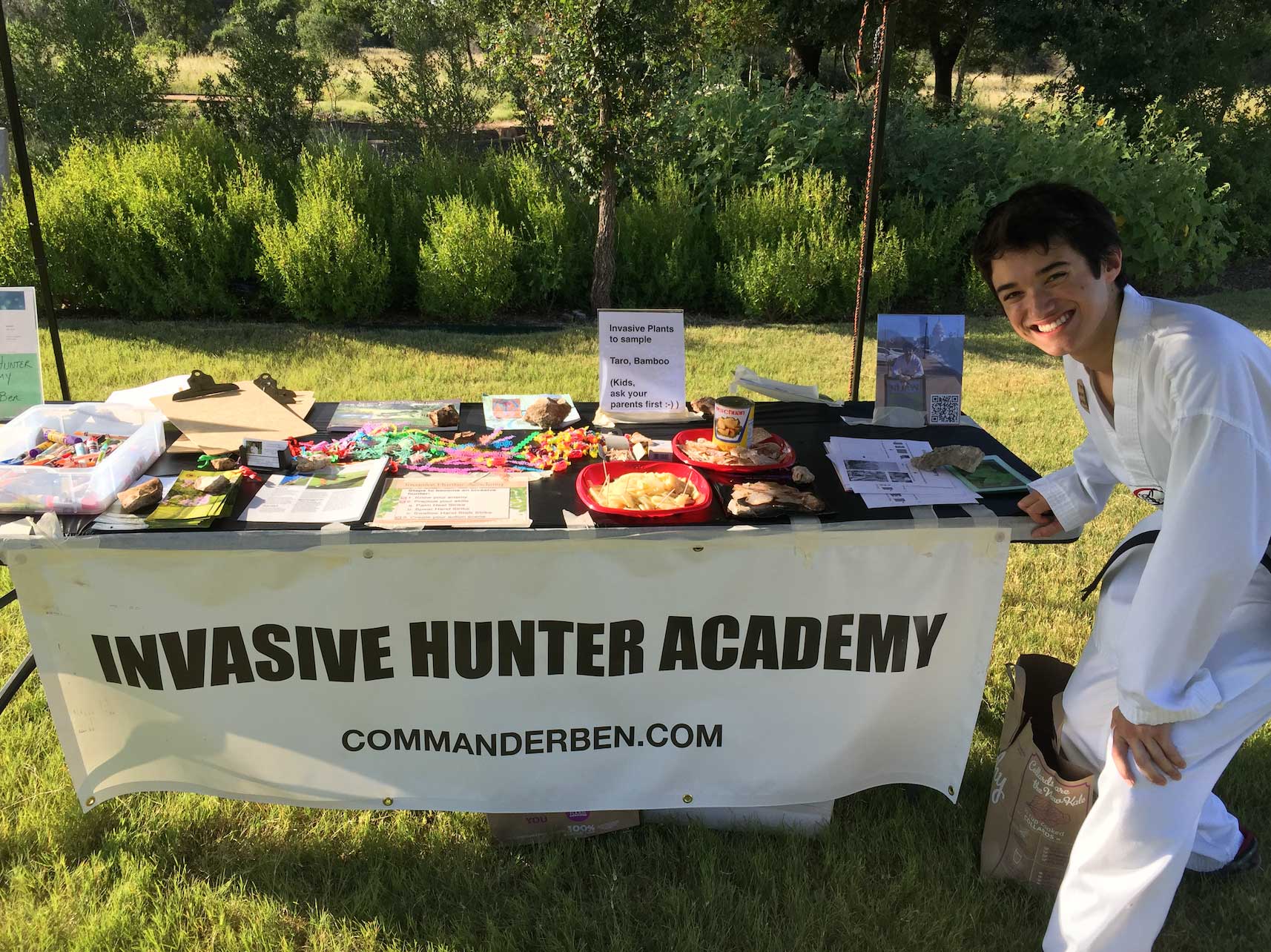
Setting up the Invasive Hunter Academy with samples of edible invasive plant species

Setting up the Invasive Hunter Academy with samples of edible invasive plant species

It was wonderful bringing the Invasive Hunter Academy to the Lady Bird Johnson Wildflower Center on Thursday, June 11, 2015, to help teach kids about invasive species as part of this summer’s Nature Nights events.

I previewed the event along with some videos in my Yum! Edible Invasive Species at the Wildflower Center during Nature Nights blog post.

The Nature Nights event that I attended focused on edible plants, so naturally, I found some varieties of edible invasive plants for the kids to try:

What a hit they were! The Taro chips went fast, but many agreed that the Bamboo was an acquired taste.

Here are some pictures from the event:

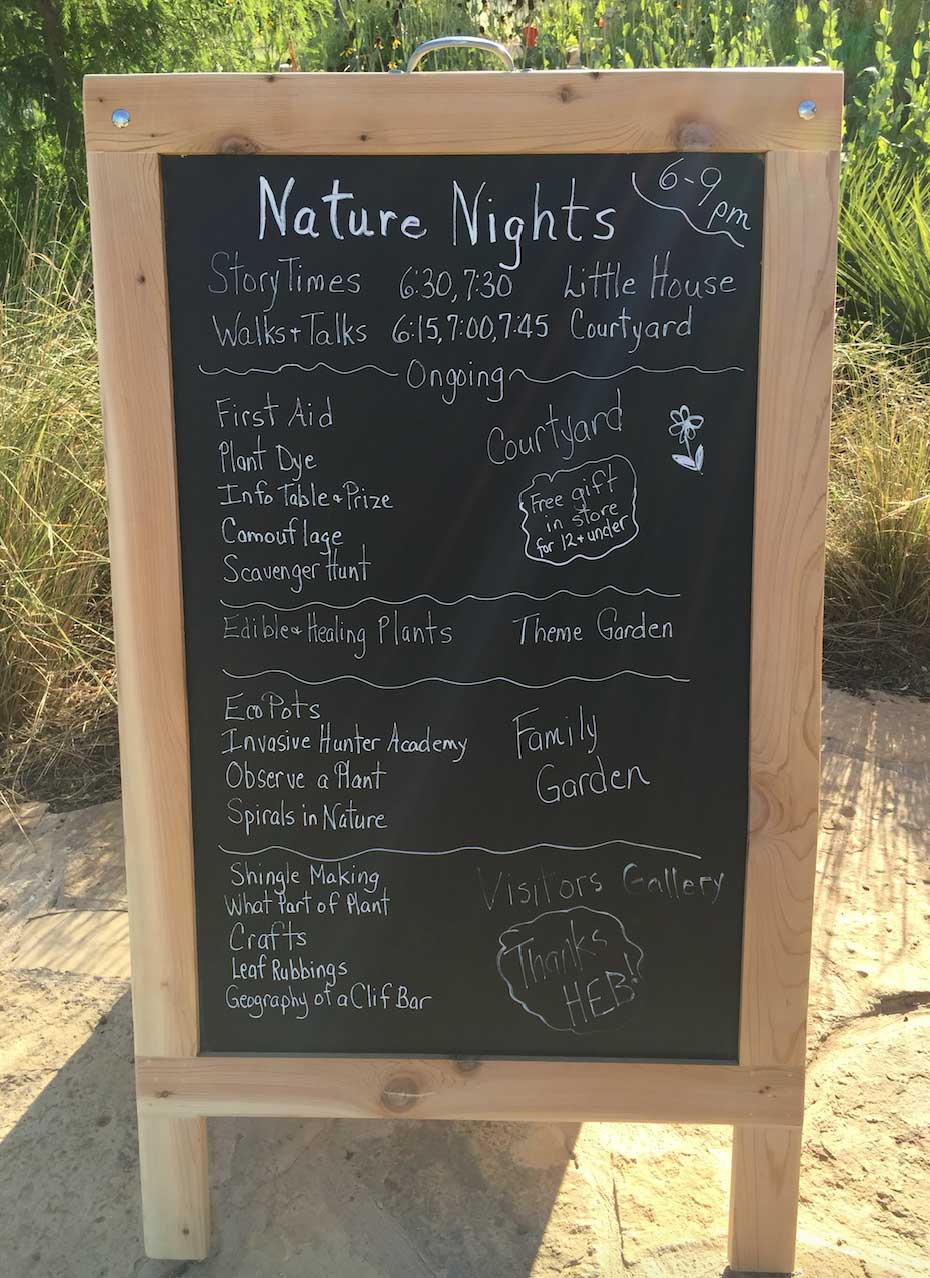
Lots of plant activities for kids during Nature Nights 2015

Lots of plant activities for kids during Nature Nights 2015

The young Austin naturalists found a great spot near the academy table to sample invasive plant species and work on their Invasive Hunter action diorama.

The young Austin naturalists found a great spot near the academy table to sample invasive plant species and work on their Invasive Hunter action diorama.

Remember that to become an Invasive Hunter, you need to learn the action moves to take down your opponent.

Remember that to become an Invasive Hunter, you need to learn the action moves to take down your opponent.

I enjoyed talking with kids about invasive species as they picked the invasive plant they wanted to battle for their action diorama.

I enjoyed talking with kids about invasive species as they picked the invasive plant they wanted to battle for their action diorama.

Thanks, Ms. Julie Graham, Wildflower Center Education Specialist, for inviting me to bring my Invasive Hunter Academy back to Nature Nights this year! We had a lot of Austin kids graduate as Invasive Hunters, ready to protect their native ecosystem from non-native plants.

Nature Nights in July

There are more opportunities to enjoy the Wildflower Center this summer! Nature Nights continues with more fun, family-friendly events in July:

  • July 9 – Springs, Streams and Ponds Ecology
  • July 16 – Harnessing Fire
  • July 23 – Birds of Prey

I hope that you’re having a wonderful summer!

Your friend,
Ben

Leave a comment

Filed under Elephant Ear, Golden Bamboo, Invasive Hunter, Invasive Hunter Academy, Invasive Species, Lady Bird Johnson Wildflower Center, Nature Nights

Yum! Edible Invasive Species at the Wildflower Center during Nature Nights

Eating invasive species is a great way to get rid of them

Eating invasive species is a great way to get rid of them

Nature Nights returns to the Lady Bird Johnson Wildflower Center this Thursday, June 11, 2015, and I’m excited to let you know that I’ll be there with my Invasive Hunter Academy.

The Wildflower Center hosts this free, fun, and family event on Thursday nights during the summer. It’s a great opportunity for kids to enjoy learning about the plants, animals, and the ecology of Central Texas.

You’ll get the chance to create crafts, go on hikes and adventures, and listen to nature presentations. In addition to goodies that they can pick up as part of the nature night activities, kids 12 and under will also receive a free gift from the gift store.

Plants – They taste good!

This Thursday’s Nature Night is all about plants and how they taste good and can help us. We all know about fruits and vegetable plants, but what about invasive species? (Watch my video invitation to the Nature Night’s event on plants.)

Invasive species are not native to the ecosystem, and they can cause millions of dollars in damage to the environment and economy.

The best way to get rid of invasive species is to prevent their spread. If they’re already established, removal efforts can be time consuming and expensive. It may not even be feasible to get rid of them. For example, it’s not going to be possible to remove KR Bluestem from our Texas roadsides and fields, even with the Amazing Invasive Hunter Man’s help.

There is another way to get rid of invasive plant species…to eat them!

Join me at the Nature Nights event on Thursday, June 11, to learn about invasive plant species you can eat, including a variety of delicious Elephant Ear (Colocasia esculenta – also known as Taro) and Golden Bamboo (Phyllostachys aurea).

Note: Always be sure to learn about invasive plant species to see if they are edible before you decide to eat them. (Kids, always ask your parents first.) For example, don’t try eating elephant ear raw. It’s inedible, but the variety commonly known as Taro, can be boiled or cooked to make it both edible and tasty.

In addition to learning about invasive species and sampling an invasive plant as part of the Invasive Hunter Academy, you’ll also be able to take a guided tour of the gardens, enjoy story time, and go on a scavenger hunt as part of the Nature Night’s event.

That’ll build up your appetite!

Videos for your invasive plants dining

While you’re snacking on invasive plants, enjoy some of my earlier Battles with Invasive Species videos:

Still hungry?

Did invasive plants wet your appetite for more invasive species?

2015 Summer Nature Nights Schedule

Young naturalists train to be invasive hunters during a previous Nature Nights at the Lady Bird Johnson Wildflower Center

Young naturalists train to be invasive hunters during a previous Nature Nights at the Lady Bird Johnson Wildflower Center

There are many fun Nature Nights events planned for this summer.

  • June 11 – Plants
  • June 18 – Pollinators
  • June 25 – Snakes
  • July 9 – Springs, Streams and Ponds Ecology
  • July 16 – Harnessing Fire
  • July 23 – Birds of Prey
Learn about edible plants at the Nature Nights on June 11, 2015 (Image credit: Wildflower Center)

Learn about edible plants at the Nature Nights on June 11, 2015 (Image credit: Wildflower Center)

Hope to see you there!

Your friend,
Ben

Leave a comment

Filed under Lady Bird Johnson Wildflower Center, Nature Nights, Wildflower Center

Radiation resistant bacteria at UT Austin’s Hot Science – Cool Talks

Dr. Lydia Contreras and Ben Shrader before her Hot Science - Cool Talks presentation

Dr. Lydia Contreras and Ben Shrader before her Hot Science – Cool Talks presentation

I’m so happy that my high school sophomore year is over, and I did great on my finals!

In my English class, our final was mostly over the last two books that we read: All Quiet on the Western Front and Great Expectations. In my world history class, I enjoyed writing a “changes in continuity over time” essay about Europe. I talked about the Roman empire through the Medieval era to the modern day.

UT Environmental Science Institute

In my last blog post, I shared my pictures from the UT Austin Environmental Science Institute Education and Outreach Dinner at the Google Fiber Space on April 29, 2015.

I’m a big fan of the UT Environmental Science Institute (ESI) because they have an awesome program called Hot Science – Cool Talks, where they bring scientists and researchers to talk about hot (of course) science topics each fall and spring semester. The presentations are geared to kids from kindergarten (which I was in at one time) to high school students, but even adults will find the talks and activities before the presentation both fun and interesting.

Better Living Through Microbes

A candid photo of Deinococcus radiodurans (aka Conan the Bacterium) (Photo credit: Michael Daly, Uniformed Services University)

A candid photo of Deinococcus radiodurans (aka Conan the Bacterium) (Photo credit: Michael Daly, Uniformed Services University)

The last Hot Science Cool talks of the Spring 2015 semester on May 1, 2015, was Better Living Through Microbes by Dr. Lydia Contreras, UT Austin Assistant Professor of Chemical Engineering. I previewed her talk in my previous blog post.

Dr. Contreras talked about microbes that could live in toxic environments, and I was fascinated to learn about Deinococcus radiodurans, a bacteria that could survive high doses of radiation.

Scientists discovered this unique bacteria after they irradiated meat for sterilization. The radiation should have killed all the bacteria in the meat, but they discovered that the irradiated meat spoiled after a few days.

Scientists were baffled, and after they investigated, they discovered this new bacteria. In addition to radiation, it can also withstand most cold, dehydration, vacuum, and acid! Because of its hardiness, it also has the nickname, Conan the Bacterium.

How does the bacteria resist radiation?

Dr. Contreras’ is researching the DNA of the bacteria along with its cell composition to understand how it is able to withstand lethal doses of radiation that would kill all other bacteria. These radiation levels are also fatal to humans.

Somehow the bacteria can repair the damage that radiation causes to its DNA. Note however that Deinococcus radiodurans is not immune to radiation. There is a high enough level of radiation that can kill the bacteria.

From her research, we may be able to understand how to protect or repair cells from the harmful effects of radiation. (I learned more about radiation and half-lives in one of the last chapters that we covered in my sophomore high school chemistry class.)

Pictures from the Hot Science – Cool Talks event

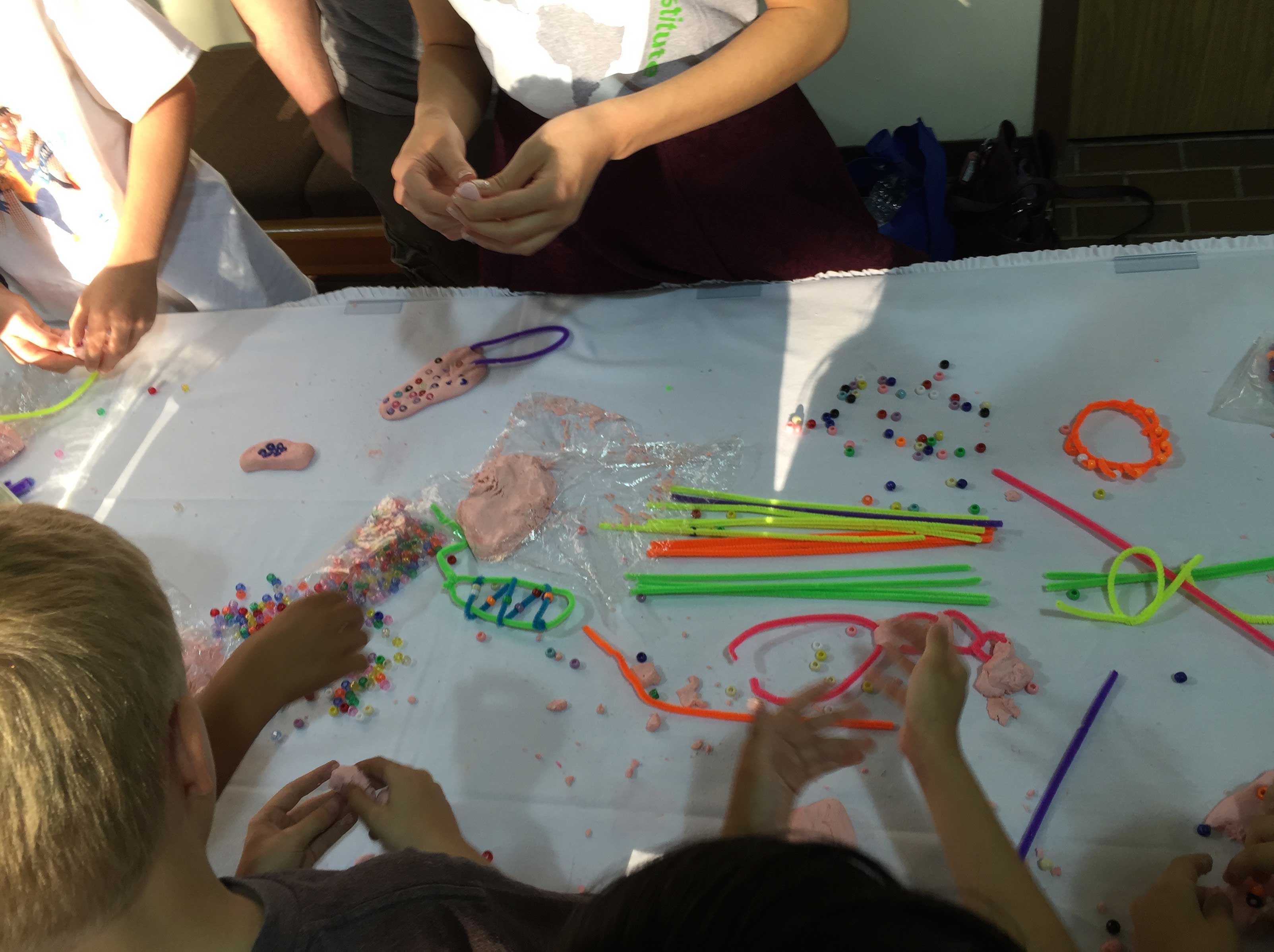
One of the many hands activities for kids before the Hot Science event.

One of the many hands activities for kids before the Hot Science event.

One of the benefits of arriving early before the event is that you get to participate in the community science fair. In this activity, kids got a chance to create a DNA model of their own.

Ben Shrader and Mr. Trevor Hance with the science activities before the event

Ben Shrader and Mr. Trevor Hance with the science activities before the event

I was happy to see Mr. Trevor Hance at the event. He is a wonderful science teacher at Laurel Mountain Elementary.

I’m so grateful to Mr. Hance for inviting me to present my experiences with invasive species at the Children and Nature Network Conference. Dr. Jay Banner, UT ESI director, also highlighted how Mr. Hance inspires his students at the UT ESI Education and Outreach Dinner.
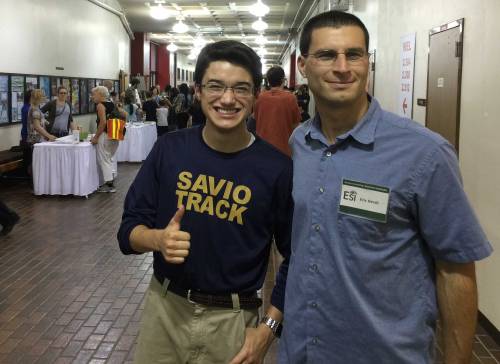
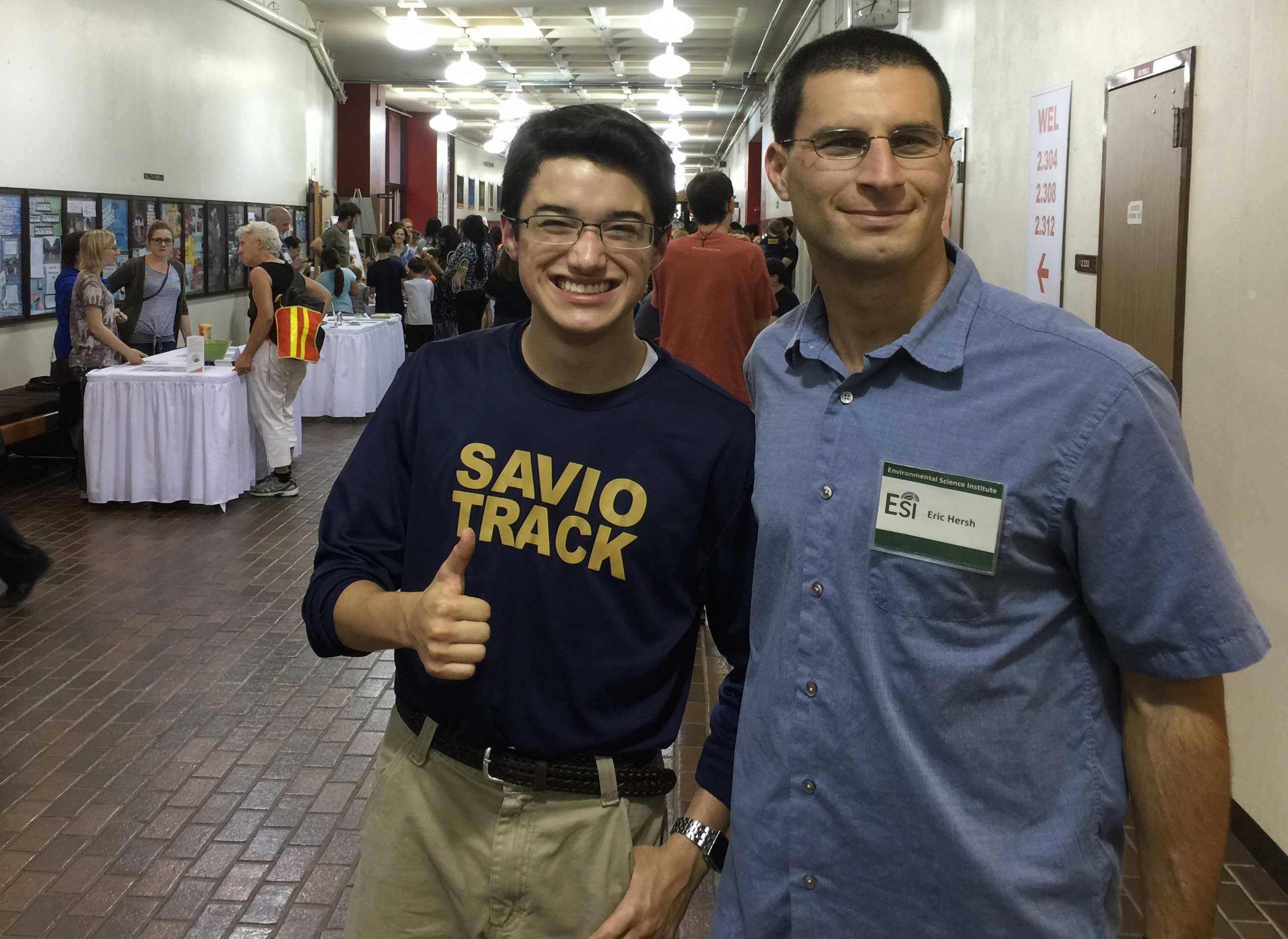
Ben Shrader and Mr. Eric Hersh in Welch Hall before the Hot Science event

Ben Shrader and Mr. Eric Hersh in Welch Hall before the Hot Science event

Mr. Eric Hersh is both the UT ESI Research Coordinator and a Geological Sciences lecturer.

Ms. Melinda Chow and Ben Shrader in the audio and film room at the top of the Welch Hall auditorium

Ms. Melinda Chow and Ben Shrader in the audio and film room at the top of the Welch Hall auditorium

This was a treat. Ms. Melinda Chow, UT ESI Outreach Coordinator, gave me a tour of where UT ESI films and streams the Hot Science presentations in a room at the top of the Welch Hall auditorium. Joining the live webcast on your laptop is a great way to be part of the event if you are not able to join in person.
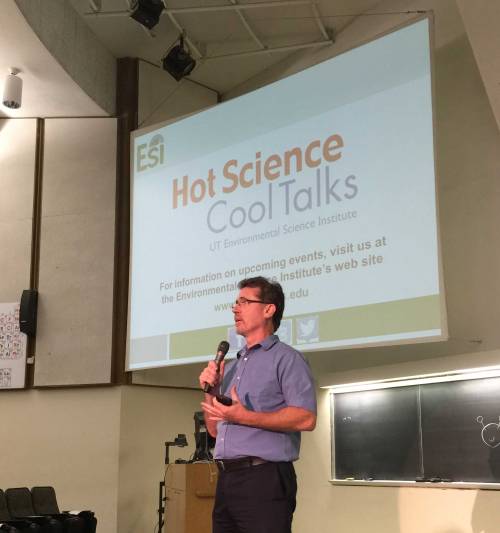
Dr. Jay Banner talks about Hot Science - Cool Talks

Dr. Jay Banner talks about Hot Science – Cool Talks

Dr. Banner welcomed the audience and the different schools in attendance.

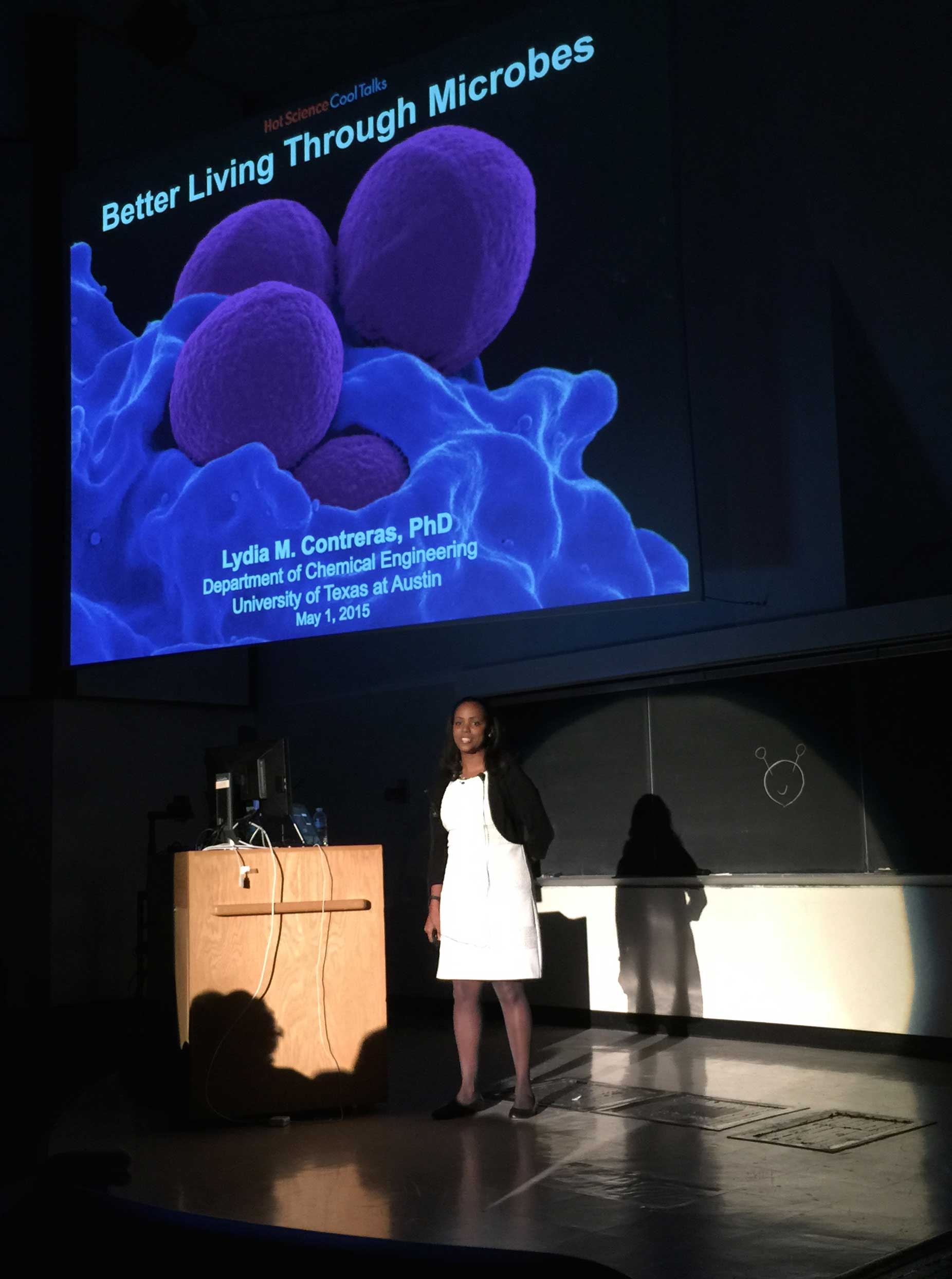
Dr. Lydia Contreras during her Hot Science - Cool Talks presentation

Dr. Lydia Contreras during her Hot Science – Cool Talks presentation

Dr. Contreras starts her presentation, Better Living Through Microbes.
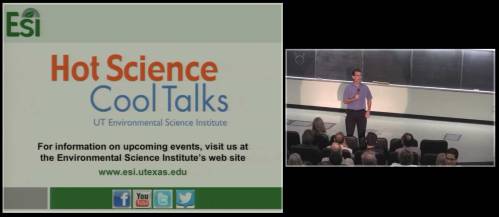
Watch Hot Science - Cool Talks live or as a webcast replay

Watch Hot Science – Cool Talks live or as a webcast replay

If you missed the event, you can watch the webcast and learn more about Dr. Contreras’ talk and about the fascinating Deinococcus radiodurans bacteria.

Fall 2015 Hot Science – Cool Talks

The UT ESI team was still confirming the speakers for the Fall 2015 semester during the microbes event, but now they’ve announced their upcoming talks on their website:

  • Two Guys on Your Head on Why We Behave Unsustainably with Dr. Art Markman, Dr. Bob Duke, and Rebecca McInroy – August 28, 2015
  • The Future of 3D Printing: The Democratization of Design with Dr. Carolyn Seepersad – October 16, 2015
  • Humanoids of Our Future with Dr. Luis Sentis – December 4, 2015

Hope to see you there!

Your friend,
Ben
Leave a comment

Filed under Eric Hersh, Hot Science - Cool Talks, Jay Banner, Lydia Contreras, Melinda Chow, Uncategorized