Monthly Archives: February 2015

National Invasive Species Awareness Week 2015

National Invasive Species Awareness Week logo (image credit: NISAW)

National Invasive Species Awareness Week logo (image credit: NISAW)

National Invasive Species Awareness Week (NISAW) 2015 starts today (February 22) and continues through February 28! After being absent from Washington D.C. since 2012, NISAW 2015 returns with lots of activities, including a invasive species fair and congressional reception on February 25. There are also many state activities too.

In Texas, Mr. Justin Bush, Invasive Species Coordinator for Texasinvasives.org, has special Invaders of Texas Citizen Scientist Workshops that you can join to learn how to report invasive plants and use the new Texas Invasives mobile app. (Here’s a video I made with an earlier version of the Texas Invaders iPhone App.)

Kids’ Day at National Invasive Species Awareness Week 2012

I was happy to bring my Invasive Hunter Academy to Kid’s Day at NISAW 2012 that was held at the US Botanic Garden. Here are some of my adventures teaching kids about invasive species during my 2012 trip:

What happened to National Invasive Species Awareness Week 2013 and 2014?

Sadly, the events for NISAW 2013 were cancelled because of the government sequester and the event was not rescheduled until 2015.

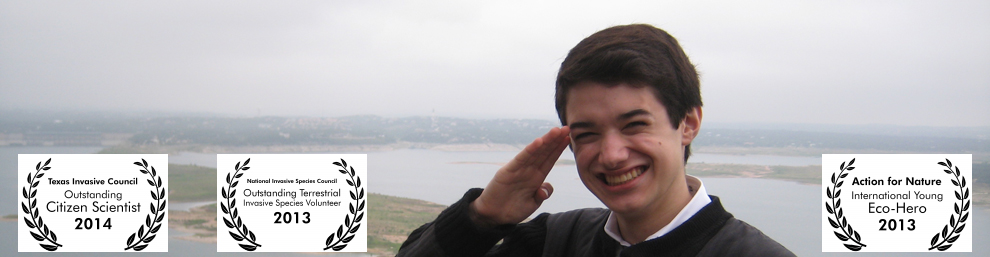
NISAW 2013 was special for me because the National Invasive Species Council (NISC) gave me the 2013 Outstanding Terrestrial Invasive Species Volunteer of the Year Award. What a great honor! But I was disappointed that I couldn’t go to Washington DC that year to accept the award.

Kids’ Day at National Invasive Species Awareness Week 2015

This year’s Kid’s Day at NISAW 2015 is being held on February 28, 2015, during National Invasive Species Awareness Day at the National Museum of Natural History (NMNH).

If you’re in Washington D.C., you’ll learn about invasive species from the presenters with lots of interactive activities for kids. Afterwards, be sure to visit the top five Washington DC museums for Invasive Species Hunters. (Don’t forget the International Spy Museum. It’s great! Sometimes hunting invasive species requires stealth.)

Invasive Hunter Academy at Nature Nights 2015

I have some great news to share with you! I’m excited to announce that I’ll be bringing the Invasive Hunter Academy back to Nature Nights at the Lady Bird Johnson Wildflower Center in Austin, Texas.

The Nature Nights plants special event on June 11 has a special theme this year. I can’t wait to share it with you in an upcoming blog post. 😉

Your friend,
Ben

Leave a comment

Filed under Invasive Species, Justin Bush, National Invasive Species Awareness Week, National Invasive Species Council, NISAW

A New Age of Enlightenment with Hot Science – Cool Talks

Sébastien Leclerc I, Louis XIV Visiting the Royal Academy of Sciences, 1671 (Source: Wikipedia - The Elisha Whittelsey Collection, The Elisha Whittelsey Fund, 1962)

Sébastien Leclerc I, Louis XIV Visiting the Royal Academy of Sciences, 1671
(Source: Wikipedia – The Elisha Whittelsey Collection, The Elisha Whittelsey Fund, 1962)

We are studying the enlightenment in my high school world history class. There was an explosion of scientific knowledge and advancements in art and literature during this time period, which was also known as the Age of Reason. This change in Western civilization promoted individualism and thought and reached its peak in Europe in the mid-1700s.

Some of the great scientists during this time period include Nicholas Copernicus who came up with the heliocentric theory of the solar system with the Earth and the planets revolving around the sun.

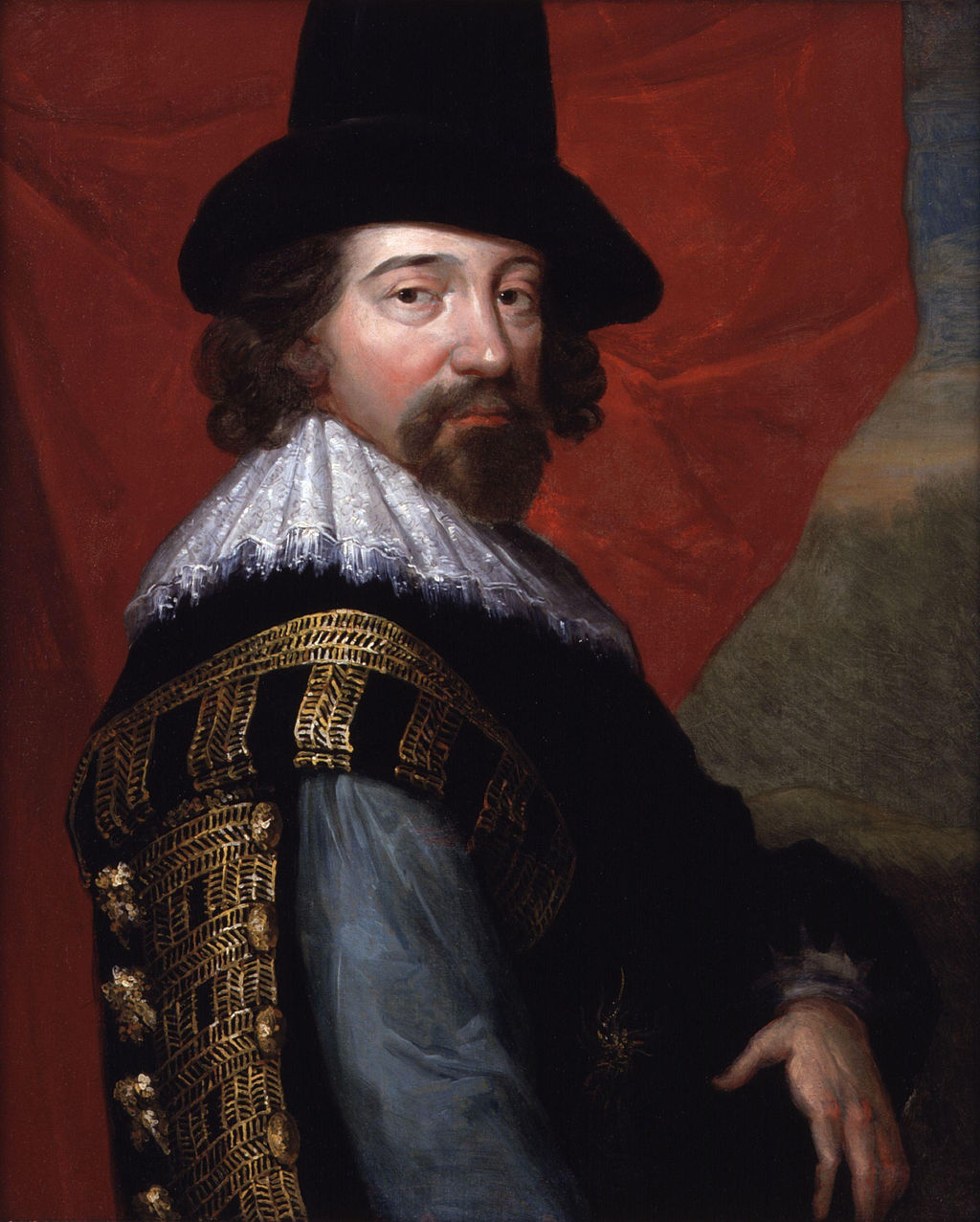
Sir Francis Bacon (Image credit: Wikipedia, public domain)

Sir Francis Bacon (Image credit: Wikipedia, public domain)

One of my favorite scientists of the enlightenment is Francis Bacon. He encouraged scientists not to rely on ancient thinkers, but to use experimentation and then draw conclusions. This approach helped to develop the scientific method, which is basically to have a hypothesis, test your hypothesis, get your results, and see if others can copy your experiment and get the same result.

These scientists allowed us to advance past intuition and into reason. An example of intuition is that since frogs live in the mud, they must be made of mud. Also, since rotten meat has maggots, the maggots must be born out of meat. But with the scientific method, we were able to use experimentation to learn that flies lay eggs on rotten meat, and that the maggots just don’t come into existence.

We’re doing a fun activity in class soon. It’s called a salon. Not the beauty one, but one where intellectuals get together and discuss the topics of the day. It originated in France, and the exchange of scientific ideas helped to propel this Age of Reason.

Sadly, intellectual salons are not as common today, but there is something better – Hot Science, Cool Talks, and my friends, we have an opportunity to join a modern day scientific salon on Friday, February 20, 2015, at the University of Texas at Austin.

Power Trip: The Story of Energy

Power Trip: The Story of Energy (Image credit: UT Austin Environmental Science Institute)

Power Trip: The Story of Energy (Image credit: UT Austin Environmental Science Institute)

Dr. Michael Webber will talk about the role of energy in our lives and society, spanning hundreds of years. (Including the enlightenment too?) He’ll bust a few myths on the way and give fun facts on future technologies and solutions.

This Hot Science – Cool Talks event is a part of UT Energy Week and includes a community science fair before the event.

Wouldn’t it be fantastic to talk with the great scientists of our time? Well, you can with Dr. Michael Weber, Dr. Jay Banner, and many illuminating UT Austin researchers and scientists during Hot Science – Cool Talks events. And this month’s presentation about energy is a great way to turn on a new age of enlightenment!

Your friend,
Ben

Leave a comment

Filed under Environmental Science Institute, Hot Science - Cool Talks, Michael Webber