Monthly Archives: May 2012

Invasive Hunter Academy joins Nature Nights at the Wildflower Center to Teach Kids about Invasive Species

Since I was very young, I’ve always enjoyed Nature Nights at the Lady Bird Johnson Wildflower Center in Austin, Texas.

Nature Nights are a great way for families, especially younger kids, to learn about wildlife, plants, and the ecology and ecosystem of Central Texas. On the following Thursdays from 6-9 p.m. this summer, you can listen to presentations, go on hikes, and take part in nature activities and crafts.

2012 Summer Nature Nights Schedule

  • June 21: Butterflies
  • June 28: Hummingbirds
  • July 5: Power of Plants
  • July 12: Birds of Prey
  • July 19: Bats
  • July 26: Snakes

Admission to the Lady Bird Johnson Wildflower Center is free during Nature Nights. It’s a ton of fun for kids and adults too, and kids under 12 can also get a cool free gift from the center’s store.

Become an Invasive Hunter

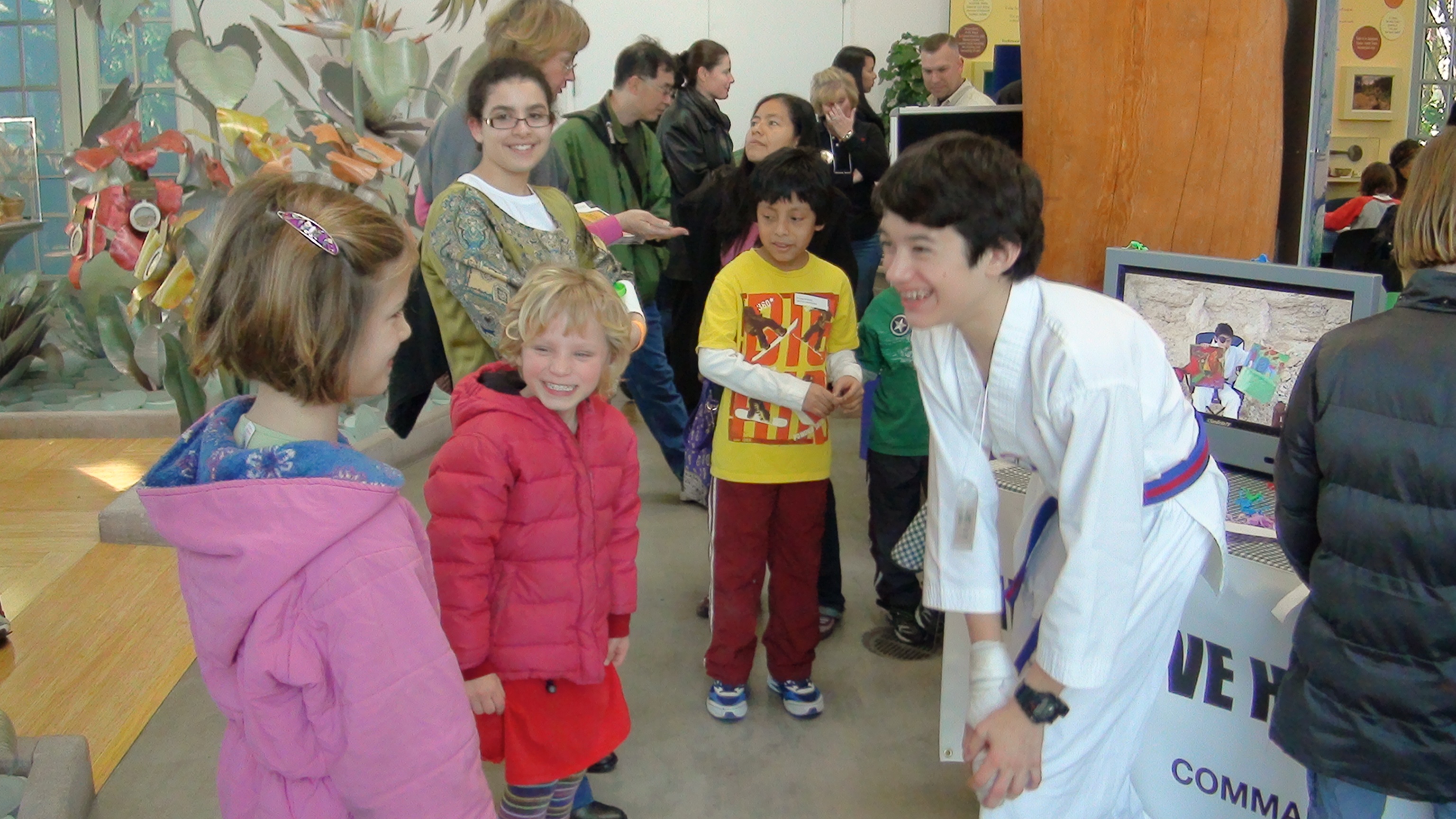
I’m bringing the Invasive Hunter Academy to Nature Nights on Thursday, July 5, during the Power of Plants event.

I created the Invasive Hunter Academy as part of Kids’ Day during National Invasive Species Awareness Week (NISAW) at the U.S. Botanic Garden in Washington D.C. earlier this year.

As part of the academy, I’ll teach you how to spot invasive plants, how to defeat your enemies with your invasive hunter moves, and how to create an action scene to capture your battle with invasives.

Learn more about the Invasive Hunter Academy:

Thank you Ms. Alice Nance, Wildflower Center Education Manager, for inviting me to be part of your wonderful Nature Nights event!

I hope to see you during Nature Nights, and be sure to join me on July 5th to learn how to become an Invasive Hunter!

Your friend,
Ben

Leave a comment

Filed under Invasive Hunter Academy, Invasive Species, Lady Bird Johnson Wildflower Center, Ms. Alice Nance, National Invasive Species Awareness Week, Nature Nights

Giant Redwoods and Lowly Ferns Nurture an Ancient Ecosystem

It’s been a few days since my last blog post, and I wanted to assure you that I haven’t been captured by invasives. I was in California enjoying the wonderful weather and the giant Redwoods.

Hiking through the Lady Bird Johnson Grove Nature Trail

Loving nature, as I do, I really enjoyed hiking the trails through the Redwood trees in the Redwood National Park. I especially liked the Lady Bird Johnson Grove Nature Trail because it reminded me of my home state of Texas and our wonderful Lady Bird Johnson Wildflower Center.

It’s amazing how old the Coastal Redwoods (Sequoia sempervirens) can get with the larger trees in the park dating back 600-700 years ago. The giant trees started growing when the Aztecs and Mayans ruled Central America, well before the first Pilgrims arrived from the Mayflower.

It’s also shocking how large they can get with some growing over 360 feet. By comparison, my arch nemesis, the Giant Reed (Arundo donax), can grow up to 20 feet. That means that it would take at least 18 of these invasive plants on top of each other to reach the top of one of the Giant Redwoods. (I guess the Giant Reed is not so giant after all!) The Redwoods are the largest trees on the planet.

When I was at the lower edge of the trail where loggers had clear cut the Redwoods many years ago, there were no large Redwoods, but there were smaller ones and other fir and hemlock trees that had grown up around the stumps of the older trees. They were starting to work together to build another ancient forest of trees. Redwoods can grow from seedings or from burls at their base.

In other areas, it was sad to see some Redwoods so badly burnt, but they were still alive. They are hardy trees, with tannin-rich bark that resists insects, and that’s why they were so coveted by people.

The Redwoods like to grow in Northern California because of the climate, the fog, and the heavy winter rains. The fog is important to the trees because they get a lot of their moisture from the fog during the dry summer months.

Ferns pioneer the way

I found the ferns that grew around the Redwoods amazing because I love pioneer plants. They’re one the first plants to come in after a fire or other disasters. There haven’t been any large fires in the Redwoods lately, but the ferns are a key part of the forest ecosystem. Ferns reproduce by spore instead of seed, and they love the foggy wet weather along the Northern California coast.

There are many kinds of ferns and without a careful eye, they can look similar to each other. At the National Park Visitor Center, I picked up a book called Pacific Coast Fern Finder by Dr. Glenn Keator and Ms. Ruth Heady.

This handy pocket book uses dichotomous keys to help identify ferns. The technique of dichotomous keys asks at least two description questions at each step to help you identify what you’re studying.

For example, here’s a simple dichotomous key to help identify birds in central Texas:

Step 1.
If the bird has a red chest, go to step 2.
If the bird is gray and white, you sighted a Mockingbird.

Step 2.
If the bird has brown wings, you found a North American Robin.
If the bird is all red, you discovered a male Cardinal.

One of the ferns that I saw was the Common Sword Fern (Polystichum munitum). Turning the leaves over, you can really see the sorus, which are clusters of sporangia that bear the spores.

Your friend,
Ben

4 Comments

Filed under California, Common Sword Fern, dichotomous key, Giant Reed, Lady Bird Johnson Grove Nature Trail, Lady Bird Johnson Wildflower Center, Pioneer plant, Redwood National Park, Redwoods

Commander Ben Joins Earth Week Activities at St. Edward’s University


At last year’s Texas Invasive Plant and Pest Conference, I had the opportunity to meet Mr. Mitch Robinson, Education and Land Management Coordinator for Wild Basin Preserve.

He talked with me about how Wild Basin Preserve fends off invasive species, and I was very impressed by his passion for protecting the preserve’s native ecosystem.

We’ve kept in touch since then, and he was so nice to invite me to be part of the Earth Week activities at St. Edward’s University, which were also broadcast on Google+ Hangouts. He was giving a presentation about invasive species on April 19, and he asked me to join him to talk about my experiences battling invasives and teaching others about them.

On the guard against invasives

Mr. Robinson started the event by giving an excellent presentation about invasives including several examples and how they affect our environment. I was especially intrigued by the Giant African Land Snail. Why? Because it’s giant and eats houses!

Actually, it eats the stucco off houses, but that’s close enough. They can grow up to 8 inches, and eat other snails and over 500 species of plants. They were brought into Florida as pets, but were released in the late 1960s, and Florida State University had to spend millions of dollars to battle them back.

It’s a menace to Western Civilization!

Native Plant Avengers movie trailer shown at St. Edwards

Afterwards, Mr. Robertson introduced me by first playing my latest video, Native Plant Avengers. When I saw my video played on a big screen in front of an audience, I had a great feeling of happiness because that’s why I make the videos–to help educate people about invasives and for my audience to have fun at the same time.


After my video, I talked about how I got started learning about invasives and teaching others. I also took questions from the audience and talked about my Invasive Hunter Academy as part of Kid’s Day during National Invasive Species Awareness Week at the US Botanic Garden.

Thank you so much Mr. Robinson and St. Edwards for inviting me to be part of your Earth Day events! It was a lot of fun! Down with invasives!


Your friend,
Ben

Update: Invasive Hunter Academy Returns to St. Edward’s University for Earth Day 2013

Leave a comment

Filed under 2011 Texas Invasive Plant Conference, Earth Day, Environmental, Giant African Land Snail, Googe+ Hangouts, Invasive Hunter Academy, Invasive Species, Mitch Robinson, National Invasive Species Awareness Week, Native Plant Avengers, St Edward's University, U.S. Botanic Garden, Wild Basin Wilderness Preserve

Behind the Scenes of the Native Plant Avengers Movie Trailer

The Avenger’s movie opened this weekend, and it was great! I saw it in IMAX 3D and can’t wait to see it again!

I’ve been looking forward to this movie for many months. I like action movies, and this movie had plenty of action, as do my Battles with Invasive Species video series.

After I watched their second movie trailer earlier this year, I thought, why don’t I bring together a group of native plants to fight the battles that we never could against invasives. And thus was born the Native Plant Avengers.

Here’s my movie cast and how they relate to Marvel’s Avengers movie trailer:

  • Texas bluebonnet as Captain America. Both Texas’ state flower and our great American hero wear blue.
  • Bitterweed as the Hulk. The Hulk was a challenge to me. He’s green, but I couldn’t find native plants in my area that have green flowers. I picked Bitterweed because I thought the plant name suited the Hulk so well.
  • Indian Paintbrush as Thor. Both this colorful plant and this Norse god don themselves in red.
  • Bastard Cabbage as Loki (and the alien army invading Texas roadsides and fields). I picked this invasive plant because it was causing a lot of problems with native Texas wildflowers this spring. Bastard Cabbage also has yellow flowers like Loki’s headgear.

Originally, I wanted to include a native plant for Iron Man, but I was already using a red flowering plant for Thor, and I wanted to adapt some of Iron Man’s (and Nick Fury’s) lines from their trailer.

If you haven’t seen my Native Plant Avengers video yet, I hope you enjoy it. And if you’re a Star Wars fan too, don’t miss my In an Ecesis Far, Far Away… video.

Your friend,
Commander Ben

Leave a comment

Filed under Avengers, Bastard Cabbage, Battles with Invasive Species, Bitterweed, Indian Paintbrush, Texas Bluebonnets, Texas Invasives, Texas Wildflowers